
If your cat spends time outside after dark, you might find yourself worrying about owls lurking nearby. Owls are pretty sharp hunters and sometimes go after small animals outdoors. Large owls can kill cats—especially kittens or smaller cats—but honestly, these attacks don’t happen often.
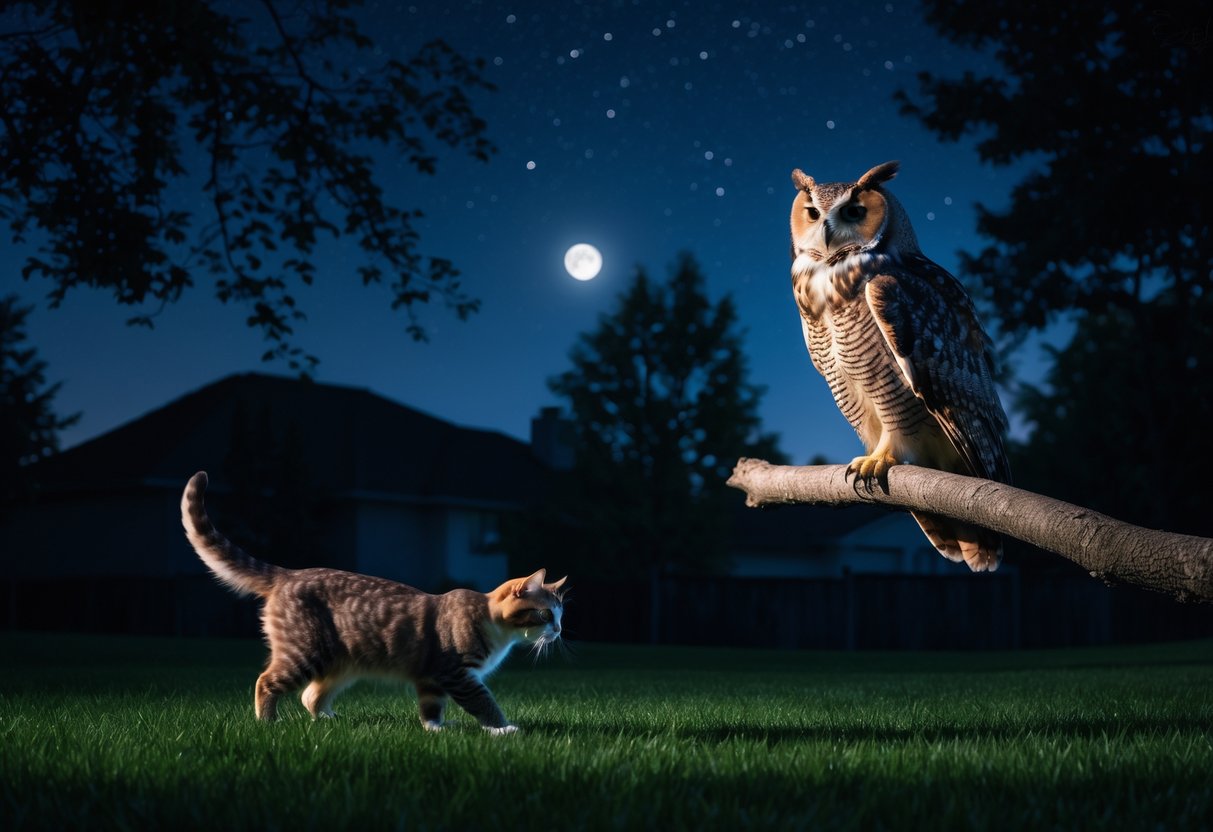
Owls do most of their hunting at night. That means your cat faces more risk if it’s outside after sunset. If you keep your cat indoors during those hours, you’ll help protect it from owls and other predators.
It helps to understand how owls hunt and what makes them go after pets. That way, you can keep your furry friend safer.
Let’s take a closer look at what to watch for and how you can lower the risk of owl attacks.
Do Owls Eat Cats at Night?

Owls usually hunt at night, so they’re most active after dark. While owls don’t usually hunt cats, sometimes certain species will go after small pets—especially if those pets are left outside overnight.
How Often Do Owls Attack Cats?
Attacks on cats by owls don’t happen often, but they do occur. Large owls might try to catch small cats or kittens, mostly at night when they’re out hunting.
Most owls prefer wild prey like mice, birds, or insects. Still, small pets can end up as targets now and then.
If your cat weighs less than five pounds, it faces a higher risk. Bigger or older cats usually don’t attract as much attention from owls, but nighttime is always the riskiest.
Owl attacks can cause serious injuries. It’s just safer to keep small pets indoors when it’s dark out.
Which Owl Species Hunt Larger Prey?
A few owl species go after bigger animals. The Great Horned Owl and Eurasian Eagle Owl are two that sometimes catch small cats or dogs.
Both of these owls have powerful talons and amazing night vision. They can grab prey almost as big as a small cat.
These owls tend to live in wooded or rural areas, but sometimes they’ll fly into suburbs or towns. If you know these owls live nearby, you might want to be extra careful about letting pets outside at night.
Factors That Affect Cat Predation Risk
Several things make it more likely an owl will go after your cat. The biggest risk comes from letting your cat outside at night.
Owls do most of their hunting after dark, so that’s the most dangerous time for small pets. The size of your cat matters too—smaller cats attract more attention.
Where you live plays a role, especially if there are big owls in your area. Dense trees or wide open spaces can also make a difference, since owls like spots where they can easily spot and grab prey.
If your cat is outside alone, it’s more at risk compared to when someone’s watching it.
You’ll lower the risk a lot by keeping small pets inside after sunset.
For more info on owls and small pets, check out the International Owl Center.
Owl Diets and Nocturnal Hunting Habits

Owls stay busy at night, using sharp hearing and nearly silent wings to catch their food. Their diets change depending on the species, but usually, they eat small mammals and other animals that move around in the dark.
Some big owls might see small pets as prey, especially at night.
Typical Prey of Owls
Most owls eat small mammals—think mice, rats, voles, and shrews. These animals are everywhere and pretty easy for an owl to catch at night.
Barn owls and barred owls mostly hunt rodents. That’s how they get by.
Besides mammals, some owls eat small birds, snakes, or insects, depending on what they can find. Their hearing is so good that they can even locate prey hidden under leaves or snow.
You could call owls true carnivores—they really depend on a steady supply of small animals.
Differences Among Owl Species
Not all owls hunt the same way or like the same food. Barn owls usually go after mice and voles, while great horned owls sometimes hunt rabbits or even other birds of prey.
Barred owls catch small mammals, but they’ll also grab frogs or little snakes. Eastern screech owls focus on insects and small rodents.
Burrowing owls hunt day and night, eating insects and small animals near the ground.
Their size and hunting style really shape what they go after.
Why Large Owls May Target Small Pets
Big owls—think great horned owls or barred owls—sometimes go after small pets like cats or tiny dogs. It’s not common, but it happens, especially if a pet weighs under five pounds or spends time outside at night.
Owls don’t really set out to hunt pets. They just go after whatever they can catch. If a small pet is outside alone, moving around and making noise, an owl might see it as easy prey, just like a wild animal.
If you want to keep your small pets safe, it’s a good idea to keep them indoors or watch them closely outside. Curious about how owls interact with pets? Check this information about owls eating pets.


