
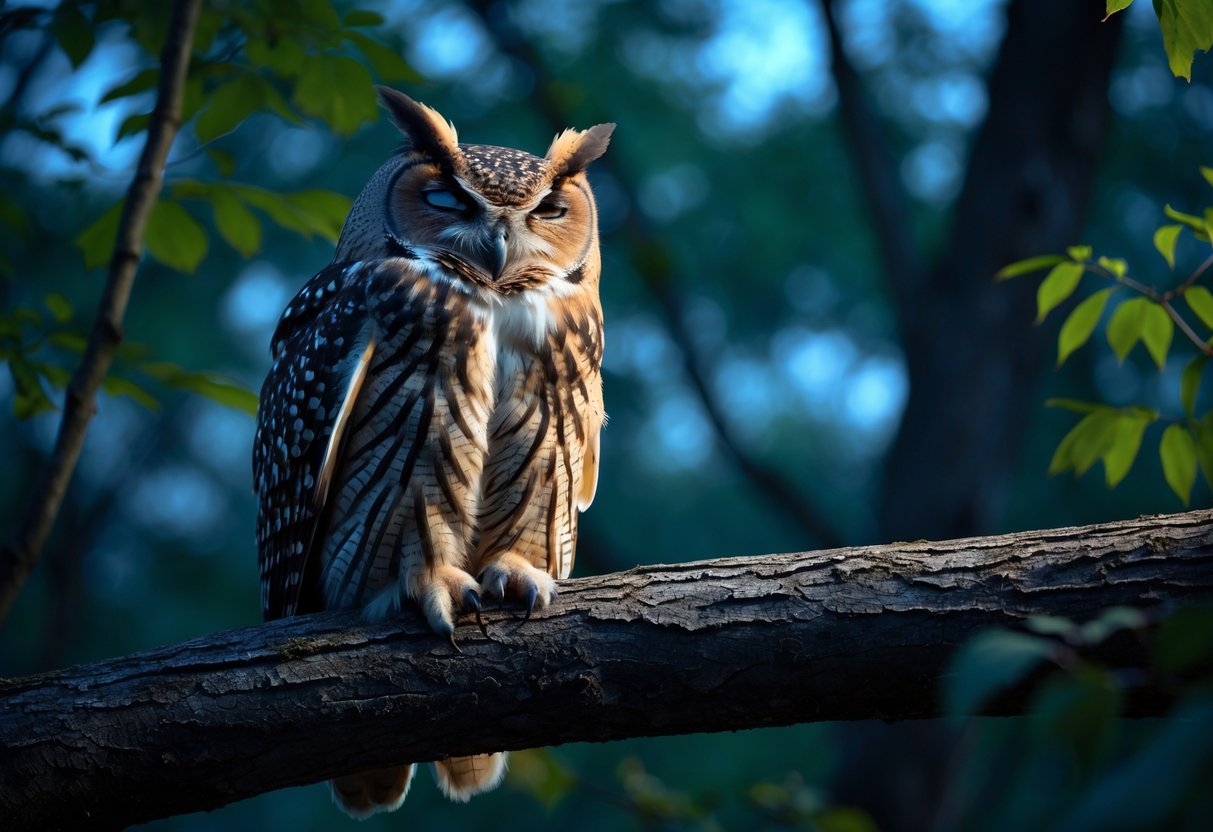
Owls sleep in ways that might catch you off guard. Unlike most birds, adult owls usually perch upright when they rest, gripping branches with those surprisingly strong claws.
They’ll sometimes keep one eye open and let only half their brain snooze, so they can stay on the lookout for any trouble, even during a nap.
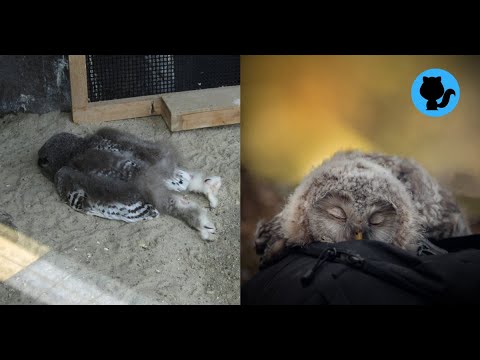
Baby owls? They do things differently. Since their necks are still wobbly, they’ll just flop down on their bellies or sides, a bit like a little kid dozing off.
Ever wondered how owls pick their sleeping spots or how they stay safe while they’re out cold? There’s a lot to uncover about their quirky habits as you keep reading.
How Do Owls Sleep?

Owls have sleep habits that really fit their nighttime lives. They look for quiet, hidden places to rest but still manage to stay alert for anything sketchy.
Their routines don’t match humans—or even most birds—because their lives as night hunters set them apart.
Typical Sleep Patterns in Owls
Most owls are nocturnal, so they come alive at night and crash during the day. You’ll spot them snoozing on tree branches, tucked in cavities, or sometimes even hanging out in burrows underground.
Adult owls tend to sleep upright, perched and balanced. Those talons? They’re like built-in safety hooks. Baby owls, though, just sprawl out on their stomachs. It’s easier for them while they’re still growing.
Owls rarely fall into deep sleep like humans do. Instead, they drift in and out of lighter rest, so they can snap awake if something’s off. It’s a smart way to stay safe.
Differences Between Owl and Human Sleep
Owls don’t sleep like we do. While people might drift off for hours of deep sleep, owls take shorter, lighter naps.
This lets them wake up fast if a threat pops up or if they need to hunt. Surprisingly, adult owls usually close both eyes when they sleep, even though some birds can nap with one eye open. Makes you wonder—doesn’t that make them a bit more vulnerable?
They perch upright while they sleep. Sure, it might look uncomfortable, but it’s normal for them. Their feet just lock in, so they won’t fall.
Daytime and Nighttime Sleep Habits
Owls hunt at night, so they catch most of their sleep during the day. You won’t often catch an owl napping out in the open.
They pick quiet, hidden spots—think thick tree canopies or rocky ledges—where nothing will bother them.
Some species, like Snowy owls or Burrowing owls, break the mold and stay active during the day. These diurnal owls sleep at night, which flips the usual owl routine.
Owls always keep an ear out, even when they’re resting. So, when you see an owl just sitting there during daylight, it might look totally zonked—but it’s probably just dozing lightly, still listening for trouble.
Want to dig deeper? Check out more on how owls sleep in trees or burrows at How Do Owls Sleep? (Sleeping Habits & Pictures!).
Owl Sleep Across Species
Owls have sleep styles that fit their size, where they live, and how they hunt. Some nap on tree branches, while others hide out underground or in rocky spots.
These habits help them avoid predators and stay ready for their next hunt.
Barn Owl Sleep Behavior
Barn owls usually sleep during the day, tucked away in dark, hidden places like old barns or tree hollows. They always pick spots that block out light and keep them out of sight.
You’ll often see them standing on one leg, gripping a branch with those strong claws. They shut their eyes tight to keep out the light. Since they hunt at night, they’ll rest for about 10 to 12 hours in these peaceful hideouts.
Burrowing Owl Sleep Adaptations
Burrowing owls do things differently. They live down in underground burrows instead of up in trees.
They either dig these tunnels themselves or move into ones left by other animals. The burrows keep them safe from bad weather and most predators.
During the day, you might spot them perched at the burrow entrance or hiding inside, quietly resting. Their sleep comes in shorter bursts between hunting trips.
They don’t need to grip branches, but they’re always ready to react if something comes too close.
Comparing Eurasian Eagle Owl and Elf Owl Sleep
Eurasian eagle owls rank among the largest owl species out there. You’ll usually spot them perched high on tree trunks or rocky cliffs.
They lean against the trunk for a bit of extra support. Their impressive size helps their muscles keep them steady while they sleep, often for 10-12 hours at a stretch.
Elf owls, on the other hand, are tiny. They sleep mostly on tree branches or tuck themselves inside cactus cavities.
Since they’re so small, elf owls sometimes huddle together for warmth, especially when winter rolls in. They sleep during the day too, but their higher metabolism means they might just take shorter naps.
| Species | Sleep Location | Sleep Style | Typical Sleep Hours |
|---|---|---|---|
| Barn Owl | Dark barns, tree hollows | Standing on one leg, eyes closed | 10-12 |
| Burrowing Owl | Underground burrows | Rest inside tunnels, watchful | Shorter intervals |
| Eurasian Eagle Owl | Tree trunks, rocky cliffs | Leaning against surfaces | 10-12 |
| Elf Owl | Branches, cactus cavities | Huddling for warmth | Short naps |


