
Ever sat outside at night and caught the sound of an owl hooting? It’s a little eerie, right? It makes you wonder—how far does that sound actually travel?
Most owl hoots reach about a quarter mile, but some, like the Great Horned Owl, can send their calls several miles across a quiet night. The distance really depends on the owl, the weather, and honestly, how loud they feel like being.
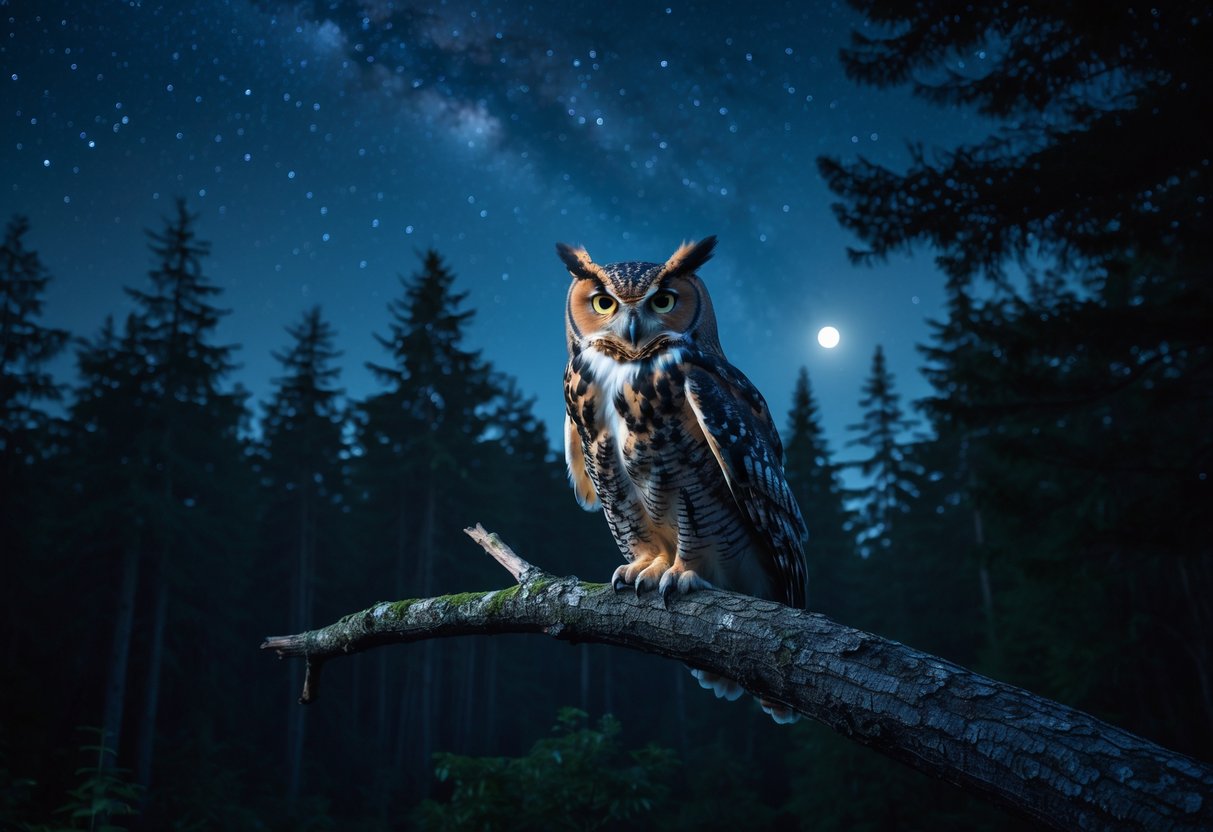
Some owls, like the Snowy Owl, have deep, clear hoots that can travel up to seven miles if the area’s wide open. So, when you hear a hoot outside your window, that owl might be way farther away than you’d guess.
Learning just how far these calls can reach might change how you listen at night. It’s kind of wild to think about.
Owls don’t hoot just for fun. They’re talking to each other. If you know how far their calls go, you start to understand their world a bit more.
Honestly, it might make you want to step outside and listen a little closer. Curious about what helps or hinders an owl’s call? Let’s dig in.
How Far Away Can You Hear an Owl Hoot?

How far you can hear an owl hoot depends on the species, the land, and how loud the owl wants to be. Some owls belt out deep hoots that travel far, while others stick with softer calls.
Where the owl is and the time of day also make a difference.
Typical Distances for Hearing Owl Hoots
If you’re in a big open field or a wetland, you might hear a Great Horned Owl from 1 to 3 miles away. In a forest, the same owl’s call usually reaches about a quarter mile to a mile.
Barred owls have gentler hoots. You’ll typically hear them within a few hundred yards. Screech owls? Their high-pitched trills only travel a few hundred feet.
The night helps. Less noise means the sound carries better. But if you’re in a city, traffic and buildings cut down that distance—sometimes to less than a mile.
Still, on a quiet, humid night, those deep calls seem to drift forever.
Factors That Affect Sound Travel
Sound travels best over open ground. Thick trees or buildings? They block or muffle the hoots.
Hills, walls, and houses can get in the way too. Wind might help or hurt, depending on which way it’s blowing.
Humidity actually helps sound go farther. Moist air lets those sound waves move smoothly.
If there’s traffic or other loud noises nearby, you might miss the hoot entirely.
Where the owl sits matters. When it perches up high and calls out in your direction, you’ll hear it much better than if it’s tucked down in some thick bushes.
Differences Between Owl Species’ Calls
Great Horned Owls give off deep, booming hoots—hard to miss, honestly. Their calls go something like “hoo-hoo hoooo hoo-hoo.” Males use these to claim territory or attract a mate.
Barred owls have a call that sounds like “who cooks for you.” It’s loud but not as deep, so it doesn’t travel as far.
Screech owls? They make soft, trilling or whinny-like sounds. You’ll only hear those if you’re close by, but they’re pretty unique.
Each owl’s call fits its needs. Some want to warn off rivals, others just want to chat with a mate.
If you want more details on how far Great Horned Owl calls can go, check out this guide on how far away can you hear a Great Horned Owl.
Owls, Their Calls, and the Nocturnal Soundscape

Step outside at night and you’ll hear a whole world of animal sounds. Owls use their hoots to mark territory and find mates.
Other nighttime predators add their own voices to the mix.
Why Owls Hoot and Communicate
Owls hoot mainly to defend their turf and attract a mate. Males often pick a spot and send out rhythmic hoots, warning others to back off.
These calls travel best on cold, clear nights, especially when the trees are bare.
Great Horned Owls have deep, foghorn-like hoots. Barred Owls call with a rhythm that sounds like “Who cooks for you?”
Even if you can’t see them, these calls help you figure out where they are. It’s their way of keeping in touch, finding partners, and protecting their nests.
Role of Raptors and Other Nocturnal Predators
Raptors like owls, hawks, and eagles rule the night—or at least the early morning. Owls stand out because they’re mostly nocturnal, relying on their calls to keep order and communicate.
Hawks and eagles usually stick to daytime, but sometimes you’ll hear them early or late.
Nocturnal predators help keep things balanced by hunting rodents and other critters. Listening for owl calls? That’s a good way to figure out which hunters live nearby, since each species has its own signature sound.
Impact on Bats and Other Wildlife
Bats spend their nights alongside owls and other predators. Owls rely on sound to notice bats and dodge food competition.
Some owls hunt in total silence. Their calls mostly let them chat with each other instead of scaring off prey.
Plenty of other animals tweak their calls, too, just to avoid trouble. For instance, smaller creatures might suddenly go quiet if they hear an owl’s hoot.
Sometimes, you’ll catch owls copying noises like rattlesnakes to freak out would-be predators. All these sounds blend together and create the wild, layered soundscape of the night.
Curious to dig deeper? Check out more about how owls communicate and their calls on Bird Watcher’s General Store.


