
If you’ve ever heard someone mention the “satanic owl,” you might wonder what makes this bird so spooky or mysterious.
People mostly tie the satanic owl to the Stygian Owl, a bird with dark feathers and those wild, glowing red eyes—no wonder it’s called the “Devil’s Owl” in some places. Its haunting look and night-time habits have turned it into a symbol of darkness and the supernatural.
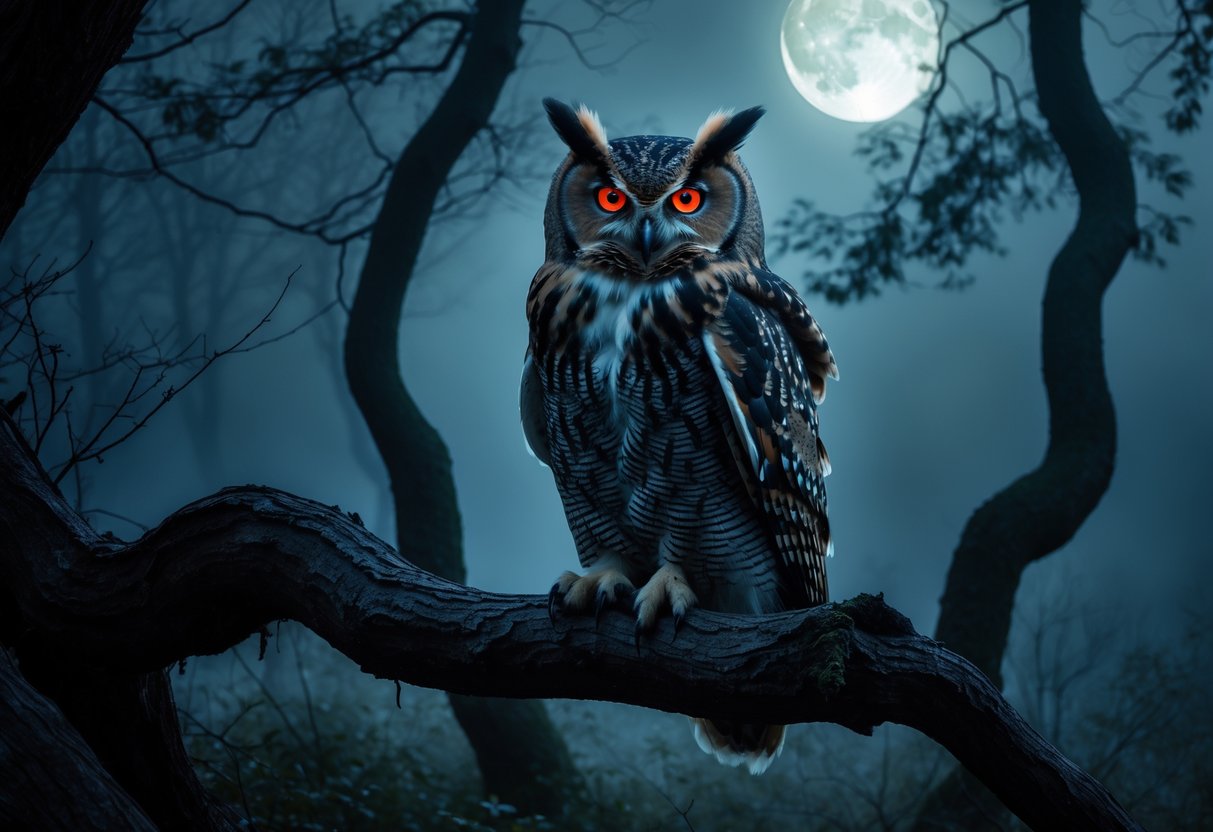
You might not expect this, but the owl’s name actually comes from the River Styx in Greek mythology. That river is all about the afterlife.
All over the world, people have seen owls as mysterious creatures. Sometimes they connect them with witches or evil spirits.
If you dig into why the Stygian Owl picked up its devilish nickname, you’ll see how myths and the bird’s natural traits just blend together.
Curious about why the satanic owl has fascinated—and honestly, creeped out—so many people? Its real behavior and looks sparked stories that still grab our imagination.
Want to go deeper? Here’s more about the Stygian Owl’s mysterious traits and symbolism.
Origins and Symbolism of the Satanic Owl

The satanic owl ties right into old stories and symbols about owls being creatures of darkness and mystery.
Its roots reach through history, myths, secret groups like the Illuminati, and religious beliefs that link owls to evil or hidden knowledge.
Historical Roots in the 2nd Century
People have seen owls as mysterious for a long time. By the 2nd century, some cultures already connected owls to the darker side of life.
Many believed owls brought bad luck or even death. Since owls are nocturnal, their ability to see in the dark made people think they had secret powers.
Some early Christian texts claimed owls symbolized darkness and the devil. This idea set the stage for later negative meanings.
Myths and Folklore About Owls as Bad Omens
Lots of cultures treat owls as bad omens. Some Native American tribes, for example, see owls as signs of death.
They believe hearing an owl call could mean someone’s about to die. In the Middle East, owls stand for ruin and destruction.
Folklore from all over the world often puts owls in the spirit world. Some people think owls warn of danger or misfortune.
Their silent flight and night-time habits just add to their spooky reputation.
Association With the Illuminati
The Illuminati, that secretive group everyone loves to speculate about, uses the owl as a symbol.
This connects the owl to secrecy, wisdom, and mysticism. The “Illuminati owl” stands for watching and guarding hidden truths.
Some folks believe it hints at the group’s control over secret information and influence behind the scenes.
Because of all this, people started seeing the owl as a symbol of not just bad luck, but shadowy power and control.
Religious and Spiritual Interpretations
In Christian art, owls often show up as symbols of evil or the devil. Artists like Hieronymus Bosch painted owls to represent sin and darkness.
Not all religions agree, though. Some link owls to wisdom, like the Greek goddess Athena’s “Owl of Pallas.”
But in satanic symbolism and occult practices, owls usually stand for secrets, darkness, or hidden forces.
Depending on the belief system, the owl’s role in spirituality can change a lot. Sometimes it’s a wise guide; other times, it’s a warning of evil.
If you want to read more, check out this analysis of the owl as a symbol of evil in Christian art.
Owls in Nature and Humanity’s Perception

Owls are honestly fascinating animals, both in how they live and how we see them.
People have viewed them as mysterious and even magical. Their biology and weird sounds shape a lot of these ideas.
Biological Characteristics and Unique Behaviors
Owls have big, round heads and those huge eyes that help them see in the dark. Their eyes face forward, which means they get great depth perception for hunting.
Unlike most birds, owls can’t really move their eyes much—they turn their heads up to 270 degrees instead.
Owl eggs are usually white and smooth, blending into hidden nests. Most owls lay several eggs, and they don’t all hatch at once.
Their feathers have soft edges, so their flight is nearly silent. That lets them sneak up on prey.
At night, they hunt by listening and watching for small animals like mice and insects.
Silent Flight and Hooting Mystique
One of the coolest things about owls? Their silent flight. Their wings have special feathers with serrated edges that break up the air and keep things quiet.
You’ll often hear owls hoot at night. Each species has its own hoot pattern.
Hooting helps them claim territory or find a mate. People sometimes think these sounds are spooky, since they echo in the dark and quiet.
Because of this, many cultures link owl hoots to mystery or even warnings. But really, these sounds are just how owls talk to each other.
Cultural Contrasts: Evil Symbol Versus Beautiful Animal
Depending on where you live, people see owls in totally different ways.
Some folks think owls bring bad luck or even hint at death. Old myths say owls warn about danger or somehow invite misfortune.
But in other places, people admire and respect owls. They value the bird’s wisdom, maybe because owls hunt so quietly and see through the dark.
You might look at owls and just see a peaceful, beautiful animal. Or maybe you find them mysterious, even a little unsettling.
Honestly, this mashup of opinions makes owls pretty fascinating—both as real creatures out in the wild and as powerful symbols in all sorts of stories.
Learn more about owl symbols and myths here.


