
Have you noticed owls hooting more as autumn rolls in? You’re definitely not the only one. This time of year, owls seem to get a lot louder—they’re claiming territory and gearing up for the colder months.
In fall, owls hoot to warn others away, practice courtship, and help young owls learn how to call.
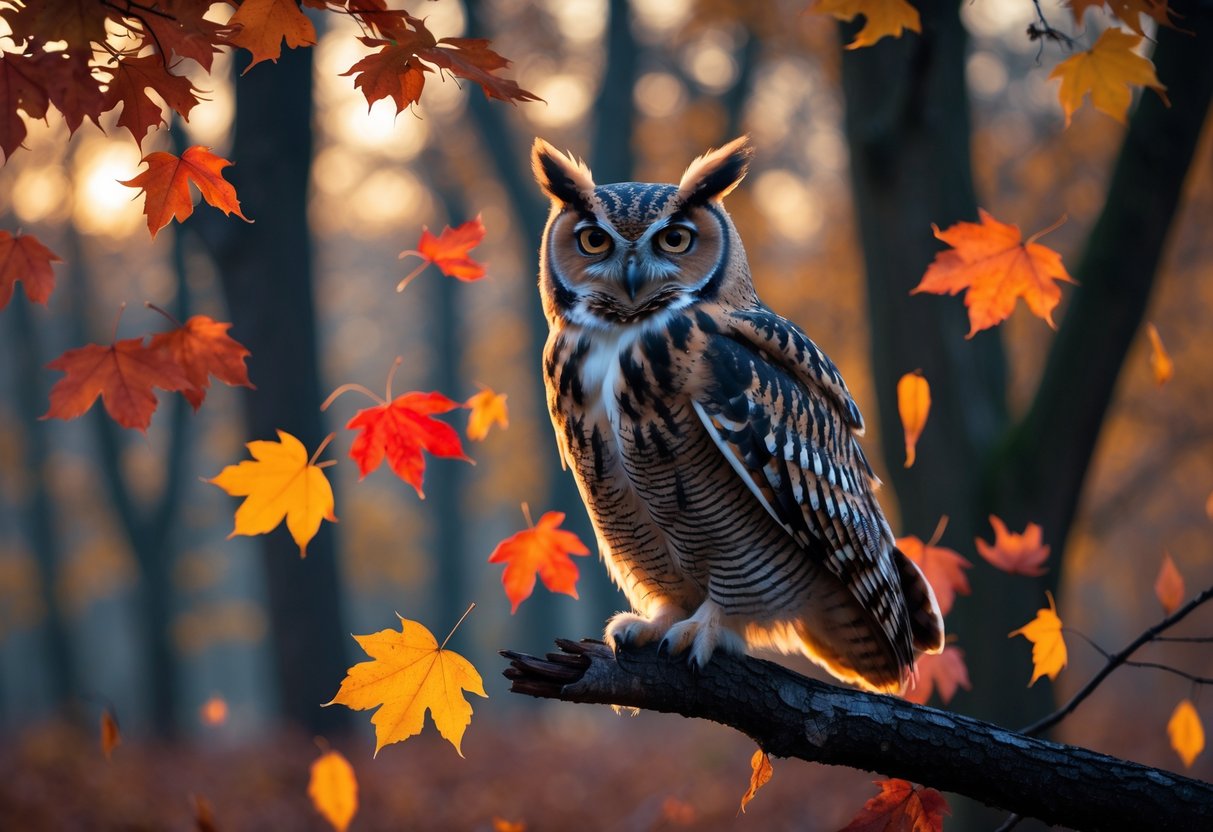
You’ll hear everything from deep hoots to those weird, almost spooky screams. Owls use these sounds to send important messages to each other.
Cool, quiet autumn air helps their calls travel farther. That way, they can hold onto their hunting spots and find mates more easily.
If you listen in, you get a front-row seat to this wild, noisy season when owls really make themselves heard.
Curious about what all those calls mean? Let’s see why fall turns into an owl symphony—and what those nighttime concerts are all about.
Why Are Owls So Vocal in Autumn?

Owls get much louder in autumn because they need to mark territory and attract mates. The cooler weather and falling leaves give their calls a boost, letting them reach farther.
Each owl species has its own reasons for hooting, so autumn nights can get pretty lively.
Territorial Behaviors and Call Patterns
In the fall, owls hoot to mark their turf. Males shout out warnings to keep rivals at bay.
This helps them secure the best spots for food and shelter before winter hits.
You’ll probably hear those hoots more on cold, clear nights—sound just travels better without thick leaves in the way.
Owls size up their rivals by listening to their calls. If two owls sound similar, things might get tense and lead to a fight.
Both males and females get pretty vocal. They call back and forth to make sure no one else sneaks into their space.
Mating and Pair Bonding in the Fall
Fall kicks off the owl mating season. Sometimes, you’ll hear pairs hooting together in duets.
These back-and-forth calls help them stay close and show they own the territory as a team.
The calls also show off strength and health. A deeper hoot usually means the male is bigger and stronger.
When you hear two owls hooting in sync, they’re probably confirming their partnership before nesting.
Species Most Likely to Be Heard
Some owls just can’t keep quiet in autumn. Tawny owls, for example, seem to out-call almost every other species during this time.
Great horned owls and barn owls also ramp up the noise in North America.
Barn owls do well in cities and farms, so you might hear them even with human noise around.
Other owls need quiet, old forests, so city dwellers might miss out on their calls.
Environmental Triggers for Increased Vocalization
You’ll probably notice more owl calls on cool, calm nights when there’s not much wind.
As leaves fall, sound can travel even farther, so owls can reach mates or rivals at a distance.
Owls react to changes in light and noise, too. Human activities—like city lights or gas wells—can shift when and how much they call.
You might catch more hoots in places where the natural conditions let their voices carry.
Key fall conditions for louder owl hoots:
- Cooler temperatures
- Clear, calm nights
- Less dense foliage
- Lower background noise
That’s why autumn really does feel like “hooting season” if you’re out at dusk or after dark.
If you want to dig deeper, check out this autumn owl hooting article.
Autumn Owl Activity and Its Impact on Other Wildlife
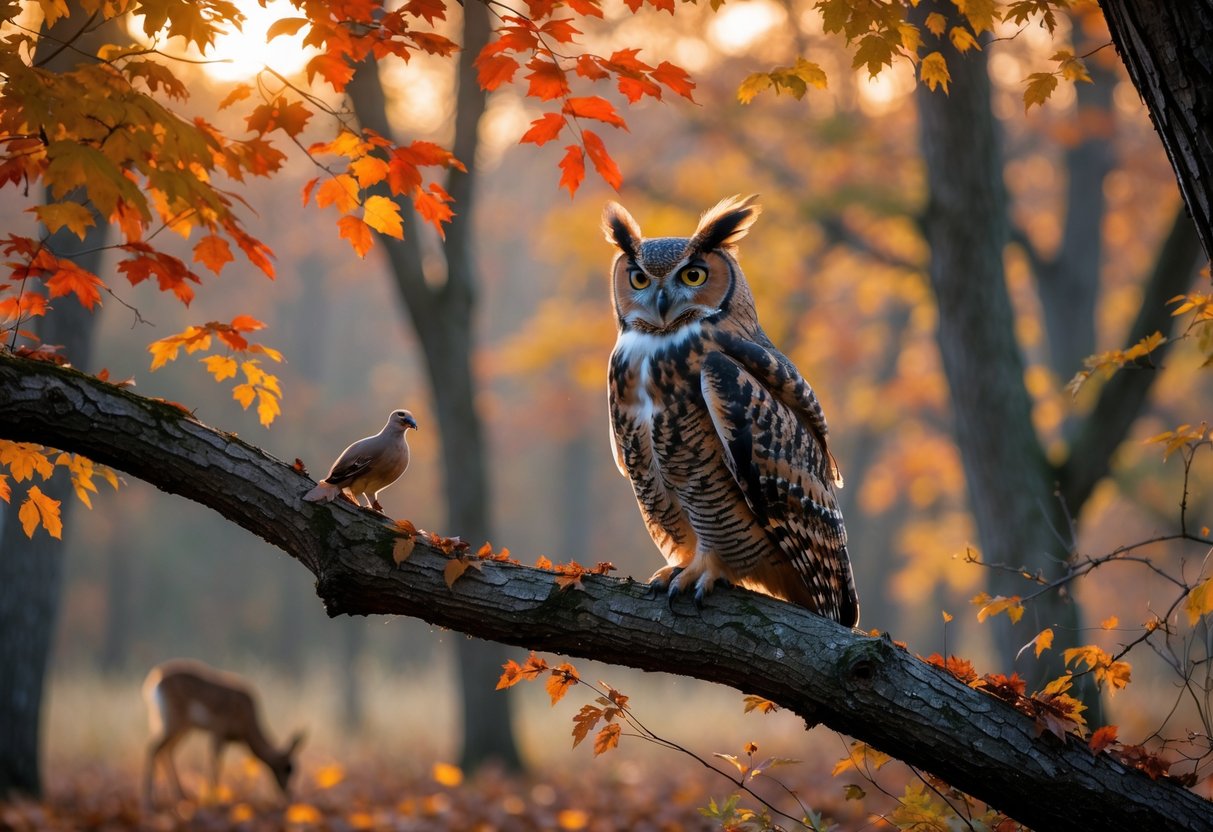
When autumn arrives, owls get louder and more active. This shift shakes up other birds, their prey, and even the whole local ecosystem.
If you pay attention, you might spot some changes in your neighborhood wildlife.
Interactions with Songbirds and Other Avian Species
Owls’ loud calls in autumn make songbirds like blackbirds and sparrows change their habits. These smaller birds often quiet down or move away when owls are hunting nearby.
Owls sit at the top of the food chain, so their calls act as a warning for these birds.
You might see fewer black-headed gulls in some spots because owl activity scares them off.
Songbirds and gulls often switch up their feeding and nesting to avoid danger.
Owls don’t go after these birds often, but their calls still mark territory and keep others alert.
This balance keeps bird populations steady during autumn.
Feeding Habits and Food Availability
Owls get more vocal in fall because they’re defending hunting grounds with good food. You’ll spot them hunting small mammals, insects, and sometimes birds in both woods and fields.
Their calls help keep other owls away from these spots.
As it gets colder, insects start disappearing. Owls then focus more on mammals like mice, which are also important for birds like blackbirds and sparrows.
As owls hunt, smaller animals get more cautious or change up their routines.
If you listen closely, you might hear young owls practicing their calls as they learn to hunt.
This practice gets them ready for winter, when food can be much harder to find.
Influence on Local Ecosystems
Owls really shake things up in the local ecosystem during autumn. When they hunt rodents and insects, they help keep those populations in check.
That means plants get a break—fewer critters chewing on seeds and leaves. It’s a small but important win for the greenery.
You might notice owl hoots echoing through the woods or fields. Those sounds usually mean the habitat’s in pretty good shape.
Where owls thrive, you’ll often spot other wildlife too—blackbirds, sparrows, maybe even black-headed gulls. It’s all connected, right?
If you hear owls calling in autumn, take a moment to appreciate how these creatures depend on each other. It’s a reminder that your local ecosystem relies on this natural back-and-forth.
Curious about how owls shape the sounds of autumn nights? Here’s an article that dives into how they turn those nights into a haunting symphony of sound.


