
Ever heard owls hooting at night and wondered if they’re actually chatting? Well, they are—owls communicate with each other using hoots and a bunch of other sounds. They call out to connect with mates, mark their territory, and coordinate during breeding season.
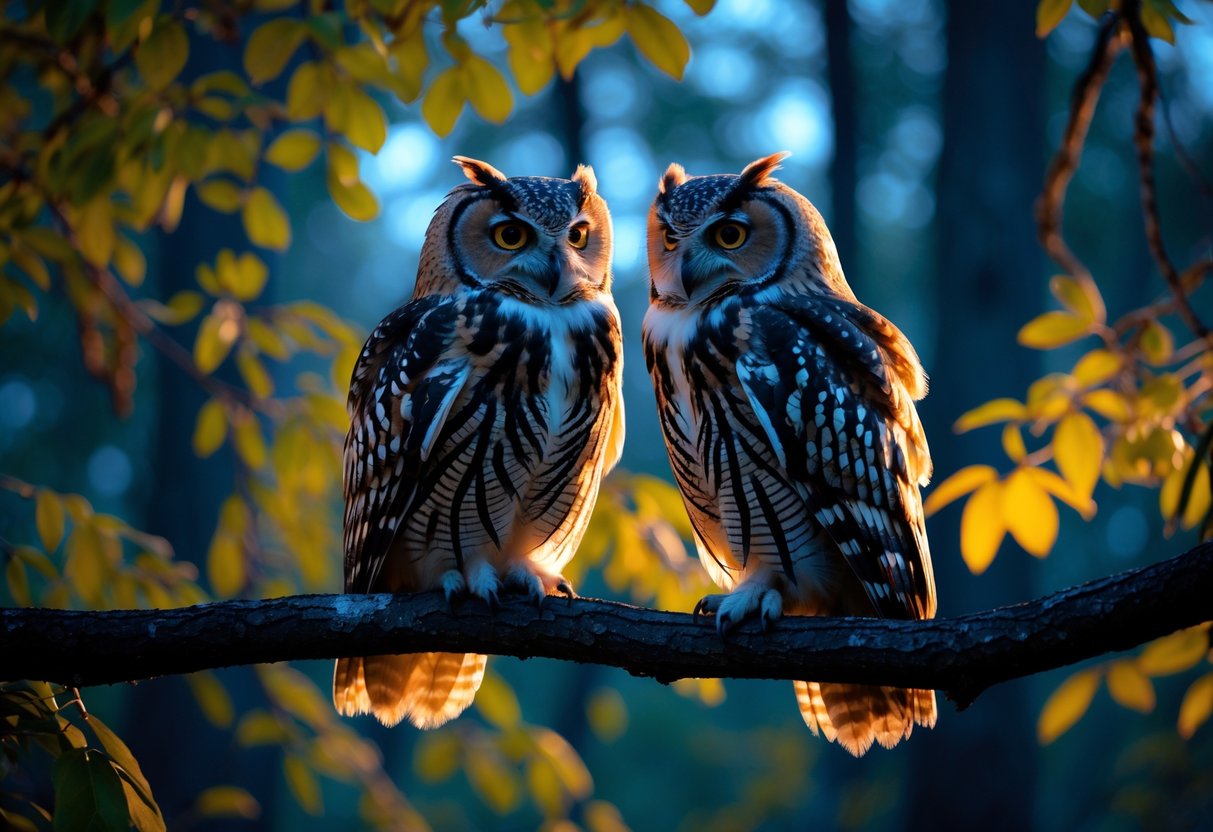
Each owl pair sort of invents its own way of calling back and forth. Sometimes, their hoots sound like a real conversation. The female might start, and the male answers. This back-and-forth keeps their bond strong and warns other owls to steer clear.
Owls don’t just make noise for the fun of it. Their sounds range from hoots to screeches, and each one means something different. Curious what those calls actually mean or why owls choose to “talk” at night? You’re not alone!
How Owls Communicate With Each Other

Owls use a mix of sounds and body signals to connect with each other. Their calls shift depending on the species and what they’re trying to say.
You’ll find different sounds for warnings, attracting mates, or marking territory. It’s all pretty fascinating.
Diversity of Owl Sounds and Calls
Owls make a surprising variety of noises. Take the barred owl—it belts out a call that sounds a lot like “Who cooks for you?” That’s how other barred owls know who’s around.
The spotted owl, on the other hand, sticks to softer, quieter hoots to avoid drawing attention in its forest home.
Besides hooting, owls can screech, whistle, or even snap their bills. Each sound means something different. Males and females often have different pitches and tones.
Great horned owls are famous for their duets. One starts hooting, and the other answers. This duet keeps their bond strong and tells others the territory is taken.
Purposes of Owl Vocalizations
Owls use their voices for a bunch of reasons:
- Claiming and defending territory
- Attracting and keeping mates, especially during breeding
- Warning about danger or threats
- Talking to their young in the nest
Barred owls hoot to let others know where their home range is. Spotted owls keep things quieter, probably to avoid predators.
Most owls do their calling late at night. The forest is quieter then, so their messages travel farther. It also helps keep their calls from getting lost in the noise of other animals.
Physical Displays and Non-Vocal Signals
Owls don’t just rely on sound to talk. They use their feathers, eyes, and body posture too.
Sometimes, they fluff up their feathers to look bigger or lean forward to show they’re feeling aggressive. You might see them turn their head slowly, keeping a close watch on something—or someone.
Barred owls use wing movements or flick their tails as signals. That could mean “stay away” or “hey, I’m interested.”
If you ever get close enough, you’ll notice these small, quiet moves can be just as important as their hoots when it comes to getting the message across.
Unique Communication Styles of Barred and Spotted Owls

When you listen to owls, you’ll notice their calls do a lot of jobs—defending territory, finding mates, or warning others. Each species has its own style for using sounds and behavior to get the point across.
Barred Owl’s Social and Vocal Behaviors
Barred owls have a call that’s hard to miss—“Who cooks for you? Who cooks for you-all?” You can hear this hoot, made up of 8 or 9 notes, echoing through the woods.
They mostly use these calls to mark territory and keep their bond with their mate strong. Barred owls also do duets, calling back and forth to show they’re paired up and to stay connected when they’re apart.
During courtship and when delivering food to the nest, barred owls mix in other sounds too. The male might call after dropping off prey to get the female’s attention. All these vocal signals help them stay in sync.
Spotted Owl’s Communication Patterns
Spotted owls usually go for a quieter, more subtle style than barred owls. They’ll use soft hoots and gentle whistles, just enough to let others know they’re around without giving away their spot.
These owls live in thick forests, so keeping things low-key really matters. You’ll probably hear them calling mostly when they need to defend their territory or reach out to a mate from a distance.
Their calls? They’re shorter and not as melodic as what you’d hear from barred owls. Honestly, it’s almost like they’re being careful not to stand out too much.
Since barred owls compete with them, spotted owls often keep their calls quiet on purpose. This cautious way of communicating lets them survive in their crowded habitat and still stay in touch with each other.


