
Ever found yourself wondering if owls really sleep all day? You’re definitely not the only one. People mostly think of owls as nighttime animals, but their sleep habits? Well, they’re a bit more complicated than that.
Most owls do sleep during the day, usually for about 10 to 12 hours. Still, some don’t follow this pattern exactly.
Not every owl sticks to the night shift. Some hunt in the daytime, or maybe at dawn and dusk, so their sleep schedule isn’t always what you’d expect.
If you know where and how owls rest, you’ll start to see just how unique their habits are. Honestly, it’s kind of fascinating.
Do Owls Really Sleep All Day?

Owls don’t all stick to one sleep schedule. Some sleep mostly during daylight hours, but others are up and about in the day or at twilight.
Their sleep depends on the species and where they live. It’s not a one-size-fits-all thing.
Nocturnal, Diurnal, and Crepuscular Owls
Most owls are nocturnal. They hunt at night and sleep during the day.
You’ll see these owls, like the Great Horned Owl and Barn Owl, resting for 10 to 12 hours after a night of hunting.
Some owls are diurnal—they’re the day shift. These guys, like the Snowy Owl and Northern Hawk Owl, are out hunting in broad daylight.
Then you’ve got the crepuscular owls, such as the Short-eared Owl. They’re most active at dawn and dusk.
Their sleep and activity times bounce between day and night, depending on when their prey is moving around.
Why Some Owls Are Active During the Day
Some owls stay active during the day because of food. If their favorite snacks are out in the sun, owls will adjust their routine.
Take the Burrowing Owl for example. It hunts mainly in daylight since it lives in open places where rodents and bugs are easier to spot.
Owls living in places with super long days or nights, like the Arctic, might change their habits too. That way, they can hunt when it’s easiest.
How Owl Species Differ in Sleep Patterns
Each owl species has its own sleep quirks, shaped by size, habitat, and what’s trying to eat them. Small owls, like screech owls, usually nap in tree cavities or birdhouses during the day to stay hidden.
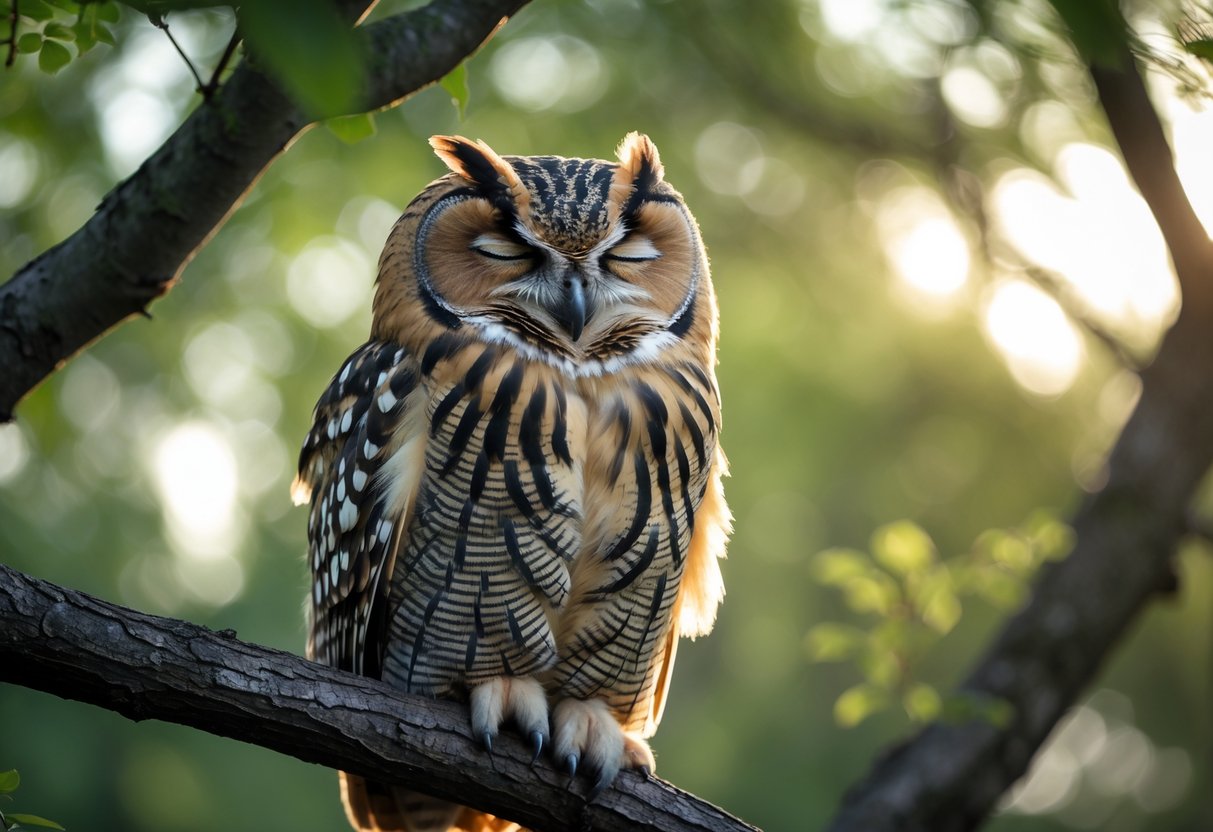
Bigger owls, like the Barred Owl or Great Horned Owl, rest upright on tree branches in daylight. They grip the branch tight with their talons so they don’t fall.
Some, like the Burrowing Owl, sleep underground in burrows. That gives them extra protection from predators and bad weather.
Young owls tend to sleep lying down, which seems to help their muscles develop. Most adult owls sleep with their eyes closed, but they still stay alert enough to fly off if something sneaks up.
You can check out more details about why owls sleep during the day if you’re curious.
How Do Owls Sleep?

Owls mostly sleep during the day since they’re out at night. Their sleep isn’t quite like ours; they manage to stay alert even while resting.
Some owl species have special sleep tricks that help them stay safe and ready to move if they need to.
Typical Owl Sleep Cycles
Owls don’t fall into deep sleep the way humans do. Instead, they stick to light sleep or a state called torpor.
Their bodies slow down, but they can wake up in a flash if needed. You might spot an owl standing up while it sleeps, usually tucked away in a tree hollow or another safe spot.
They get about 12 hours of sleep during daylight, but it’s broken up with short bursts of alertness. That way, they’re always somewhat aware of what’s going on around them.
Unihemispheric Sleep and Alertness
Owls have a neat trick called unihemispheric sleep. One half of their brain sleeps while the other half stays awake.
Because of this, an owl can rest with one eye open and still keep tabs on its surroundings. It’s a pretty clever way to nap, especially for owls perched out in the open.
You get the feeling that the owl is resting but could take off at any second if trouble shows up.
Sleep in Burrowing Owls
Burrowing owls have a pretty unique way of sleeping compared to other owls. Since they live underground in burrows, they rest mostly during the day but often just lie flat instead of standing up.
Their burrows give them shelter from predators and rough weather. I’d imagine these owls probably sleep more soundly because their homes feel safe and hidden.
You might spot baby owls flopped out on their stomachs—burrowing owlets do this all the time, and honestly, it’s kind of adorable.
Living underground changes the way burrowing owls sleep, but it doesn’t really stop them from being mostly nocturnal.
If you’re curious about where owls sleep during the day, here’s a guide on owl sleeping locations.


