
Owls have always seemed mysterious. They’re out when most of us are asleep, and their haunting calls can make the night feel even darker.
It’s kind of wild, but people started calling owls evil mostly because folks were scared of the dark and didn’t understand what lurked in it. Owls just happened to fit the bill, with their nighttime habits and those spooky eyes. Over time, stories took off—suddenly, owls became bad omens or messengers of doom.
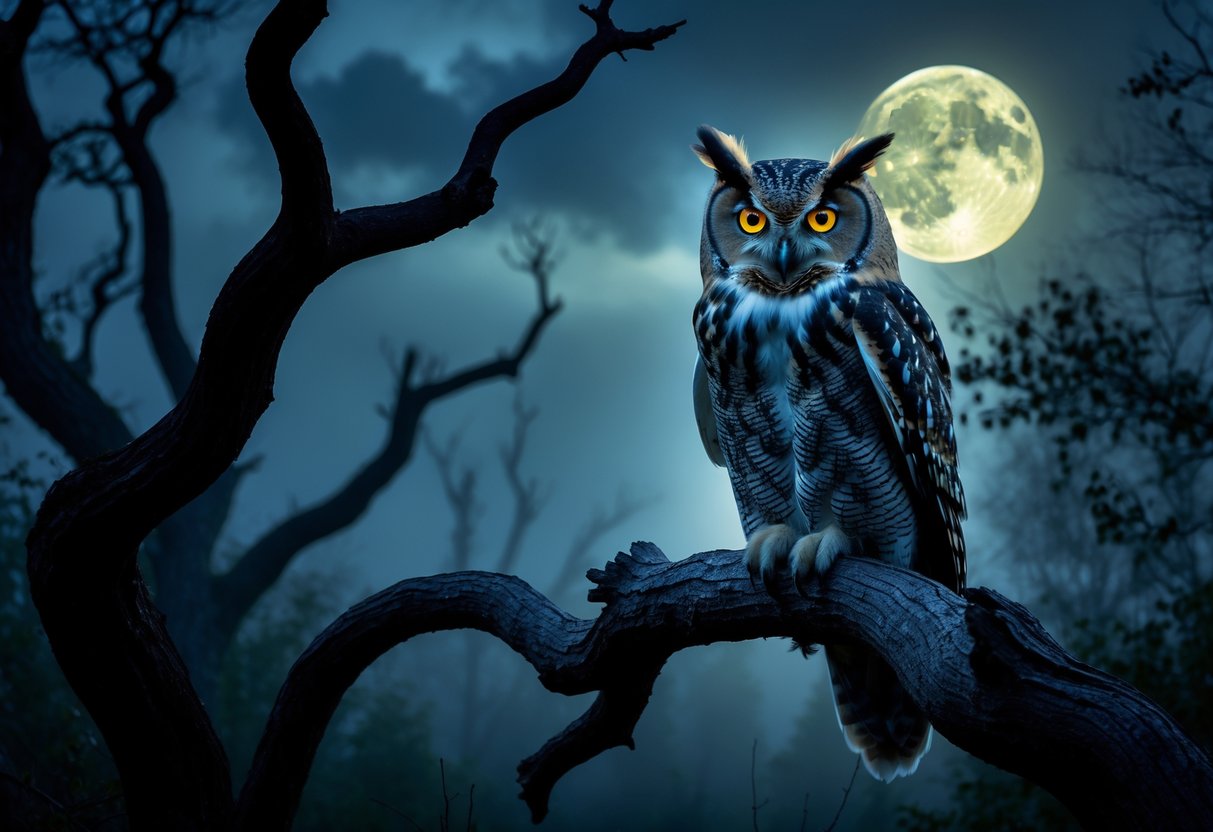
If you dig into history, you’ll see that different cultures saw owls in all sorts of ways. In a lot of Western stories, though, people turned owls into symbols of death, misfortune, or even witchcraft. Their ghostly flight and glowing eyes just made it easier for people to believe they were supernatural.
Even Shakespeare jumped on this idea. It’s funny, isn’t it, how the same animal can be seen as wise in one story and evil in another? It all comes down to old tales and the way humans try to explain what freaks them out.
Next time you hear an owl hoot, maybe you’ll think twice before calling it creepy. If you want more on these spooky connections, check out how owls got tangled up with death and bad luck.
Origins of Owls’ Evil Reputation

People gave owls a spooky reputation because of how they behave, what they look like, and how they hunt. Their weird habits and features just feel mysterious to a lot of us.
These qualities made it easy for people to link owls with bad luck or evil.
Nocturnal Habits and Silent Flight
Owls mostly come out at night. You don’t see them much in the daylight.
When they hoot in the dark, it can make your skin crawl because you can’t spot where the sound is coming from. Their flight is basically silent.
Owls like the horned owl and screech owl have special feathers that keep them quiet as they fly. They sneak up on prey without a sound, which is cool, but if you’re alone in the dark, it’s a little unsettling.
You don’t see them coming, and they just appear out of nowhere. No wonder people started thinking of them as mysterious or even scary.
Physical Characteristics and Unsettling Features
Owls really do look unique. Their huge, round eyes stare straight at you, which can be kind of intense.
Most birds have eyes on the sides of their heads, but not owls. Their faces are round, almost human-like sometimes.
Some species, like the horned owl, have tufts that look like horns. That doesn’t exactly help their reputation.
Their feathers are usually dark and blotchy, so they blend right into the shadows. With all these features, it’s easy to see why some folks think owls are a bit eerie.
Predatory Behavior and Hunting Skills
Owls are top-notch hunters. They go after mice, frogs, insects—pretty much anything small that moves.
Their sharp talons and beaks let them kill quickly and quietly. When you watch them hunt, you can see they’ve got serious power and control over their world.
That’s normal for predators, but people sometimes connect those traits with darker stuff. The way they swoop down in silence, out of nowhere, can give you chills.
Because of this, many cultures started linking owls with danger, death, or bad luck. That’s a big part of why people started calling owls symbols of evil or misfortune.
If you want to dive deeper, here’s an article about owls in mythology and culture.
Owls in Global Myths and Superstitions

People all over the world have found owls fascinating, but a lot of cultures tie them to death, magic, or the unknown. Their night-time lifestyle, silent wings, and weird calls shape how we see them—sometimes with fear, sometimes with awe.
Ancient Civilizations and Folklore
Back in ancient Greece, owls weren’t evil at all. The horned owl actually stood for wisdom and was connected to Athena, the goddess of knowledge.
It’s kind of cool that owls were once seen as protectors. But in some Native American cultures, people saw owls as guides to the afterlife or even as soul-stealers.
Some tribes believed that hearing a screech owl meant someone was about to die. Over in Mesopotamia and the Middle East, owls got linked to dark spirits or bad luck.
Their creepy calls and habit of staying up all night just made them seem like omens of doom.
Regional Beliefs About Evil Omens
During the Middle Ages in Europe, fear of witchcraft was everywhere, and owls got dragged into it. People started saying owls were witches’ pets or even witches themselves in disguise.
In Africa and Asia, opinions are mixed. Some folks see owls as bad luck, but in places like Japan and China, some people think owls actually protect against evil.
The Japanese Ainu people, for example, believe owls are spiritual guides that bring good fortune. A lot of these beliefs come from how owls look and act—their glowing eyes, the way they show up out of nowhere, and their freaky ability to turn their heads almost all the way around.
All these things made owls seem supernatural to a lot of people.
Owls in Popular Culture and Modern Media
You’ll spot owls popping up in movies, books, and art, where they usually bring a dark or mysterious energy. Sometimes they play the villain or hint at something dangerous, probably because of those old superstitions and their haunting calls.
But honestly, not every modern owl gets cast as a bad guy. Some stories put owls in the spotlight as wise, magical creatures or even guardians. The screech owl, for instance, sometimes shows up as a clever survivor instead of a warning sign.
Science actually paints owls as helpful hunters that keep pests in check. Still, pop culture keeps mixing in that air of mystery and fear. It’s kind of wild how old stories keep shaping how we see owls, isn’t it?
If you’re curious, you can dive deeper into these ideas with the detailed tales about owls in global myths and superstitions.


