
Ever wondered if owls actually poop out skeletons? Well, it’s not quite like that. Owls don’t poop out bones or fur—they cough up something called owl pellets. These pellets are just the leftovers their bodies can’t digest, like bones, fur, and feathers.
Pellets aren’t droppings. They’re the bits of dinner that just won’t break down.
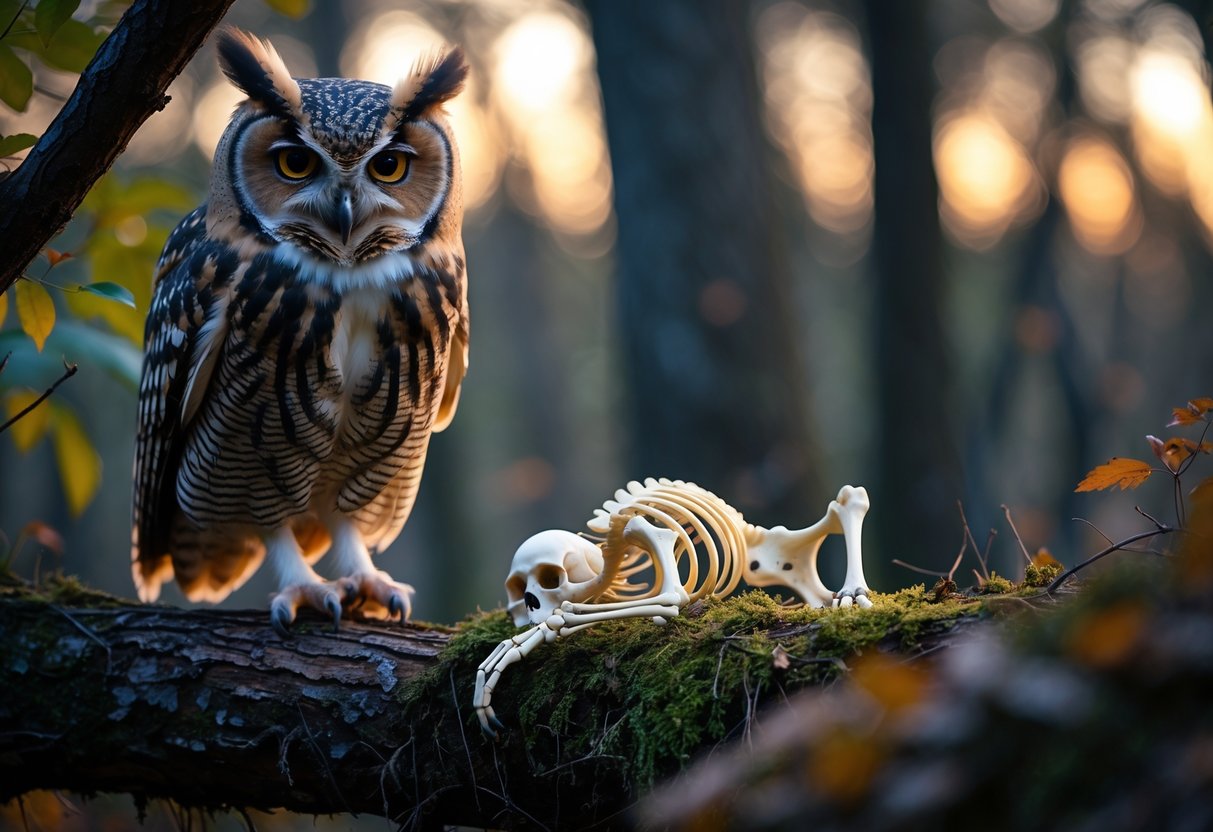
Owls catch their prey and swallow it whole or in big chunks. Their stomachs handle the soft stuff but leave the tough bits, like bones and fur, behind.
Later, the owl spits this stuff out as a neat little pellet. That’s why, if you poke around under an owl’s roost, you might find these pellets packed with tiny skeletons instead of finding them in the poop.
If you think that’s weirdly fascinating, you’re not alone. Digging into owl pellets can actually teach you a lot about what owls eat and how they live.
It’s a pretty cool glimpse into their world. If you’re curious for more, check out owl pellets facts.
Do Owls Poop Skeletons or Regurgitate Pellets?

Owls don’t poop out skeletons. They get rid of the hard bits in a totally different way.
The tough stuff—bones, fur, feathers—just doesn’t break down in their stomachs.
How Owl Digestion Works
Owls gulp down prey whole or in big pieces. The food lands in the gizzard, which is a tough part of their stomach.
The gizzard crushes the soft parts, but bones, fur, and teeth stay behind. Those undigested bits pile up in the owl’s digestive system.
Later, the owl coughs them up as a pellet. That’s why you’ll never find skeletons in owl poop.
What Is an Owl Pellet?
An owl pellet is just a small, round bundle of leftovers that the owl spits out. You’ll usually find bones, fur, teeth, and feathers all pressed together.
Pellets don’t smell and are safe to touch. They aren’t poop, just undigested food.
You can spot owl pellets on the ground under nests or roosts. If you open one, you might find tiny skulls or jawbones from mice and other little critters.
It’s honestly a fun way to figure out what wild owls have been eating.
Differences Between Owl Poop and Pellets
Owl poop and pellets are nothing alike. Poop comes out wet and stinky.
Pellets are dry, packed with bones and fur, and don’t smell at all. They’re just food leftovers, not waste.
Don’t mix up pellets and poop. Owls spit pellets up from their throat, while poop exits out the back end.
Pellets give you a peek at what the owl ate, without being broken down by digestion.
If you want to know more, here’s a Barn Owl pellet facts page.
The Science Behind Owl Pellets

Owl pellets are like little time capsules that show what owls eat and how their bodies work. Inside, you’ll find bones and fur that just couldn’t be digested.
If you look closely, you can figure out the owl’s diet and maybe even guess what animals it caught.
What Skeletons and Remains Are Found in Owl Pellets
Owls swallow prey whole or in pieces. Their stomach acids break down the soft stuff, but bones, teeth, and fur hang around.
These leftovers get packed into a pellet and spat out.
In a pellet, you might spot:
- Small mammal bones like skulls and jaws
- Fur and feathers
- Teeth or claws
Sometimes you’ll even find weird things like frogs or bird rings.
By checking out the bones—especially the skulls and jaws—you can tell what the owl ate. Pellets don’t have poop in them, so they don’t stink.
Fresh pellets look dark, usually black or grey.
You can count the bones to see how many animals an owl ate. Some pellets have leftovers from six small mammals or more.
If you want to dive deeper, check out Barn Owl pellet facts.
Educational Value of Owl Pellet Dissections
Dissecting owl pellets gives you a hands-on way to dive into science. When you break apart a pellet, you sort of become a researcher, piecing together clues about what owls eat and how ecosystems work.
This activity lets you:
- Spot animals just by looking at their bones
- See how food chains and predator-prey relationships play out
- Practice careful observation and jot down your findings
You might want to sketch the bones you discover. Or maybe you’ll measure jaws with a ruler and compare them to animal guides.
Teachers love using owl pellet dissection in class because it’s safe, and honestly, it’s pretty fascinating. It gets students asking questions and making new discoveries about the natural world.
If you’re curious, you can grab free worksheets and guides to kick things off—like the ones from the Barn Owl Trust.
Owl pellets really do make biology more fun and interactive. If you want to dig deeper, check out resources for dissection and analysis at places like the Barn Owl Trust.


