
Ever wonder if it’s normal to spot an owl in broad daylight? Most people think of owls as nighttime hunters, but here’s the thing—some owls absolutely do their thing during the day, depending on their species and what they need. While plenty of owls hunt after dark, certain types will go after prey in the daylight, especially if food gets tough to find.
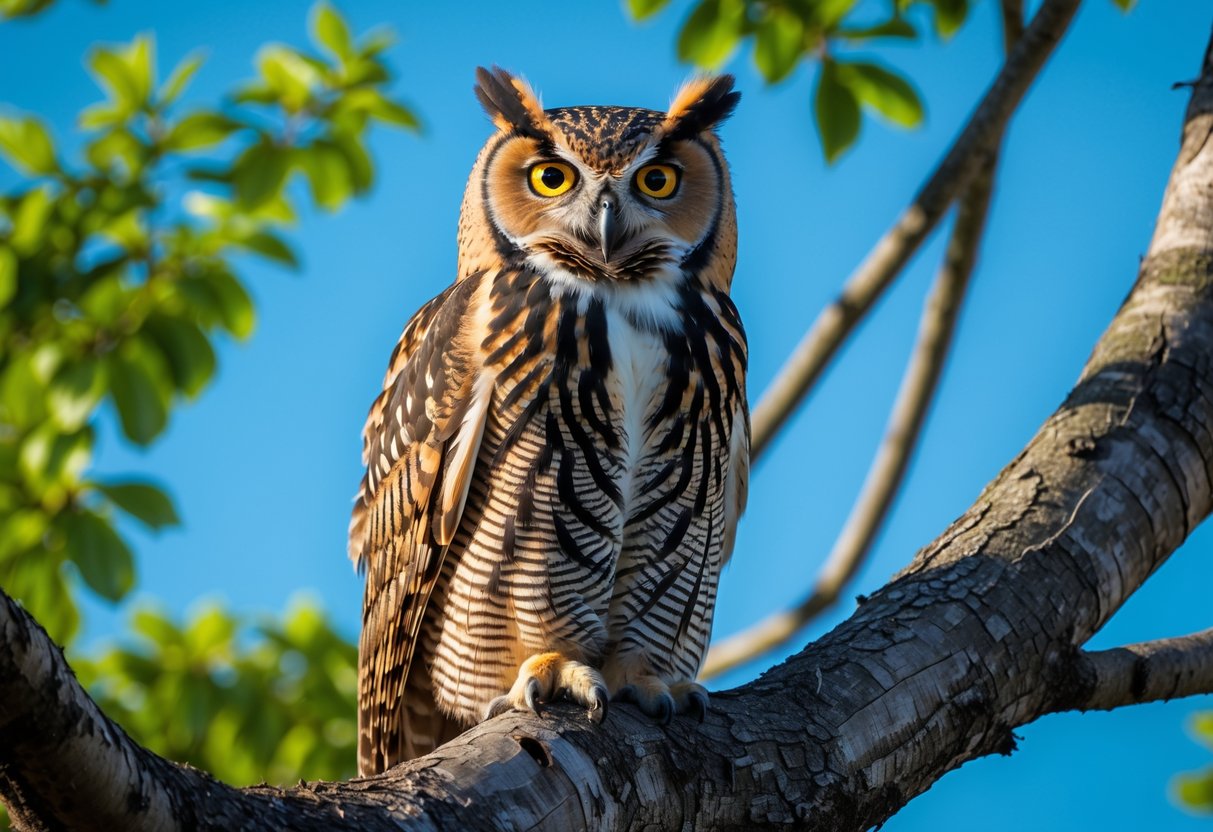
Owls don’t all stick to the same schedule. The northern hawk-owl and northern pygmy-owl, for example, hunt mostly during the day.
Snowy owls mix things up too—they’ll hunt whenever the light and prey allow, day or night. Even the usual night-hunting owls can pop out during the day if they need to.
If you know why an owl might be out in the sun, you’ll probably appreciate their behavior a bit more. It’s not a sign anything’s wrong—it’s just how they adapt.
Spotting an owl in daylight? That’s a treat. You’re catching a glimpse of something special. For more info, you can check out this guide on owls’ daytime activity.
Why Are Owls Sometimes Seen During The Day?

People usually know owls as night hunters, but you might catch a few out and about in the day. Why? It depends—sometimes it’s the species, sometimes it’s their environment, or maybe they’re just trying to avoid other animals.
Nocturnal and Diurnal Owl Species
Most owls, like the Great Horned Owl and Barred Owl, stick to nighttime hunting and rest during the day.
But not every owl does this. Some, like the Snowy Owl, are diurnal and actually stay active in daylight, then rest at night.
You might even see a typically nocturnal owl out in the day if it’s got chicks to feed. More daylight hours mean more chances to find food for the little ones.
So, seeing an owl in the daytime doesn’t automatically mean something’s off.
Environmental Stressors and Food Scarcity
Sometimes owls come out during the day because their environment changes. If food gets scarce at night—like in winter or in crowded spots—they’ll hunt whenever they can.
Barred Owls, for example, sometimes hunt in daylight during colder months when prey is tricky to find.
Storms or human activity can spook owls or force them to move. That might make them hunt or rest during the day.
If prey like mice or rabbits are running low, an owl may need to expand its hunting hours just to survive.
Avoiding Predators and Competition
Owls might be top hunters, but bigger animals can still threaten them. Sometimes they use daytime hours to dodge competition from other nighttime predators.
Some owls take advantage of daylight to avoid those rivals. They can also perch quietly and watch for danger, blending in with their surroundings.
Great Horned Owls seem especially bold—you might spot them in the day since they don’t have many natural enemies. The local balance of wildlife plays a big part in when and why owls show up in daylight.
Want to dig deeper? Here’s a good explanation on Hitchcock Center.
The Impact Of Daytime Sightings On Owls And Birding
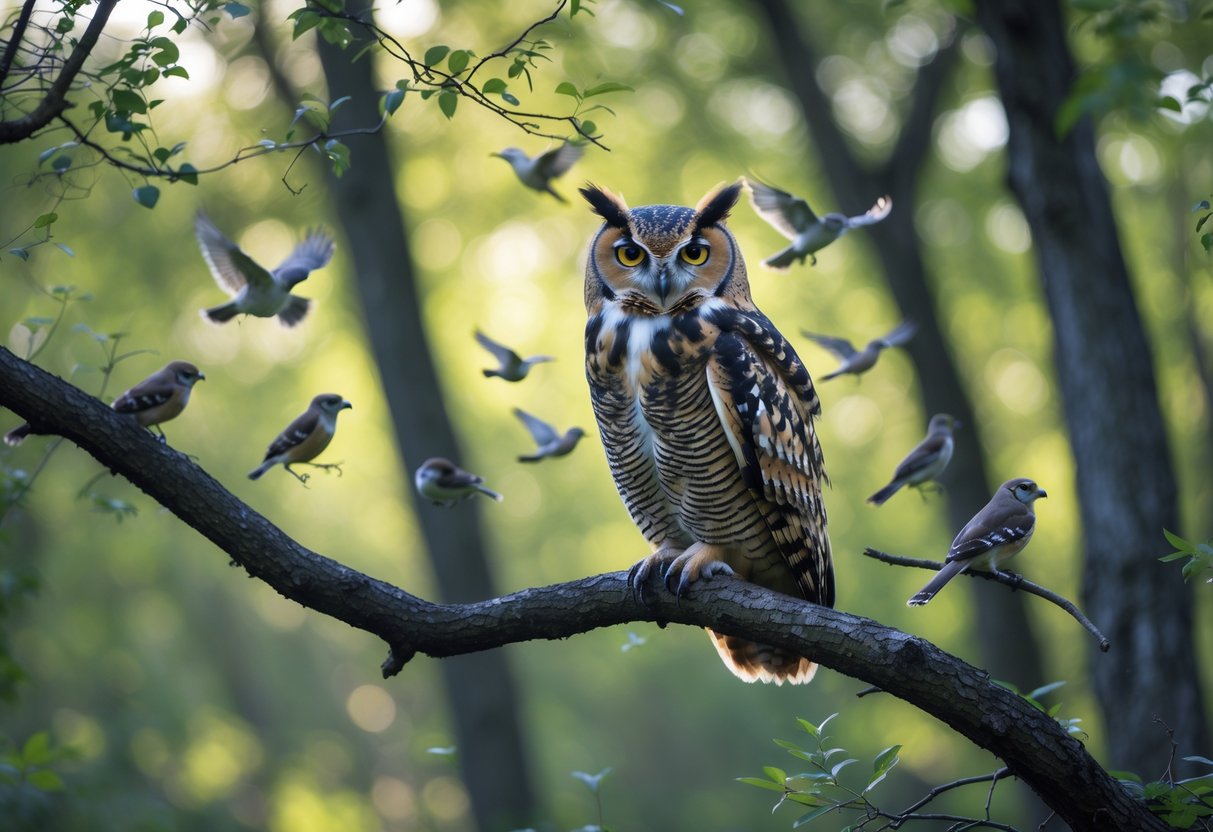
Spotting an owl during the day can totally change your birding experience. It’s a rare chance to watch these birds up close, but it also means you need to be careful not to bother them.
Owl Behavior And Wellbeing
When you see an owl out in the sun, it might be searching for food, caring for chicks, or maybe recovering from something.
Snowy Owls, for instance, naturally do their thing in daylight. But nocturnal owls that rest during the day really depend on quiet, safe spots to avoid stress.
If humans or habitat loss force owls to be active by day, they can lose out on rest. That drains their energy for hunting at night and can mess with their health.
If you spot an owl during daylight, try to keep your distance and avoid loud noises. It’s better for their peace of mind.
Ethical Birding And Owl Sightings
If you love birding, respecting owls during daytime sightings really matters. Binoculars or a good zoom lens work best—no need to get too close.
Skip the flash photography; their eyes are sensitive. Always follow local wildlife guidelines.
See an owl near people? Don’t feed or touch it. That can actually harm them in the long run.
When you share your owl sightings, think twice before posting exact locations. Too many visitors can disturb their habitat.
Popular Daytime Owl Species
Not all owls hide away when the sun’s up. Some species actually seem to enjoy the daylight, and birders love catching a glimpse of them.
- Snowy Owl: You’ll often spot this owl out and about during the day, especially in winter. It usually hangs around open fields up north.
- Burrowing Owl: This one likes grasslands and prairies. It might stand on dirt mounds or even scurry along the ground.
- Northern Pygmy-Owl: It hunts small birds, mostly in the daytime, deep in the forest.
- Barred Owl: Sometimes you’ll catch it resting or hunting during daylight hours, especially in wooded spots.
If you know which owls venture out in the day, you’ll have a better shot at seeing them—and you can do it without disturbing them. Want to dig deeper into owl habits and daytime sightings? Check out this in-depth overview on what owls do during the day.


