
Ever wondered what to call a bunch of owls hanging out together? You’re not the only one. Most people call a group of owls a parliament. It’s a quirky term, honestly, but there’s some cool history and meaning packed into it.
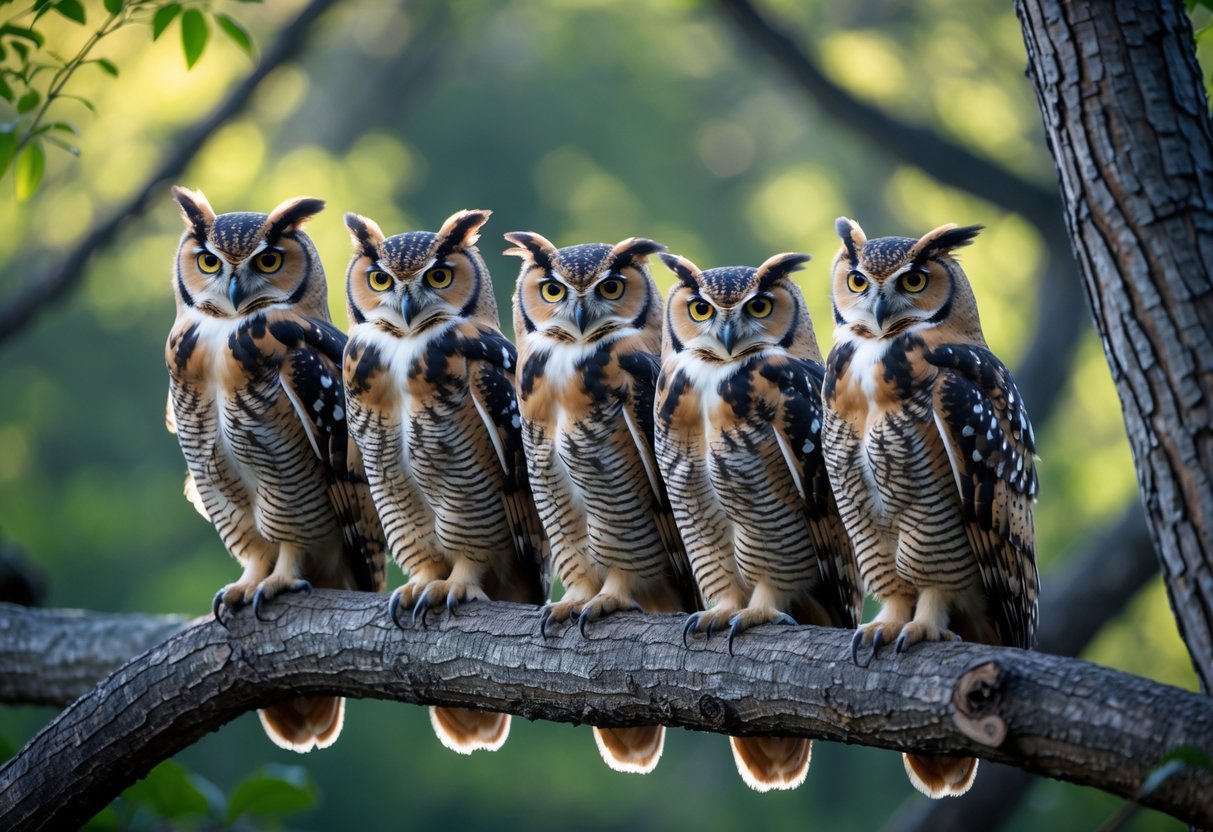
Usually, you’ll spot owls alone. So, seeing them together feels sort of rare and magical.
Sometimes, folks use other names—like a wisdom, a congress, or even a hooting of owls. If they’re flying as a group, people call it a silence because their wings barely make a sound.
These names really add a bit of wonder to these mysterious birds.
Owls always seem tied to wisdom and a bit of mystery, don’t they? That’s probably why their group names feel so poetic.
Let’s dig into how these names started and what’s so fascinating about a bunch of owls hanging out.
What Is a Group of Owls Called?

When you think about owls in a group, “parliament” is probably the word that pops up first. It’s got a certain ring to it, but there are actually a few other names floating around out there.
Learning these names gives you a little insight into how people see owls and how language tries to capture that vibe.
The Meaning of Parliament of Owls
People most often call a group of owls a parliament. The idea came from seeing owls as wise—kind of like a bunch of smart folks debating in a meeting.
Stories and culture have always linked owls to wisdom, so the name just fits.
You’ll spot “parliament of owls” in books or hear it in nature documentaries. But honestly, owls don’t gather in big groups very often.
Most of the time, they stick to themselves or pair up. Still, if you ever see a few together, calling them a parliament just feels right—it sounds clever, doesn’t it?
Origins and Usage of Collective Nouns
People use collective nouns to describe animal groups in a fun way. The word parliament for owls has been around for ages, but it really took off after C.S. Lewis used it in The Chronicles of Narnia.
Lewis called a group of owls a parliament, and suddenly, everyone started using it.
Writers in old poems and stories often made up these group names based on what the animals were like. Owls are quiet and always seem to be watching, so “parliament” kind of nails it.
Other birds have their own fun names too, like a “mischief of magpies” or a “squabble of seagulls.”
Alternative Group Names for Owls
Besides parliament, a few other names pop up, though they’re less common. You might hear people say wisdom of owls—another nod to their clever reputation.
Some folks call it a stare or a hooting of owls, which just describes how they look or sound together.
If you see owls flying together, you can call it a silence because, honestly, their wings barely make a noise. If it’s just a couple of them or a family, people usually say pair or brood.
Some owl species get their own special names, like a blizzard of snowy owls or a stable of barn owls.
Here’s a quick look at the different names:
| Name | Description |
|---|---|
| Wisdom | Emphasizes owl intelligence |
| Stare | Refers to their gaze |
| Hooting | Linked to the owl’s call |
| Silence | For owls flying together |
| Blizzard | Snowy owls group |
| Stable | Barn owls group |
It’s kind of wild how many ways people have tried to describe a group of owls.
Collective Nouns for Other Birds and Their Stories

Birds in general have some of the most creative group names out there. These names often come from how people see the birds, or from old stories and books.
Some names describe the way birds move together, while others are just based on legends or the bird’s personality.
Famous Bird Group Names in English
You probably already know a few of the classic bird group names. For instance, a murder of crows—that one always sounds a bit spooky, right?
A gaggle of geese is what you call them on land, but when they’re flying, it turns into a skein of geese.
Other fun ones? There’s a bouquet of pheasants and a charm of finches—both paint a pretty vivid picture.
Ducks get a bunch of names too: a raft of ducks if they’re on water, or a paddling of ducks when they’re swimming. Eagles together? That’s a convocation of eagles.
And if you’re lucky enough to see a group of starlings twisting through the sky, that’s a murmuration of starlings.
Medieval and Literary Origins
A lot of these bird group names go way back, especially to a 15th-century book called The Book of Saint Albans.
This book listed all sorts of creative names, like a deceit of lapwings or a pitying of turtledoves. People just mixed what they saw in nature with a bit of imagination.
Many of these names show how people felt about birds back then. For example, “parliament of owls” ties into old stories about owls and wisdom.
Names like a murder of crows or an unkindness of ravens came from superstitions, since people once thought crows brought bad luck. These old names stuck around because, let’s face it, they make birds sound way more interesting.
Why Birds Gather in Groups
Birds usually group up for safety and social reasons. When you spot a host of sparrows or a company of parrots hanging out together, they’re really just looking out for each other.
Groups help birds find food and watch for predators more easily. Some birds gather in ways that are hard to miss.
A wedge of swans flying in a V shape actually saves them energy during migration. When you see a kettle of hawks circling in the sky, they’re riding rising air and keeping an eye out for prey.
Turkeys keep close together in a rafter of turkeys so they can protect one another. If you pay attention to these groups, you’ll notice how birds work as a team in the wild.
Many of these group names hint at how the gatherings look or feel. Curious about more? You can check out examples like the brood of hens, covey of partridges, and the building of rooks.
Each name tells a little story about how those birds live and interact.
Find more about these fascinating bird groups at A-Z Animals on group names.


