
Owls have these mysterious, almost hypnotic eyes, but do they actually see well? Honestly, owls have incredible eyesight, and it’s tuned perfectly for seeing in low light and darkness. Their eyes are way bigger than most birds’ eyes, so they let in a ton of light, making it much easier for owls to spot prey even when it’s pitch black.
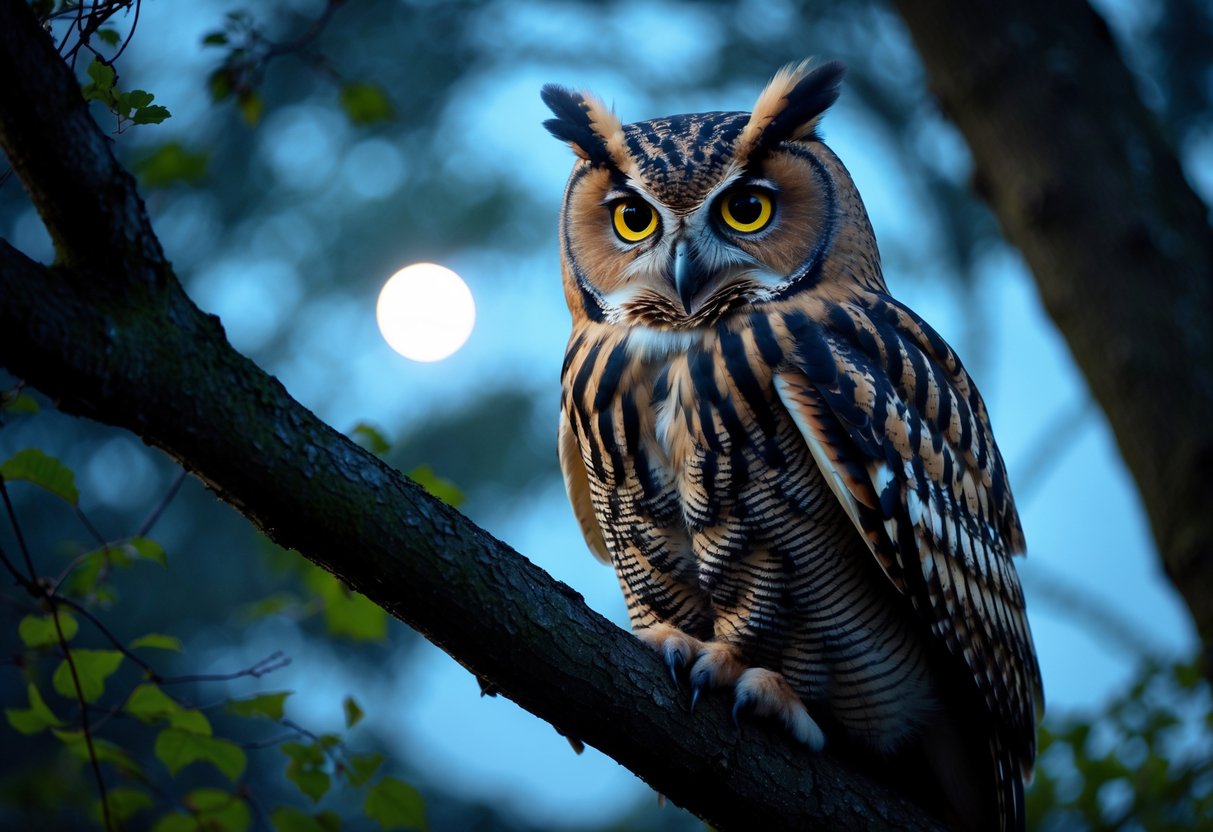
Some folks think owls only see in black and white. That’s not really true, but their color vision isn’t as sharp as ours. Their eyes are loaded with special rod cells, which are perfect for night vision.
Owls also have forward-facing eyes. That setup gives them fantastic depth perception, so they can judge distances really well when they’re hunting.
If you’re curious about how their eyes work alongside other cool traits like silent flight and razor-sharp hearing, keep reading. There’s a lot more to why owls are such skilled hunters in the dark.
You can dive deeper into their night vision secrets at Birdgap.
How Do Owls See So Well?

Owls rely on special eyes and features that let them see clearly, especially at night. Their eyes don’t work like ours; they catch more light and give them solid depth sense.
Their eye shape, the stuff inside their eyes, and even how they see color all work together to make their vision so effective.
Night Vision Adaptations
Owls are just built for darkness. Their eyes are massive for their body size, so they scoop up as much light as possible in dim conditions.
Inside their retinas, they’ve got way more rod cells than we do—about 30 rods for every cone. Rod cells pick up light and movement, which is ideal for night vision.
Behind the retina, there’s a special layer called the tapetum lucidum. This layer bounces light back through the retina, so those rod cells get another shot at catching it.
Their pupils can open really wide to let in even more light. When you see owl eyes glowing at night, that’s the tapetum lucidum reflecting light back.
That reflection helps them spot slow or tiny prey, even in places that seem almost totally dark.
Owl Eye Anatomy Overview
Owl eyes don’t look like ours. Instead of round balls, they’re more like tubes.
That tube shape helps them focus better in the dark. To keep those big eyes steady, owls use sclerotic rings—tiny bones that hold the eyes in place so they don’t move around in the skull.
Since their eyes barely move, owls turn their heads up to 270 degrees to look around. That huge head-turn lets them see more without shifting their whole body.
Their eyes point straight ahead, which is rare for birds. This helps them zero in on their prey.
Owls also have nictitating membranes—clear, protective eyelids that sweep across the eye. These keep their eyes safe from dust and damage, especially when they swoop in on prey.
Depth Perception and Binocular Vision
Both of your eyes see the same thing from slightly different angles. For owls, their forward-facing eyes create binocular vision.
That overlap means they can judge distance really well, which is what we call depth perception.
Owls need to know exactly how far away their prey is before they strike. Their forward-facing eyes let them catch small animals with impressive accuracy.
Prey animals usually have eyes on the sides of their heads to watch for danger, but owls focus on tracking and hunting.
Your depth perception helps you catch a ball. For owls, it helps them time their attacks just right.
Color Vision Differences
Owls don’t see colors like we do. Their eyes have a lot more rods than cones, and cones are what detect color.
So, owls see less color but are way better at spotting movement and shapes in the dark.
Their vision isn’t made for bright, colorful scenes. Instead, it’s built for picking up changes in light and shadows at night.
They can still see during the day, but their eyes really shine when they’re hunting at night.
This trade-off lets owls focus on what matters: finding motion and shapes instead of colors.
Our eyes use cones for color, but they’re not as good in the dark.
If you want more details about how owls see so well in low light, check out this page on owl eyes and night vision.
Types of Owls and Their Vision Abilities

Owls’ vision skills depend a lot on their species and when they like to hunt. Some see best at night, while others are active during the day or at dawn.
Their face shapes and eye features help them spot prey and avoid danger.
Nocturnal and Diurnal Owls
Most owls people think of, like the Barn Owl, are nocturnal hunters. They come alive at night and have huge eyes to grab as much light as possible.
Their pupils open wide in the dark, helping them see in super low light. Their vision is tuned to spot movement, not color, which makes them great hunters in the dark.
Some owls are diurnal—they’re active during the day, like the Snowy Owl. These owls have eyes that handle bright light better, with pupils that shrink to protect their sensitive retinas.
Eye color often gives away their active time: dark eyes for night hunters, yellow or orange eyes for daytime or dawn/dusk owls.
Unique Species: Barn Owl, Snowy Owl, and Burrowing Owl
The Barn Owl is a classic nocturnal hunter. It has a heart-shaped facial disc that focuses both sound and sight, letting it catch prey even in almost total darkness.
Barn Owls rely on both sharp sight and amazing hearing. That combo makes them deadly in the dark.
The Snowy Owl lives in the Arctic and is usually diurnal. Its bright yellow eyes are made for sharp vision in sunlight.
Unlike most owls, Snowy Owls hunt mostly by sight and can spot prey from pretty far away.
The Burrowing Owl is more active during the day and at twilight. Its vision works well in daylight, which sets it apart from mostly nocturnal owls.
You’ll notice its orange eyes, which are better for seeing in brighter light.
Influence of Facial Discs and Nictitating Membrane
Facial discs are those curved feathers around an owl’s eyes. They help direct sound to the ears and also help the owl focus on what it sees.
For a Barn Owl, this disc is extra large, boosting both hearing and vision.
Owls have a special third eyelid called a nictitating membrane. It’s clear and moves sideways across the eye.
This protects their eyes from dust and injury when they swoop low during silent flight to catch prey. You might catch it blinking sometimes, but it doesn’t block all the light, so their vision stays sharp.
Vision and Hunting Success
Owls team up their eyes and ears when they hunt. Their binocular vision helps them judge distance. This skill lets them swoop in on mice and other small animals with surprising accuracy.
At night, they depend on their huge eyes to grab almost every bit of light. Special feathers make their flight silent, but honestly, vision still guides them to land or grab prey.
Barn Owls, for example, can find prey even in sealed, pitch-dark spaces. That’s a wild example of how vision and hearing work together for a nearly perfect hunt.
You can really see how their strong depth perception and one-of-a-kind eye features help owls survive, whether it’s pitch black or broad daylight.
For more on owl vision and hunting, here’s a detailed source.


