
So, you’ve spotted an owl hanging around your house and you’re probably wondering what’s up with that. Owls usually show up because your yard feels safe to them and offers an easy food source—think mice, voles, or even bugs.
They pick places where they feel protected and where hunting isn’t a hassle. Maybe your yard just checks all the right boxes for them.
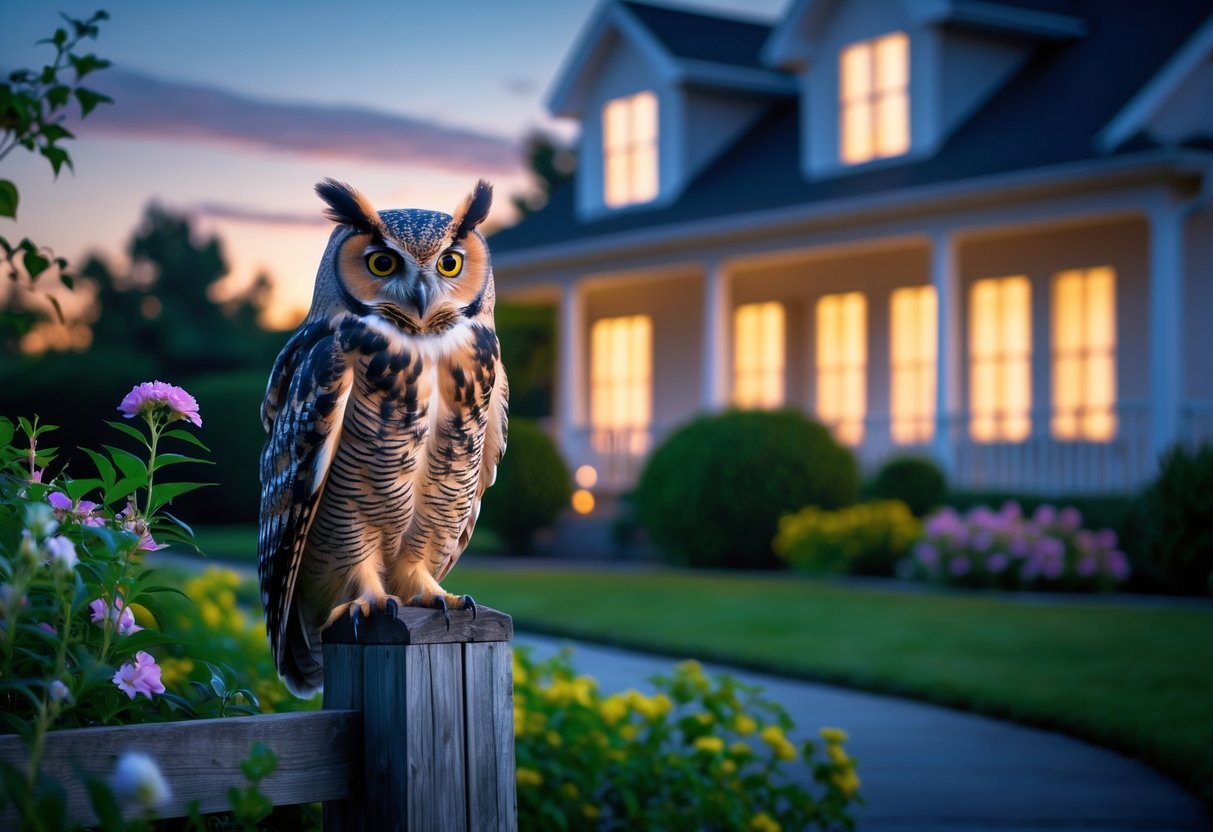
Owls do most of their business at night and like quiet, darker spots. If your property has some trees, open patches, or cozy hideouts, it’s basically an open invitation for them to chill or even nest.
Sometimes, owls just get curious and decide to check things out, especially if something catches their eye or they feel safe.
Seeing an owl can feel pretty special, honestly. Still, it’s useful to know why they’re sticking around and what that means for you or your neighborhood.
You might be surprised by what draws them in.
Why Owls Are Attracted to Your Home
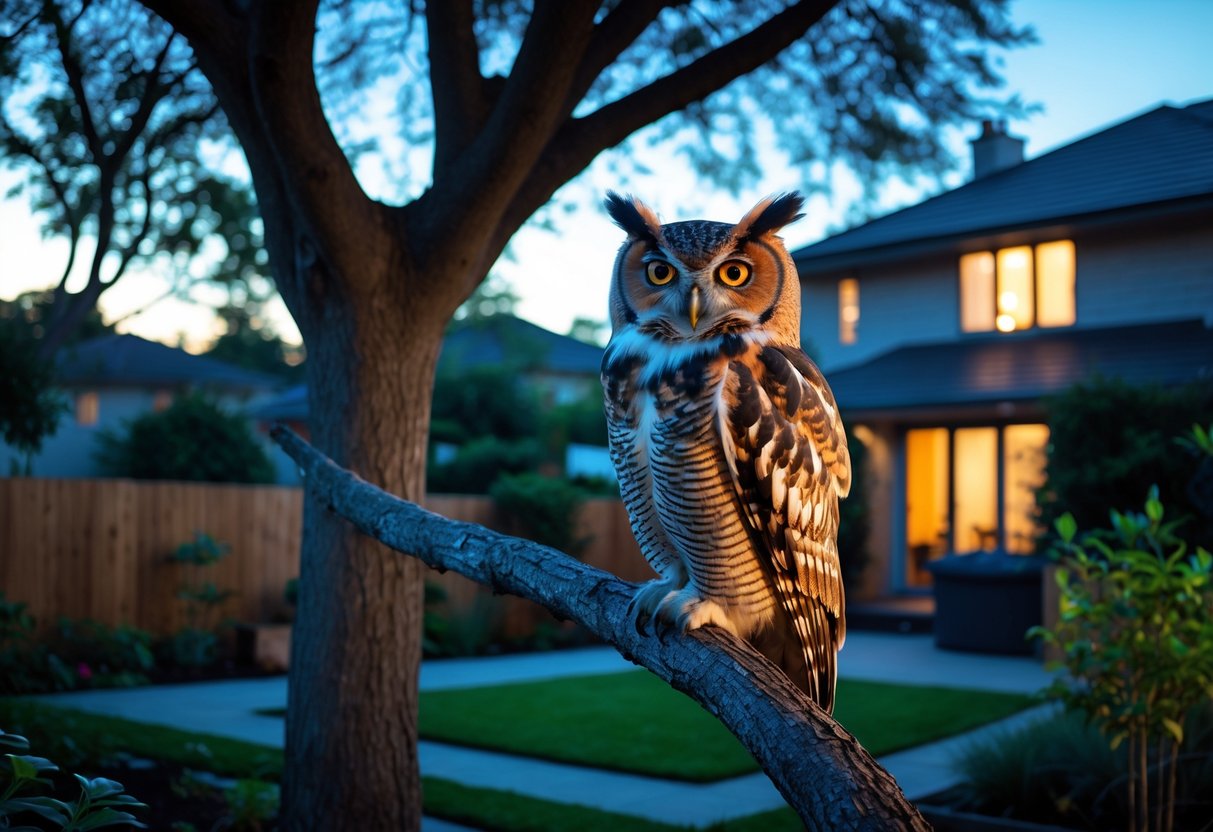
Owls come by your place for a few straightforward reasons. They’re after food, searching for safe nesting spots, and sometimes they just like the vibe your yard gives off.
If you know what’s bringing them in, you’ll get a better idea of their behavior—and what it means for your space.
Common Reasons Owls Linger Nearby
Owls stick around homes mostly because they like the conditions. They look for quiet areas with trees or old snags where they can perch or nest.
If you’ve got old trees, brush piles, or even a dead branch or two, owls might decide it’s a good hangout.
They avoid places with a lot of light or noise. If your yard stays dark and peaceful at night, you’re making it even more attractive to them.
They’ll also steer clear if you use rodenticides or harsh chemicals, since those can harm them indirectly.
If you live in regions like the Pacific Northwest, where forests are everywhere, owls often find natural spots close to people’s homes. It makes hunting and nesting a lot easier for them.
What Owls Are Hunting Around Houses
Most of the time, owls near houses hunt for small mammals—think mice, voles, or gophers. Barn owls especially rely on rodents.
If you see owls hanging around, chances are good your area has plenty of these little critters.
Great horned owls and barred owls sometimes go after birds or insects, but rodents are usually their main meal in neighborhoods.
If you’ve got a brush pile, it can give rodents shelter, which in turn attracts hungry owls looking for dinner.
Owls actually help keep rodent numbers down, so they’re kind of like natural pest control. Still, you probably don’t want to invite too many rodents close to your house.
Types of Owls Often Seen Near Homes
In lots of neighborhoods, you’ll spot barn owls, screech owls, and barred owls. Barn owls like open fields near homes and will even use nest boxes if you put them up.
Screech owls are tiny but tough, and they often pick tree cavities in backyards to nest.
Great horned owls are bigger and pretty adaptable. They sometimes nest on broken treetops by homes, and you can see them hunting at night almost anywhere.
Snowy owls? They’re not as common around houses since they prefer open snowy fields, but sometimes they’ll show up in northern areas.
Knowing which owls live nearby helps you figure out their habits and whether they might visit again. It’s actually kind of fun to learn about your local owls, especially if you’re in places like the Pacific Northwest.
Cultural, Spiritual, and Regional Significance of Owl Visits

Owls mean different things depending on your culture or where you live. Some folks see them as wise, mysterious, or even as a warning.
Their roles in stories and beliefs change a lot from place to place.
Symbolic Meanings of Owl Sightings
When an owl drops by your place, it might symbolize wisdom or a big change coming. Plenty of people see owls as messengers from somewhere beyond the everyday.
Take the barred owl, for example—it’s often linked to intuition and transformation.
In some cultures, spotting a barn owl or snowy owl means you’re about to make a smart decision or face something important. Maybe it’s a sign to trust your gut or get ready for something new.
They can also stand for protection or guidance when life gets tricky.
Owls in Folklore and Mythology
Owls show up in all kinds of old stories, so clearly, people have been fascinated by them for ages.
In Roman mythology, the goddess Minerva had a thing for owls, and the Greeks linked them to Athena and wisdom too.
Native American tales often feature the great horned owl or screech owl. Sometimes they guide people, other times they warn of danger.
In the Pacific Northwest, people see the screech owl as mysterious—maybe even a little spooky. Stories from different regions talk about owls helping out or giving a heads-up about trouble.
Regional Differences in Owl Behavior
Owls behave differently depending on where you live. In the Pacific Northwest, those dense forests attract a bunch of owl species that people tend to notice.
You’ll probably hear the barred owl calling at night—it’s pretty common in that area. If you’re out near open fields or on a farm, you might spot barn owls instead.
Barn owls don’t make much noise, but their white faces really stand out. Folks often say they bring luck, mostly because they keep pests in check.
Up north, snowy owls show up from time to time. They don’t visit often, so when they do, people get pretty excited.
If you pay attention to these regional patterns, you’ll get a better idea of why an owl might show up near your house. Maybe it’s just looking for food, or maybe it’s something else—who really knows?


