
Have you ever seen an owl gliding through the night and wondered why it picks those dark hours to fly around? Owls fly at night because it’s just a better deal for them—more food, less competition, and fewer predators to worry about. The darkness gives their silent flight a real edge, making sneaking up on dinner a whole lot easier.
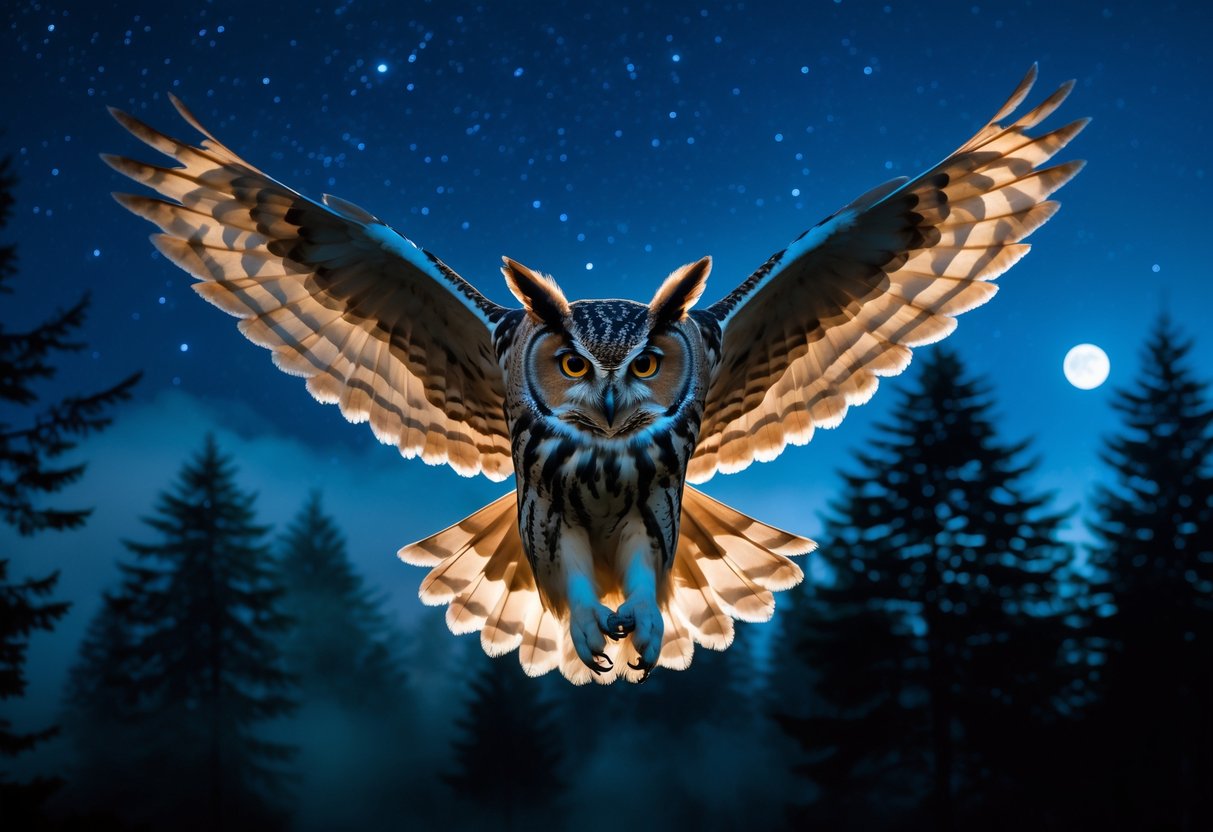
It’s actually pretty wild—owls have these special feathers that let them fly almost without a sound. That’s how they catch little animals like mice without giving themselves away. Their night vision and super hearing? Also top notch, so nighttime is basically their playground.
Owls use the cover of darkness to their advantage. Their quiet flight isn’t just cool—it’s crucial.
Key Reasons Owls Fly Freely at Night

Owls take over the night for a few clear reasons. Their unique traits let them hunt better, move quietly, and sense things that other animals just can’t.
These advantages really come together for owls once the sun goes down.
Nocturnal Hunting Advantages
So, why do owls hunt while most animals sleep? Nighttime means less competition for food. Lots of the small creatures they eat, like mice and voles, are out and about at night, making them easier targets.
There aren’t as many predators around after dark, so owls stay safer. Being active at night helps them avoid bigger threats they’d face during the day.
The night is also way quieter. With most birds and animals asleep, owls can move around without much fuss, which gives them a real advantage.
Adaptations for Silent Flight
Owls have a trick up their sleeve: silent flight. Their wings aren’t shaped like most birds’ wings, so they can fly with barely a whisper.
The feathers come with comb-like edges that break up the air and keep things quiet. The velvety texture soaks up sound, and the fringed wing tips help smooth out the airflow.
Flying quietly means prey won’t hear an owl coming. It also lets owls hear every little rustle their prey makes. So, they get to be both sneaky and super alert at the same time.
Night Vision and Hearing
Owls have eyes and ears made for the dark. Their eyes are packed with rod cells, so they can see even when it’s barely light out.
Big, forward-facing eyes give them great depth perception, which is perfect for swooping down on dinner. Since their eyes don’t move much, they just turn their heads to look around.
Their hearing is next level. With ears at different heights, owls can pinpoint sounds super fast. They can track even the faintest noise, like a mouse scurrying around in the leaves.
For more details on how they pull off silent flight, you can check out the explanation of owl wing features.
Unique Features of Owls Supporting Night Flight

Owls come packed with features that help them move quietly, see clearly, and stay safe in the dark. These abilities make them top-notch nighttime hunters.
Specialized Feathers for Silence
An owl’s feathers are all about quiet. Unlike other birds, owls rely on three main feather features to cut noise.
First, the leading edge of their wings has soft, comb-like bits that break up the air and keep things hush-hush.
Second, their wings sport a velvet-like surface that helps feathers slide past each other without making a racket.
Then there’s the fringed trailing edge—it softens the sound as air passes over.
Thanks to all this, owls can fly as slow as 2 mph and still stay silent. Prey don’t even know what hit them. If you want to dig deeper, check out the National Audubon Society’s take on owl flight.
Binocular Vision and Head Rotation
Owls see well at night because their big eyes face forward. That gives them binocular vision, so both eyes work together to judge distance.
This helps them grab fast-moving prey even when it’s dark.
They can also turn their heads about 270 degrees—way more than most animals. That means an owl can look all around without moving its body, which is handy for staying hidden.
Their eyes don’t really move inside their sockets, so the head-turning skill is a must. With these tricks, owls spot prey and keep tabs on danger, even in pitch black.
Natural Predators and Survival
Owls might be skilled hunters, but honestly, they don’t rule the food chain. Bigger birds, like eagles or hawks, sometimes go after them.
During the day, owls blend right in with their surroundings. Their feathers usually look like tree bark, which gives them some pretty decent camouflage.
If something threatens them, they count on quiet flight and those sharp senses to get away. Their silent wings make it much harder for predators to spot or hear them coming.
So, with camouflage, sneaky moves, and sharp senses, owls manage to survive the night even when things get risky out there. If you’re curious, you can check out more about owl survival and their incredible silent flight at Knowable Magazine.


