
Ever been up at 5am and heard an owl hooting? You might’ve wondered why they pick that hour for their calls. Owls hoot around this time mostly to mark their territory and talk to other owls. It’s part of what they do naturally.
This hooting happens just before sunrise, when everything’s quiet and their voices really carry. There’s not much background noise, so their messages get through loud and clear.

It might surprise you, but owls aren’t only active at night. Some, like barred owls, get pretty vocal around sunrise too. Their calls defend their space and sometimes help them find a mate, especially when it’s breeding season.
So, knowing why owls hoot at 5am actually helps you appreciate those sounds. They aren’t just random noises. They’re real signals, with a purpose.
If you’re curious about what those early hoots mean, stick around. Let’s get into how owls use their voices to connect and protect their patch. For more on this, you can check out this explanation on why owls hoot.
Why Owls Hoot at 5am
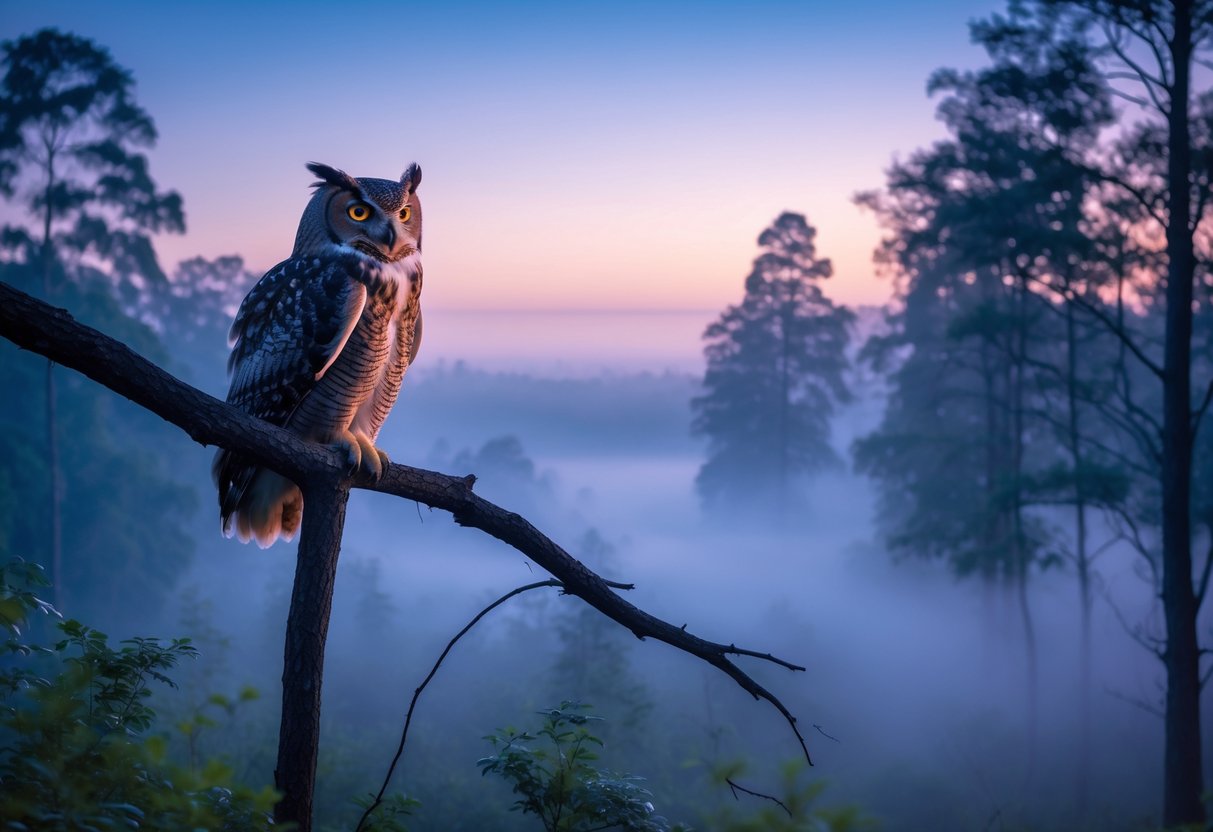
Owls hoot at 5am for a few clear reasons. They’re mostly talking to other owls, warning them off or calling for a mate.
Dawn is a special time—nature’s shifting, and owls follow their own rhythms.
Communication and Territory
When you catch an owl hooting early, it’s usually staking its claim. Great horned owls, for example, hoot to say, “Hey, this is my spot.” That keeps rivals away and cuts down on fights.
Owls guard their hunting grounds and nests pretty fiercely. Sharing isn’t really their thing, so hooting helps set those boundaries.
Early morning quiet stretches their calls farther. Distant owls get the message. It’s a smart way to avoid bumping into trouble.
Breeding and Mating Calls
Around 5am, you’ll sometimes hear males hooting to attract a mate or check in with a partner. That hoot says, “I’m healthy, I’ve got a good spot, and I’m ready.”
Females pick up on this and might answer back. Sometimes you’ll hear pairs hooting in a kind of duet. It’s a bonding thing, especially when breeding season ramps up in fall and winter.
These calls help owls connect and set up a nest for their chicks. Those early hoots play a big part in their family life.
Environmental Triggers
Changes in the environment can nudge owls to hoot at dawn. Cooler air and less wind help sound travel, so their calls work better.
Owls might also react to the first light or the stirrings of other animals. As birds and critters start their day, owls grab the last bit of quiet to send their messages.
Since owls hunt at night, early morning is when they’re wrapping up. Before they settle in, they make sure to check in with mates or warn any rivals.
Nocturnal versus Crepuscular Behavior
You might ask, why hoot at dawn? Aren’t owls supposed to be night owls? Well, a lot are nocturnal, but some are crepuscular—they get active at dawn and dusk.
Take great horned owls. They’re mostly out at night but don’t mind a little dawn activity. That’s why you’ll sometimes hear them as the sun comes up.
Owls mix night and early morning habits, which explains those 5am calls. They use dawn for hunting and talking, balancing sleep with keeping in touch.
Owls and the Dawn Soundscape

You’ll notice owls hooting around 5am, blending right in with the other early sounds. Their calls shape the whole mood of the morning for local wildlife—and even change how predators like cats behave.
Comparisons with Other Early Morning Birds
Owls hoot at dawn much like songbirds sing. But owls’ hoots are deeper and more rhythmic compared to the sharper calls of daytime birds like osprey.
Their voices really stand out in the quiet. You might hear an owl’s hoot just as songbirds start their own tunes.
That mix of sounds signals a new day. If you listen, you’ll start to recognize who’s calling by their unique voices.
Impact on Local Wildlife Habits
When owls hoot in the early morning, they announce their presence to everyone. Other animals pick up on this and often get quieter or change their routines to stay safe.
Small mammals and birds use those hoots as a warning. They know to keep hidden.
Owls defend their turf and their food by hooting. If you live near them, you’ll see how the local wildlife settles down or hides when the owls start calling at dawn.
Interactions with Cats and Other Predators
Owls and cats have a complicated relationship, especially when the sun’s just coming up.
Owls often hoot to warn off competitors and predators. That includes cats prowling near their territory.
Cats tend to hunt at dawn and dusk, but they usually steer clear of spots where they hear lots of hooting. That sound keeps owls safer from a sneaky cat.
If you let your cats roam outside, just know that owls’ hoots play a role in this natural back-and-forth. The soundscape keeps both cats and owls on their toes.
Want to dig deeper into why owls hoot early? Check out the detailed explanation about their dawn behavior at owl hooting at dawn like a rooster.


