
Ever thought about feeding an owl? You might wonder why people say it’s a bad idea. The main reason: owls need to hunt fresh, whole prey to stay healthy and strong. Human food or store-bought meat just doesn’t cut it for them. Owls live to hunt, and honestly, giving them food can do more harm than good.
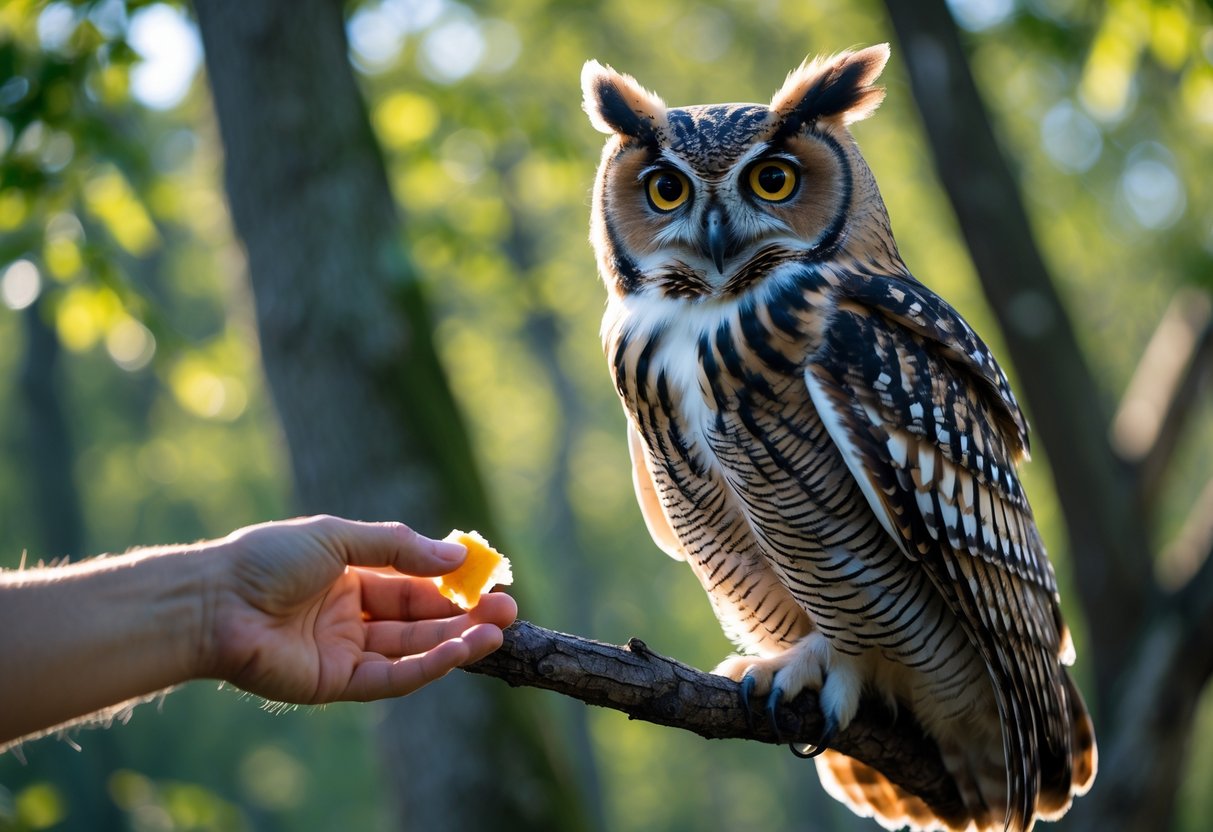
Feeding owls can make them lose their natural fear of people. That might sound friendly, but it ends up putting the birds at risk.
Owls who get too comfortable around humans may wander close to roads or people, and that can lead to accidents or other dangers they’d normally avoid.
If you spot an owl that looks hungry or weak, you might want to help. But honestly, the best thing you can do is let wildlife experts step in.
They know how to keep owls safe and healthy, and you won’t risk causing harm by accident.
Why Feeding Owls Is Dangerous
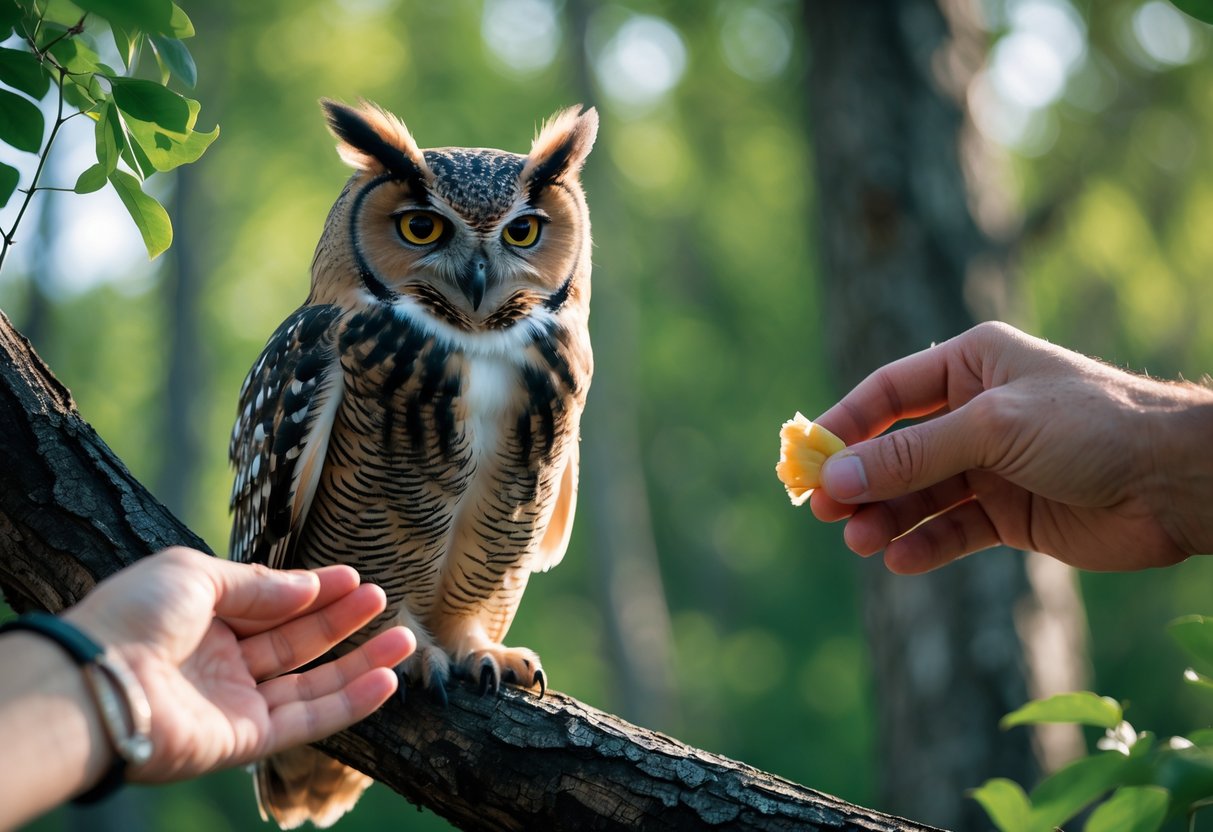
Feeding owls can hurt both the birds and the environment. It leads to health problems, changes their behavior, and sometimes even breaks the law.
Understanding these risks really helps explain why it’s best to let owls hunt for themselves.
Risks to Owls from Human Food
Owls need a balanced diet of whole animals like mice, rats, and small birds. Human food or butchered meat might seem okay for a moment, but it just doesn’t have what owls need.
Feeding owls the wrong food over time causes malnutrition, and you might not even notice until it’s too late.
Giving an owl food could make it sick. The wrong kind of food can upset their stomachs or expose them to dangerous chemicals or germs.
For example, raw meat from the store could carry diseases that wild owls aren’t used to.
Great horned owls, which are pretty powerful birds, rely on live prey to stay fit. If they eat human food, they lose their edge and their body weakens, making it harder for them to survive.
How Feeding Disrupts Natural Hunting Behaviors
When owls start getting food from people, they stop hunting on their own. That messes with their instincts and can make them dependent and weak.
Young owls especially need to learn hunting from their parents, so feeding them takes away a key lesson.
Owls that get used to humans might lose their fear, which can get dangerous. With big birds like great horned owls, this sometimes leads to aggression or confusion.
Owls hunt at night. If people feed them during the day or near burrows, it can attract predators like rats or crows, which then threaten owl eggs and chicks.
Legal and Ethical Considerations
Feeding wild owls is actually illegal in some places, and it can land you in real trouble. Laws protect wildlife and keep nature in balance, so feeding owls can break those rules by disturbing their habitat or hurting them.
There’s an ethical side, too. It’s important to respect wild animals and their space.
When owls start seeing humans as family—what experts call imprinting—it gets hard for them to survive if they’re released back into the wild.
Wildlife experts always recommend calling professionals if you find an injured or baby owl, instead of trying to feed it yourself.
They have the training to care for owls safely, without causing imprinting or harm. You can read more about this from Pennsylvania wildlife experts warn against feeding owls.
Impacts on Pets, Other Animals, and the Environment
Feeding an owl doesn’t just affect the bird—it can cause problems for your pets, other wildlife, and the environment. It messes with the natural balance and can put animals like cats, dogs, and rabbits at risk.
You also have to think about how poisons or rodent control in the area might affect owls and other animals.
Threats to Cats, Dogs, and Rabbits
Owls are hunters by nature and sometimes see small pets as prey. Cats and rabbits, which are about the same size as an owl’s usual meal, are especially at risk.
Even small dogs could catch the attention of a big owl. If you feed owls near your home, you might accidentally encourage them to hunt nearby pets.
Just a heads up: Owls have sharp talons and strong beaks. If an owl and your pet cross paths, your pet could get seriously hurt, even if the owl didn’t mean it.
Keeping owls away by not feeding them protects your pets—and the owls, too.
Habitat Disturbance and Wildlife Balance
Feeding owls can mess up local habitats. When owls hunt less because humans feed them, rodents or other animals they usually eat can overpopulate.
This throws off the ecosystem’s balance.
If you feed owls near water, even fish and other pets might be affected. Plus, feeding can attract pests like rats or crows, which just creates new problems for local wildlife and plants.
Poison Risks and Rodent Control Issues
Owls get sick when they eat rodents that have been poisoned. If you put out rodent poisons around your home to keep pests away, those chemicals can end up in any owl that hunts the affected rodents.
This problem, called secondary poisoning, can seriously harm or even kill owls. Your pets could also get hurt if they catch a poisoned rodent or mess with toxic bait.
Try not to feed owls, and stick to safer rodent control methods. That way, you’ll help protect your pets, local owls, and honestly, the whole ecosystem. For more on owl care struggles, check out reasons why owls make bad pets.


