
Ever wondered if owls fly at night? Yeah, they do—most owls come alive after dark. They use the nighttime shadows to hunt quietly and efficiently.
Owls can fly almost silently, which lets them sneak up on prey without being heard.
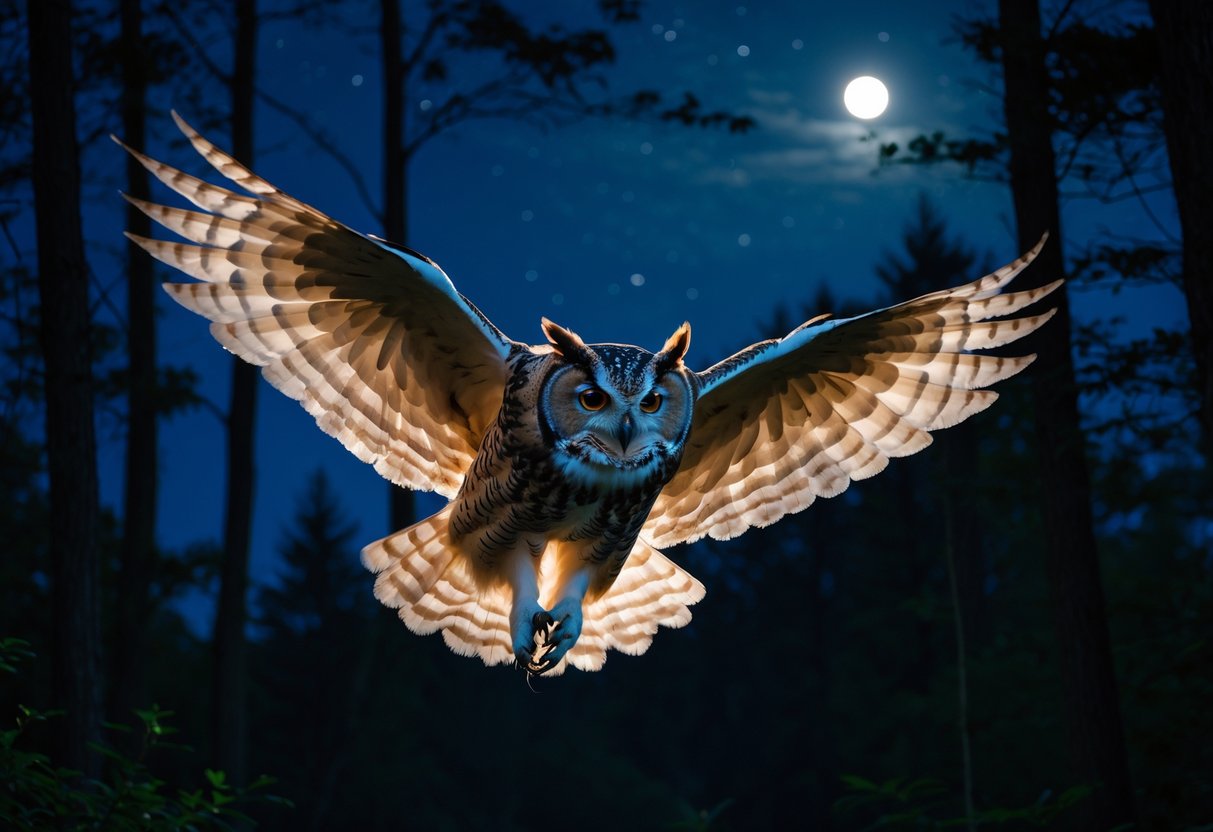
But not every owl sticks to nighttime. Some species are more active during the day, though many depend on their silent flight to move through the darkness.
This quiet flying makes it possible for you to spot or hear them without scaring them off. Owls really stand out as nighttime hunters.
If you know how and why owls fly so quietly, your next run-in with one might feel even more magical. There’s something special about their flight, and honestly, the night just suits them best.
Nocturnal Flight: Do Owls Fly at Night?

People mostly know owls for being active in the dark. Their quiet movement and haunting calls just fit the nighttime world, don’t they?
They have traits that help them hunt and communicate once the sun goes down.
Nighttime Activity and Sleep Patterns
Most owls are nocturnal predators. They usually hunt at night.
You’ll probably hear or see them in the evening or late at night, when small animals are out and about. Their eyes are built for low light, so they can spot prey even in near darkness.
But not every owl sticks to the night shift. Some, like the Burrowing Owl, hunt during the day too.
Many others—think Barn Owl or Great Horned Owl—prefer a strict nighttime schedule.
Owls rest during daylight. That sleep keeps them sharp for nighttime hunting.
Silent Flight Adaptations
It’s wild, but owls can fly almost completely silently. Their wings are made for quiet movement, so you might not even notice one gliding by.
This stealthy flying is what lets them catch prey off guard.
Their wings have comb-like serrations on the leading edges, a velvety feather texture, and a soft fringe on the trailing edges. These features break up air turbulence and reduce noise.
Owls have pretty large wings for their body size. This helps them fly slowly and glide more, so you barely hear any flapping as they move through woods or fields.
Owl Calls and Communication After Dark
Even though their flight is nearly silent, you can usually hear their calls at night. They use hoots, screeches, and other sounds to talk to mates or mark their territory.
Their voices carry well in the quiet night air, making it easier for them to find each other.
Owl sounds can matter for hunting too. Sometimes, by calling, they warn others away or even lure prey closer.
Different species make different sounds, each adapted to what works best in the dark.
If you’re outside at night, those owl calls add a mysterious soundtrack to the scene. Their wings are almost never heard, but their voices sure are.
For more about how owls manage this silent flight, check out their silent flight adaptations.
Owl Species and Their Nighttime Behaviors

Owls show all kinds of habits when it comes to flying and hunting at night. Some stick to the darkest hours, while others might get started at dusk or hunt in twilight.
Their routines change based on what they need to catch and where they live.
Barred Owl Night Habits
The barred owl is mostly a night owl, but you might spot one at dusk or dawn. You’ll find them in wooded swamps and thick forests.
They hunt small mammals like mice and rabbits, using sharp hearing to find prey in the dark.
Barred owls don’t rely on speed. They prefer gliding quietly between trees.
Their calls at night are loud and pretty unforgettable, helping them talk to each other or claim territory.
They usually don’t migrate much and tend to stay near their nests during breeding season.
Barn Owl Hunting Patterns
Barn owls have a reputation for silent flight at night. You might catch a glimpse of one hunting over fields or farms in the darkness or twilight.
They go after rodents, which are most active after dark.
You can hear their sharp, low screeches if you listen closely. Their unique feathers help them fly quietly, making them excellent hunters.
Barn owls use their great eyesight and hearing to find prey, even when it’s pitch black.
Great Horned Owl After Dark
Great horned owls are powerful nighttime hunters. Their deep hoots echo through forests at night.
They hunt all sorts of prey, from small mammals to bigger birds.
These owls can adapt to lots of habitats—swamps, mountains, deserts, you name it.
They use their strength and silent flying skills to catch prey by surprise.
Great horned owls usually hunt right after sunset or just before sunrise, taking advantage of those low-light hours.
Other Notable Night-Flying Owls
A few other owl species spend their nights flying and hunting in their own distinct ways. The northern saw-whet owl and the long-eared owl, for instance, mostly go after small rodents and insects.
You’ll usually spot long-eared owls tucked away in dense forests. Saw-whet owls, on the other hand, seem to prefer mixed woodlands.
Screech owls are smaller and tend to hunt along city edges or at the borders of woodlands once it gets dark. Snowy owls and short-eared owls sometimes take to the skies during the day, but they mostly hunt at night in open places—think tundra or wide grasslands.
Great gray owls stick to dense forests and do most of their hunting at night. They use their sharp hearing to track down prey hidden under the snow.
Every species has its own tricks for flying and hunting after dark, shaped by where they live. You might notice these owls by their haunting calls or the way their wings slice silently through the night air.
If you want to dig deeper into how owls behave or hunt, check out Understanding Owls.


