
Ever walked outside on a quiet evening in the UK and heard mysterious sounds drifting from the trees? Owls have a reputation for their calls, but honestly, not every owl sounds the same. That classic “hoot” is just one of the many noises these night birds can make.
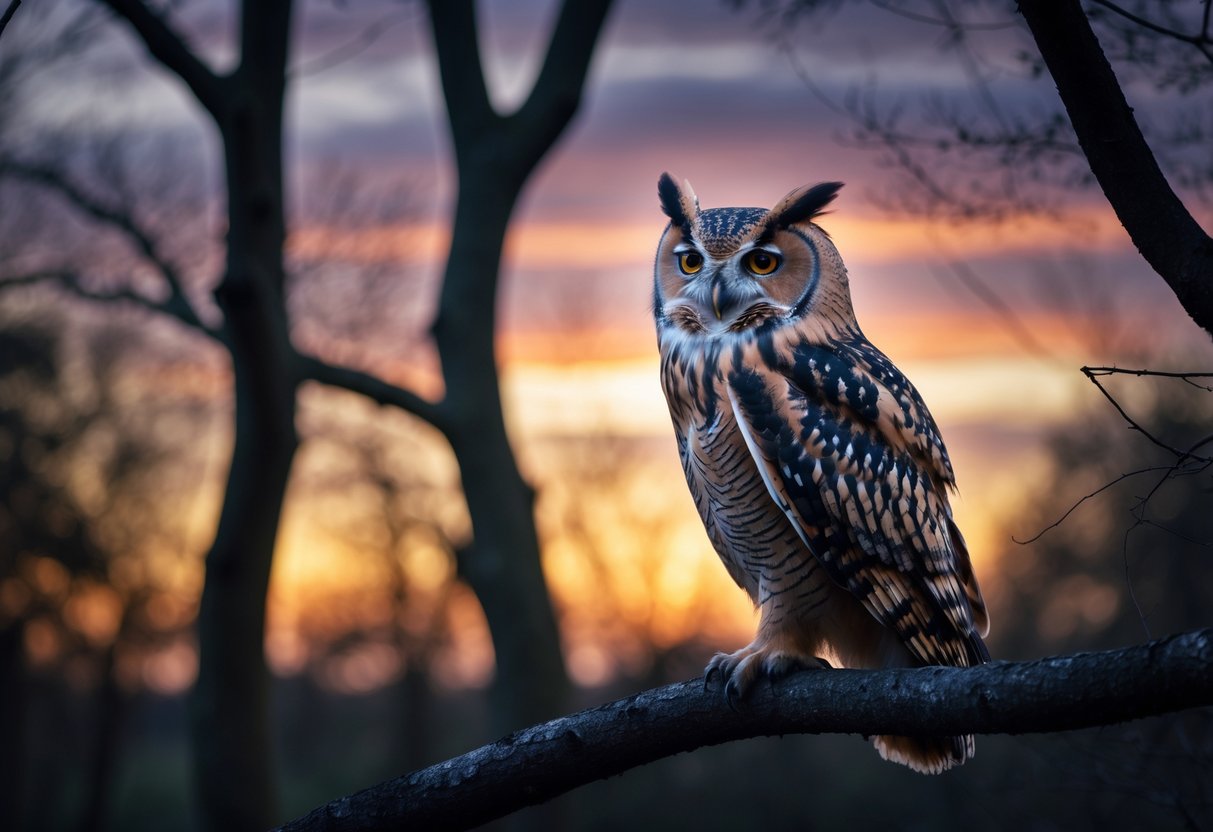
In the UK, you’ll probably hear tawny owls making the “twit-twoo” call, which is actually a duet between a male and female. Barn owls don’t really hoot—they let out a sharp shriek instead.
Other owls, like the little owl and long-eared owl, have their own distinct hoots, screeches, or soft calls. These sounds can help you figure out which owl you’re hearing.
Knowing these calls can turn an ordinary evening walk into something way more interesting. Next time you’re out, listen carefully and see if you can spot which owls live nearby.
Learning the different owl noises will give you a deeper appreciation for these secretive birds. Whether you’re in the woods, out on farmland, or just strolling through a park, you can listen for those eerie calls and maybe even put a name to them.
Curious what each owl sounds like and when you might hear them? Let’s get into it.
Typical Owl Sounds and Their Meanings

If you listen closely to owls in the UK, you’ll notice each species makes its own set of sounds. These noises help owls talk to each other through the night.
Common Calls of UK Owl Species
UK owls have pretty distinct calls you can pick out if you know what to listen for. The Tawny Owl, which you’ll find all over the place, makes the famous “twit twoo” sound.
The female calls out with a sharp “kewick,” and the male answers with a deep “hoohoo.” It’s kind of like their version of a conversation.
The Barn Owl doesn’t really hoot at all. Instead, it lets out sharp, high-pitched screeches, hisses, or even snoring noises. Some people find these sounds a bit eerie, but for barn owls, it’s just how they communicate.
The Little Owl has a gentle, repetitive “kiew kiew” call. The Long-eared Owl tends to use low “hoo” sounds, especially during breeding season.
If you’re lucky, you might catch the Short-eared Owl making a quiet “boo-boo” song.
Differences Between Tawny Owl and Barn Owl Calls
Tawny owls and barn owls sound nothing alike. Tawny owls have deep, musical hoots that carry through woods and even city parks.
The female’s “kewick” keeps her in touch with the male. It’s a bit like texting, but for owls.
Barn owls, which prefer farmland, don’t hoot at all. Instead, they scream or hiss—these sharp sounds warn off threats and signal hunting.
You’ll probably spot a barn owl before you hear one, since they tend to be quieter overall.
Barn owls hunt silently, especially around bats, so their calls are less obvious. That keeps the night a bit quieter for everyone.
Purposes of Owl Vocalisations at Night
Owls mostly use their calls to communicate. Hoots and screeches mark out territory and warn other owls to stay away.
They also call to mates during the breeding season. Sometimes, parents call to their owlets to keep the family together in the dark.
At night, owls have to balance making noise with not drawing attention from predators. That’s why some calls are loud and clear, while others—like barn owl screams—are sudden and sharp.
If you listen closely, you can figure out which owl is nearby, what it’s doing, or even what time of year it is. Want to get better at this? Try learning how to identify owls by their calls.
Noises of Tawny Owls and Barn Owls in Detail

If you’re out at night in the UK and really listen, you’ll pick up on different owl sounds. Each one has a job—marking territory, talking to mates, or warning off intruders.
Every species has its own style of calling, which makes it easier to identify them and understand what they’re up to.
Tawny Owl Calls: Territorial and Contact Sounds
Tawny owls (Strix aluco) are famous for the “twit-twoo” call. Usually, the female gives a sharp “kewick,” and the male answers with a deep “hoohoo.”
This back-and-forth helps them keep track of each other, especially when they’re breeding.
You might also hear a trembling “hoo, hu-hooo” call. That’s a signal to other owls, marking out territory and keeping rivals away.
Tawny owls mostly call at night, but sometimes you’ll catch them at dusk or dawn. Their calls echo through mature trees, which is usually where they hang out.
If you hear these sounds, you can bet tawny owls are nearby.
Barn Owl Screeches and Hissing
Barn owls sound completely different. They don’t hoot—they screech, and it’s a sharp, high-pitched sound that can be a bit haunting.
They usually screech if they’re upset or while flying. Barn owls also hiss, snore, or even clack their beaks if you get too close to their nest or young.
These noises are their way of saying “back off” to intruders, especially around their favorite hunting spots.
You might see a barn owl sitting quietly in a field, but at night, their shriek can really carry. Their calls aren’t exactly musical, but they get the point across.
How These Calls Affect Other Wildlife
The calls of tawny and barn owls can shake up the local wildlife. When owls hoot or screech, small mammals like mice and voles pick up on the danger.
These sounds can make prey freeze or hide, which sometimes helps the owl catch dinner.
Bats also pay attention to owl sounds, since owls sometimes hunt them at dusk or night. The calls help owls keep control over their hunting grounds.
If you put up a nest box for barn owls or tawny owls, their calls might attract owl pairs or let other animals know there’s an owl around.
Interaction with Prey and Nesting Sites
You’re way more likely to hear owl calls if you’re near farmland, orchards, or woodlands—places where voles and mice scurry around. Tawny owls really seem to like woodland habitats, but barn owls are usually out hunting over open fields and grasslands.
Nesting sites matter a lot, honestly. Barn owls often pick nest boxes or old buildings, and if they feel threatened, they’ll respond with some pretty loud calls.
Tawny owls, on the other hand, usually go for tree cavities. They tend to call quietly near their young, probably trying not to attract too much attention.
If you catch the sound of an owl calling near a nest, it’s likely defending its territory or talking to its mate or chicks. That’s just part of how they keep their young safe and hold on to their hunting grounds.


