
Attracting an owl to your yard isn’t as hard as you might think, but you do need a bit of planning. If you want an owl to visit, you’ll need to create a safe spot with food, shelter, and as little light as possible. Owls always look for places where they can nest, hunt, and feel safe.
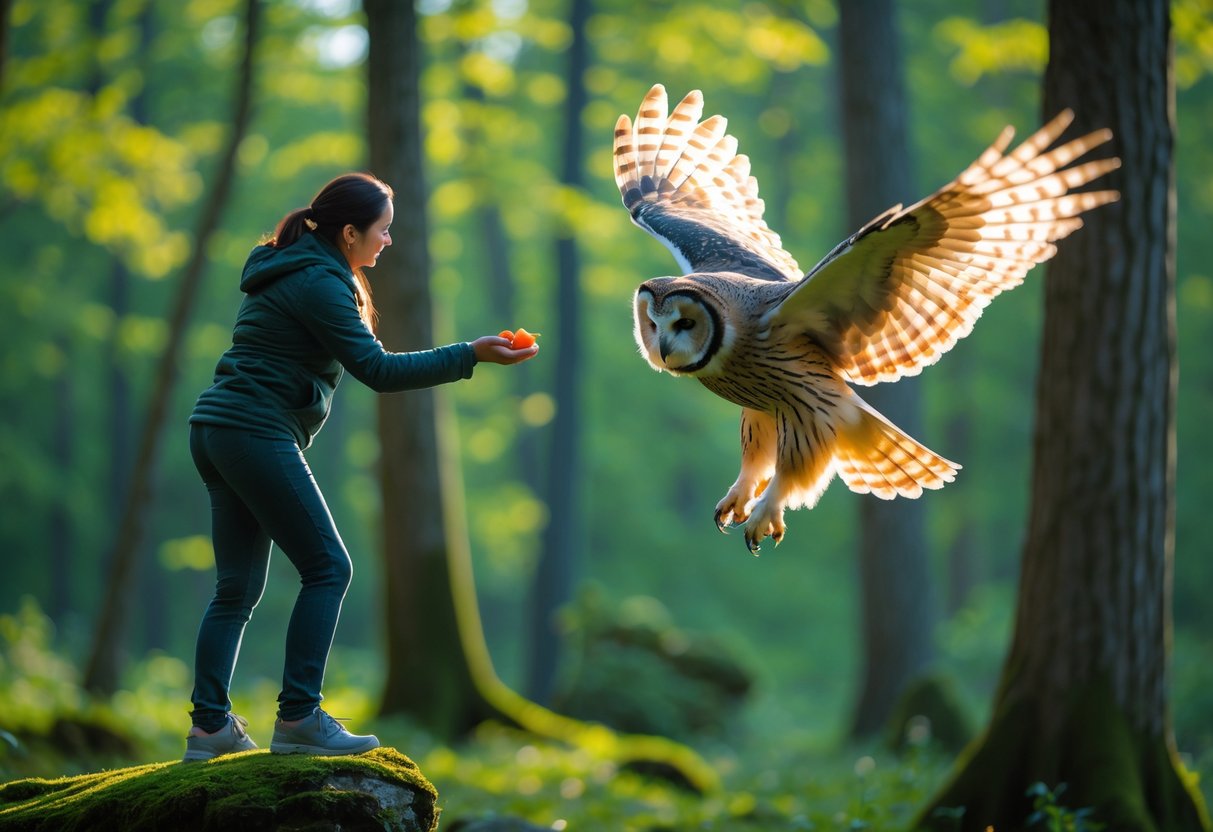
Start by putting up a nest box that matches the owl species in your area. It helps to let mice or other little rodents stick around, since most owls eat them.
If you turn off your outdoor lights at night, you’ll make it easier for owls to hunt. Bright lights tend to scare them off.
Think about what owls need if you want them to visit. If you keep your yard natural and safe, you might just spot an owl more often.
Best Ways to Attract Owls to Your Area

If you want to see owls like barred owls or great horned owls in your yard, focus on creating the right habitat. Give them safe places to live, spots to perch, food, and water.
These small details help owls feel welcome and can even encourage them to raise babies nearby.
Creating the Ideal Owl Habitat
Owls like quiet, shady areas with lots of trees. Try planting native evergreens like pines or spruces for cover.
Leave some brush piles or let parts of your yard grow wild. Small rodents like mice and voles hide there, which brings owls in to hunt.
Keep your outdoor lights off or as low as possible at night. Owls hunt better in darkness, and bright lights mess with their routines.
Using Nesting Boxes Effectively
Put up a sturdy nesting box to invite owls. Hang it at least 10 feet up, somewhere quiet and wooded.
Fill the box halfway with wood shavings, since owls don’t bother building their own nests. Don’t put boxes in wide open spaces.
Some owls, like great horned owls, might share the box with their young. Watch out for starlings, though—they love to take over nesting spots.
Providing Food Sources and Water
Owls mostly eat rodents—mice, rats, and voles are their go-to meals. If you let these animals stick around, you’ll give owls a reason to visit.
Skip the rat poison and pesticides. Those chemicals can really hurt owls.
Set out a deep birdbath or a little water pool. Owls use these for both drinking and bathing.
Put the water somewhere shaded and quiet so owls feel safe when they stop by.
Encouraging Safe Perching Sites
Owls need high spots to watch for prey. You can help by leaving dead branches, putting up tall posts, or just keeping your fence tops clear.
Make sure these perches are free from netting or other hazards. Owls can get tangled up in netting at night, which is risky for them.
When you give owls safe places to perch, you’ll probably see them visiting more often.
Understanding Owl Behavior and Responsible Observation

Watching owls takes patience, and you’ve got to be careful. If you know how they communicate and respect their space, you can enjoy seeing them without causing harm.
Identifying Owl Calls for Closer Encounters
Owls use calls to mark their territory and attract mates. Barred owls let out a “who cooks for you” hoot, and great horned owls have a deep, booming sound.
If you listen quietly at dawn or dusk, you’ll have a better chance of hearing them. Try not to make loud noises—you might scare them off.
Use a recording app or a guide to help you pick out different owl calls. When you know their voices, you’ll spot them more easily without getting too close.
Respecting Owl Boundaries and Reducing Stress
Owls really notice when people get too close. If you approach, they may fly off or stop hunting, which stresses them out and messes with their routines.
Stay back, especially during nesting season. Great horned owls, for example, can get pretty aggressive if you get near their nest.
If you see an owl on a nest, just watch from a distance—binoculars come in handy for that. Don’t shine bright lights or use flash photography at night.
That kind of thing disrupts their hunting and rest. Respecting their space keeps them healthy and lets you enjoy them longer.
Observing Owls Without Disturbing Them
If you want to watch owls safely, keep quiet and try to stay patient.
Grab a pair of binoculars or a spotting scope so you can check out all those details without getting too close.
Don’t bait or call to the owls. That just messes with their natural habits and might even make them rely on people—never a good thing.
Stick to trails, and don’t touch nests, feathers, or eggs.
It’s not just about being polite—lots of laws protect birds of prey like owls, so messing with their homes could actually get you in trouble.
At night, try turning off outdoor lights near your yard.
That way, owls can hunt without getting confused, and their nighttime world stays calm.


