
Ever wondered if owls see the world in bright colors like we do? Owls have a reputation for their incredible night vision, but when it comes to color, things get a little weird.
Owls are mostly color blind. They see mainly in shades of black, white, and gray, not the full rainbow you might expect.
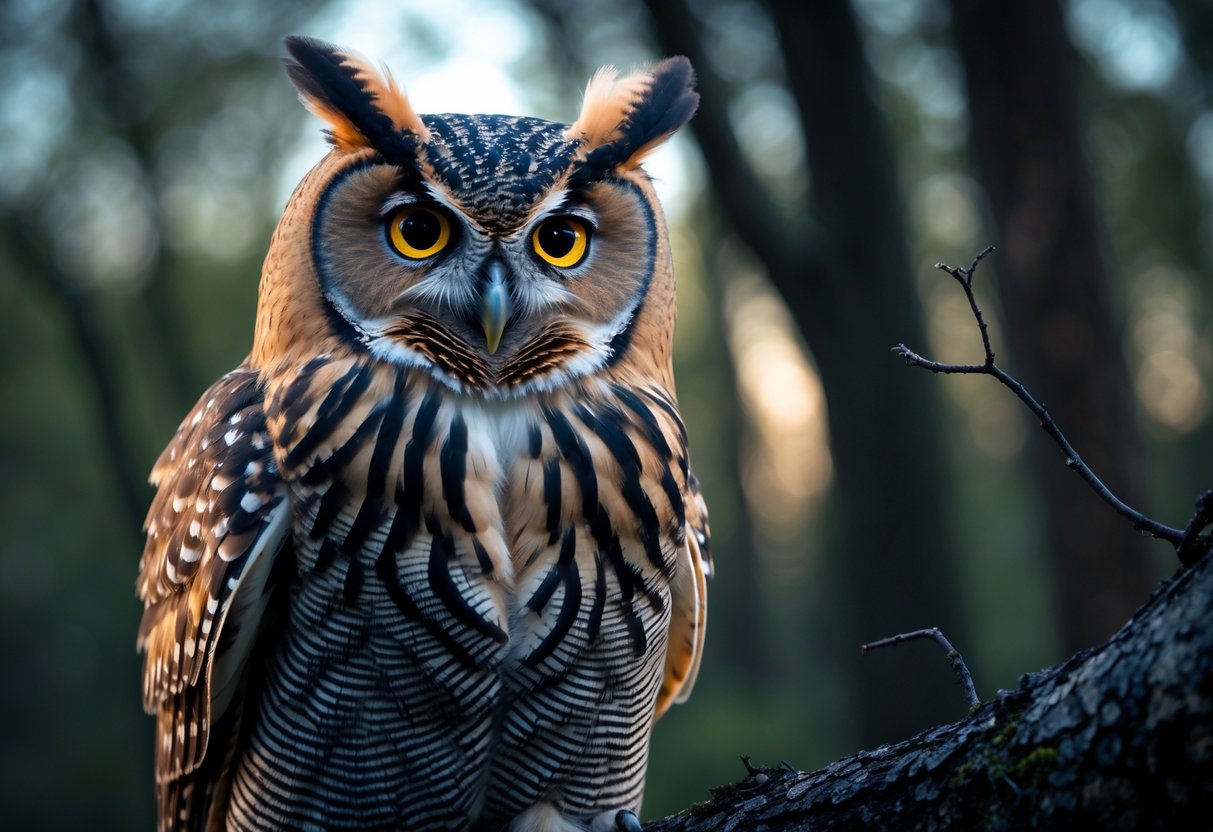
This happens because owls just don’t have many color-detecting cells in their eyes. Their vision focuses way more on picking up shapes and movement in low light than on colors.
Even though they miss out on most colors, their eyes are perfect for hunting in the dark and spotting prey from a distance. That’s kind of amazing, isn’t it?
Learning how owls see might change how you think about these mysterious night hunters. Curious about which colors owls can actually see, or how their vision really works? Keep going—it’s more surprising than you’d think.
Are Owls Color Blind? Key Facts About Owl Vision

Owls have eyes designed for seeing in the dark. But there’s a trade-off.
Their eyes work differently than ours, especially when it comes to color.
Nocturnal Adaptations and Nighttime Hunting
Owls stay active mostly at night, so their eyes need to work well in low light. They have tons of rod cells, which detect light but don’t really pick up color.
That makes owls bad at seeing colors, but fantastic at spotting movement and shapes in near darkness. Their pupils can shrink or get huge independently, so they handle bright or dim light without a problem.
This lets owls hunt at dawn, dusk, or in the dead of night without hurting their eyes.
Differences Between Rods and Cones in Owl Eyes
Our eyes have rods and cones. Rods help us see in dim light, and cones let us see colors.
Owls have way more rods and barely any cones. That means they mostly see in black and white, or maybe a hint of color here and there.
The extra rods give them sharp vision and let them notice faint movements. But since they don’t have many cones, reds and greens are almost invisible to them, and they only see some blues and yellows.
Basically, owl eyes are all about night vision, not color.
How Owl Eyes Compare to Other Animals
Compared to us or even cats, owls have way fewer cones and more rods. Cats can see some colors, but they also focus on night vision.
Humans? We have lots of cones and fewer rods, so we get great color vision but don’t see well in the dark.
Owls have tube-shaped eyes that don’t move in their sockets, unlike our round eyeballs. So, they move their heads a lot to look around.
While we see a wide range of colors, owls care more about shape and motion than color for hunting. Their vision fits their nocturnal lifestyle perfectly.
If you’re curious, check out this article on owl eyes and vision for more details.
Owl Eye Structure and Visual Fields

Owls have huge eyes that face straight ahead, giving them a pretty unique way of seeing the world. Their eyes and brains work together to help with depth, focus, and even a bit of color, but in their own way.
The design of their eyes and how their vision works really shapes what they see and how they hunt.
Eye Positioning and Binocular Vision in Owls
An owl’s eyes sit right in the front of its head, not on the sides like most birds. This lets both eyes see the same spot, creating a strong binocular visual field.
Because of this, owls can judge distances really well, which is super helpful when hunting at night.
- Owls can’t move their eyes much since they’re fixed in tube-shaped sockets.
- Instead, they turn their heads—sometimes up to 270 degrees!—to look around.
- Their big, forward-facing eyes give them about a 50-degree binocular field, which means they get precise depth perception.
This setup is perfect for spotting prey in low light and gives owls a serious hunting advantage.
Owl Retina, Blind Spot, and Visual Field
Inside an owl’s eye, there are loads more rods than cones. Rods help them see in the dark but limit their color vision.
So, their retinas are super sensitive to light but not great at showing colors. Owls have a small blind spot because of how their eyes are built, but their wide field of vision mostly makes up for it.
They also make good use of the space around their eyes, so their visual field covers almost everything in front and to the sides.
This clever design helps owls move quietly and avoid obstacles, even when it’s nearly pitch black.
How Owls See the Color Blue
Owls don’t see all the colors we do, but they’re not totally color blind either. Their eyes use dichromatic vision, so they notice some colors more easily than others.
- Owls spot blues and yellows pretty well.
- Reds and greens, though? Those tend to blend together for them.
This color sense works alongside their sharp night vision. It helps them pick out certain things in their surroundings, especially in low light.
If you think about it, that’s probably why owls hunt mostly at dawn, dusk, or during the night—light matters more than color then. Want to dive deeper? Check out this facebook discussion on owl color vision.


