
When an owl shows up in your life, it usually means something big is shifting around you—or maybe inside you. People see owls as messengers, bringing wisdom, protection, and sometimes even a warning to help you figure out life’s twists and turns.
Their visit nudges you to trust your instincts. Maybe it’s time to pay closer attention to what’s bubbling up in your mind and heart.
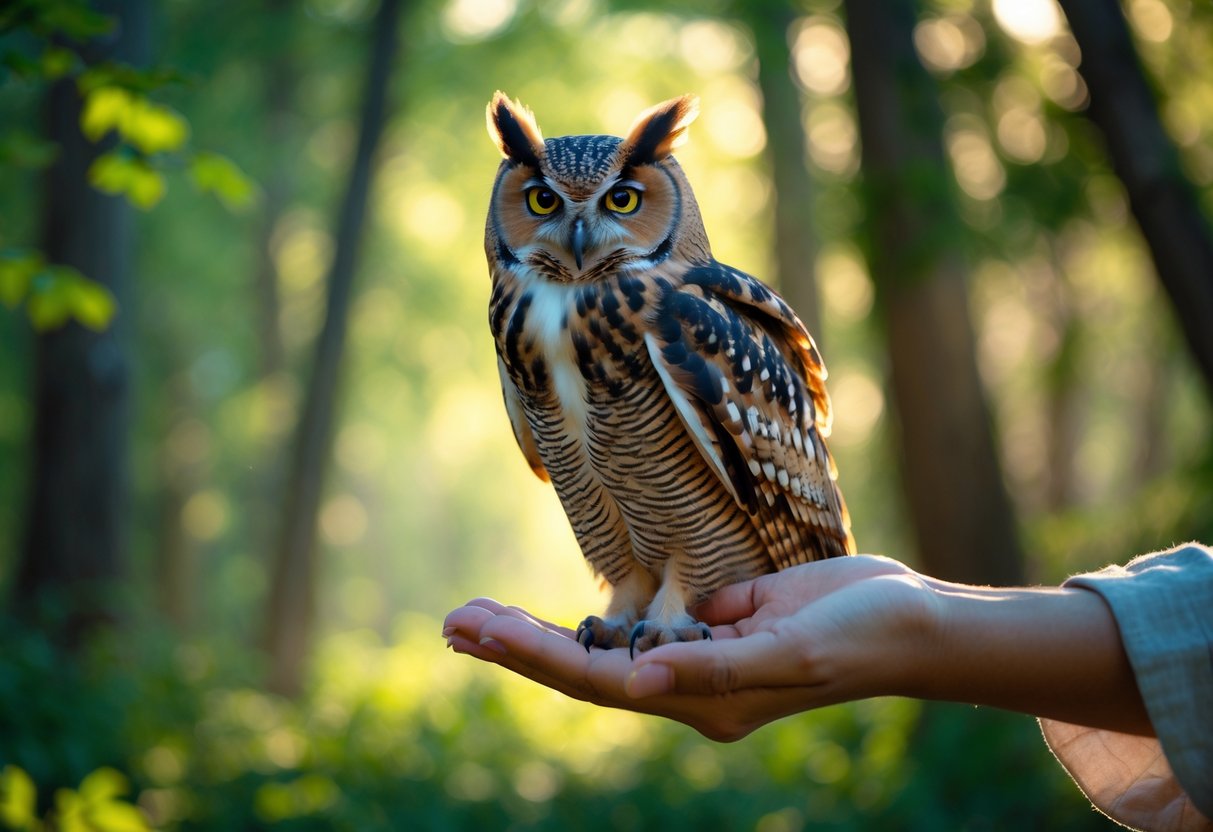
You might find yourself wondering if seeing an owl means good luck, a heads-up, or something spiritual. Depending on your beliefs or what’s happening in your life, it could mean anything from offering protection to nudging you toward change.
If you dig into these meanings, you might see the owl’s visit as more than a random event. It could be a sign to look for deeper guidance.
Owls have fascinated people in cultures all over the world, symbolizing everything from wisdom to magic. Exploring what an owl’s visit means for you might open your eyes to new insights.
It’s a chance to feel more connected to the world around you, or at least to your own journey. Curious? Here are some key messages an owl might be bringing your way.
Spiritual and Symbolic Meanings of an Owl Visit

When an owl visits you, it often brings messages about your life, intuition, or changes ahead. These visits can connect you to deeper wisdom and remind you to notice what’s happening around you.
People have given owls a special place in stories and spiritual beliefs for ages.
Common Interpretations Across Cultures
Many cultures see owls as symbols of wisdom, protection, or sometimes a warning.
- Native American tribes often treat owls as night guardians and spiritual messengers. They encourage you to trust your instincts.
- In Ancient Greece and Rome, owls stand for wisdom and careful choices, but they can also signal danger or even death.
- Egyptians believed owls guided souls through the afterlife.
- In African cultures, owls sometimes get linked to magic or seen as signs of bad luck.
Knowing these traditions might help you figure out what an owl’s visit means for you.
Spiritual Messages and Personal Growth
When an owl comes near, it could be a sign for you to look inward and listen to what you’re really feeling. Owls push you to trust your gut and pay attention to your own path.
If you’re facing a big change, the owl might be reminding you to stay calm and trust yourself. Sometimes, it’s a sign you’re protected and should keep moving forward.
This is a good time to reflect on your life and be open to new ideas.
Owls in Mythology and Folklore
Owls pop up in myths as mysterious creatures tied to magic, wisdom, and sometimes death.
- Greek myths connect the owl with Athena, goddess of wisdom, making the bird a symbol of knowledge and protection.
- Some Native American stories see owls as spirits or guides that help people see what’s hidden.
- African folklore sometimes links owls to witches or wizards, showing their mystical side.
- Celtic legends call owls messengers between Earth and the divine, guiding souls through life and death.
These stories show just how much owls have inspired people for centuries.
If you want to dig deeper, check out What Does It Mean When an Owl Visits You?
Understanding Owl Encounters and Natural Behavior
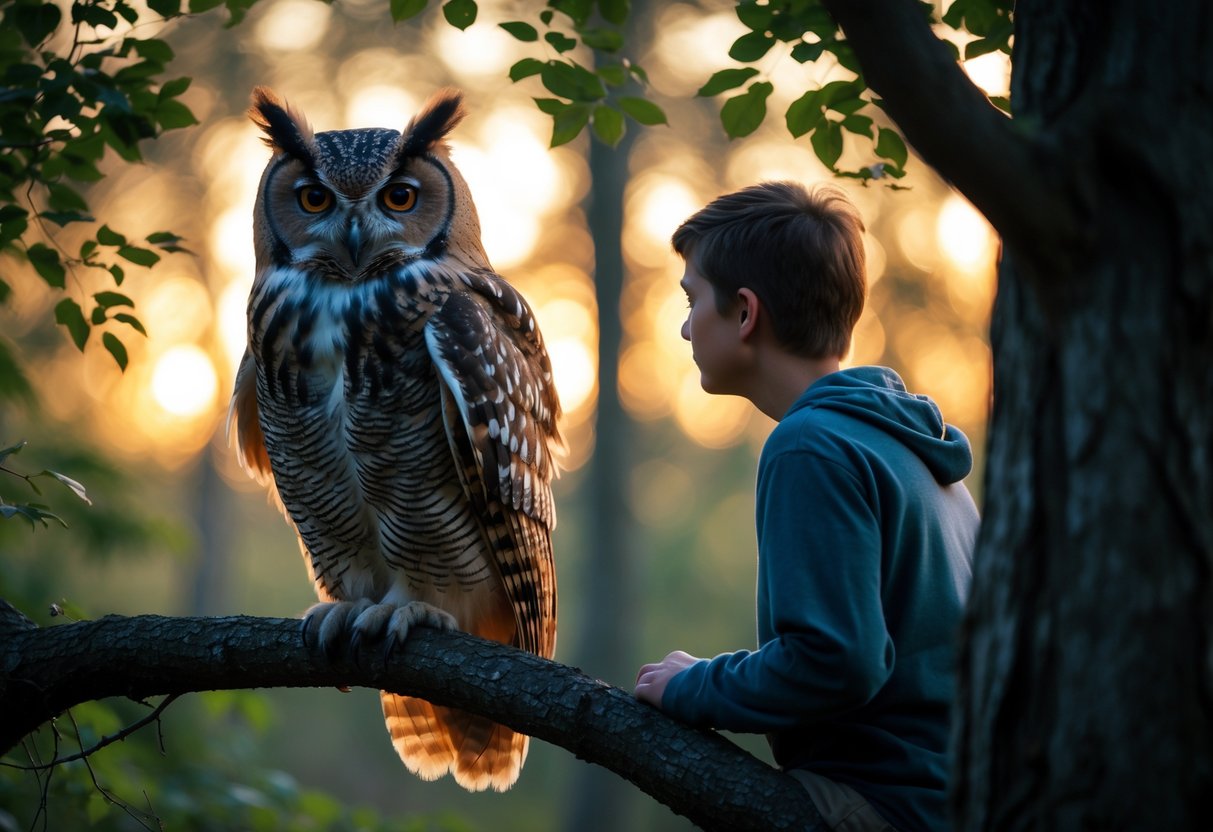
Owls have some pretty unique ways of living and moving that shape when and how you see them. Their silent flight, great camouflage, and quirky habits all play a part.
Different owls have different lifestyles. Some, like the great horned owl, stand out for their size and power.
How and Why Owls Appear to People
Owls usually keep their distance from people, but sometimes you’ll spot one because it’s hunting for food or looking for shelter. Most owls come out at dawn or dusk, but a few hunt during the day—especially if they’re busy feeding chicks.
You might see an owl if its habitat overlaps with where you live. Sometimes, they get startled and end up in new places.
If you spot an owl in your yard or local park, it’s probably just searching for prey like mice or small birds.
Some owls are active in the daytime because their species just rolls that way or they have special needs, like feeding young. So, seeing an owl during the day isn’t always strange—it’s part of their natural behavior.
Unique Adaptations: Silent Flight and Camouflage
One of the coolest things about owls is their silent flight. Their feathers have tiny fringes that muffle sound, letting them sneak up on prey.
Their feathers also come in colors and patterns that blend in with trees or leaves. This helps them hide during the day.
You might not spot an owl at first because it’s so well-camouflaged.
These traits make owls such skilled hunters. They glide quietly and stay hidden until they strike.
Identifying Different Owl Species and Their Habits
There’s a surprising variety of owl species, and they all have their own quirks. Some, like the Northern Hawk Owl, stay active during the day.
Others stick to the shadows and hunt at night.
If you notice an owl’s size, shape, or call, you can often figure out which kind you’ve seen. Smaller owls usually sound different from the big ones.
Owls also like different environments. Some pick dense forests, while others prefer open spaces.
Getting to know these habits can make your owl encounters way more interesting.
The Majesty of the Great Horned Owl
The great horned owl stands out as one of the most familiar owls around. It’s a big bird, and those ear tufts really do look like horns, don’t they?
This owl packs a punch. It hunts all sorts of animals, from tiny rodents to unsuspecting birds.
You might catch its deep, echoing hoot late at night. Usually, it chooses tall trees or quiet ledges for its nest.
Great horned owls handle all kinds of environments across North America. Spotting one feels like running into royalty among owls, honestly.


