
Owls have this mysterious charm, don’t they? Plenty of people wonder if these beautiful birds will let you get close. In reality, wild owls usually keep their distance.
Most owls won’t let you get very close because they see people as potential threats.
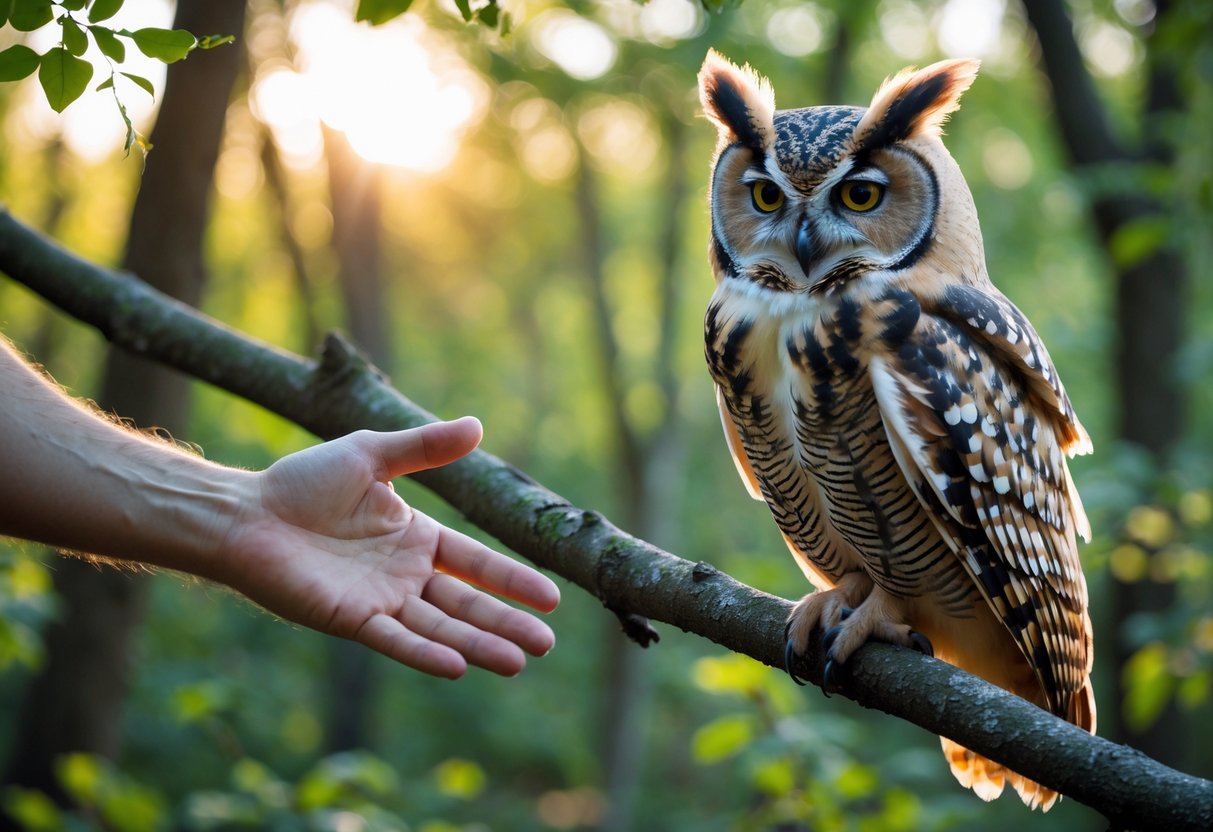
Sometimes, owls might tolerate someone nearby if they feel safe or have gotten used to a certain person, like a handler in a wildlife program.
But out in the wild, it’s way better to respect their space and just watch from afar. If you get too close, you could stress them out or scare them off entirely.
If you’re hoping to see owls up close, patience really pays off. Learning a bit about their behavior helps, too.
Knowing when to pause or how to read their body language lets you enjoy these birds without bothering them.
How Close Can You Get to Owls in the Wild?

When you’re out watching owls, understanding their behavior makes a big difference. Different species react in their own ways when you show up.
If you pay attention to their body language, you’ll get clues about whether you’re too close or making them uneasy.
Typical Behavior of Wild Owls Around Humans
Most wild owls prefer to hide during the day. You’ll often see them with their eyes closed or half-shut, blending right in.
Smaller owls like the Saw-whet or Boreal owl rely on camouflage and staying perfectly still to avoid predators.
If an owl seems to ignore you, it’s probably focused on hiding. But don’t let that fool you—owls stay alert and will keep an eye on you even if they look relaxed.
If you move in too close, they might fly away or start to fidget. Sometimes they’ll turn their body away or shift around nervously.
Species Differences in Approachability
Different owl species handle humans differently. Great Horned Owls, with their size and attitude, might let you get a bit closer, but they still need space.
Barn Owls will puff up to look bigger when they feel threatened. It’s their way of saying, “Back off.”
Long-eared Owls act pretty shy and usually avoid close encounters. Great Gray Owls, though big and quiet, might let you watch from a little closer—if you stay still and quiet.
The American Birding Association suggests you stay at least 100 yards from Snowy Owls since they’re very sensitive to people. It’s smart to look up info about the species you want to see before heading out.
Recognizing Owl Discomfort or Stress Signals
Owls make it pretty obvious when they’re uncomfortable. If you see an owl narrow its eyes to slits and stare at you, it knows you’re there and might be stressed.
Sometimes they’ll fluff up their feathers or turn away. Barn Owls especially puff up as a warning.
If an owl starts moving around a lot, flies off, or calls loudly, you’re too close. These are all signs to give them more space.
When you notice these behaviors, back off slowly. Keeping things quiet and low-key helps protect the owl and keeps your experience positive.
Safe and Respectful Approaches to Owls

If you want to get close to owls, you’ve got to do it with care and respect. Every owl has its own comfort zone, so watch their behavior and give them lots of space.
Knowing how to act means you can enjoy watching owls without stressing them out.
Best Practices for Observing and Photographing Owls
When you’re observing or photographing owls like Great Horned or Long-eared Owls, keep a respectful distance. Use a long lens so you don’t have to move in.
Move slowly and keep your voice down. Sudden movements or loud sounds can spook them fast.
Don’t try to touch or chase owls, ever. If you notice wide eyes or head bobbing, back away right away.
Stay quiet and keep your visits short so the owls can rest or hunt.
Sometimes, using your car as a blind works well. Park safely, turn off the engine, and you’ll avoid disturbing the birds or other people.
Attracting Owls Responsibly
If you dream of owls like Great Gray or Boreal Owls visiting your yard, focus on creating a safe, natural space. Offer shelter and trees, and skip artificial lights at night.
Never feed owls directly—it causes more harm than good and messes with their instincts.
You can place nest boxes to attract species like Barn Owls, but do it thoughtfully. Keep pets, especially dogs, away since owls see them as threats.
Avoid loud noises and let owls find their own food to keep them wild and healthy.
By making your yard more natural, you help owls thrive without risking their safety or changing how they live.
The Role of Habitat and Environment in Owl Encounters
Owls usually pick quiet, safe spots—think wooded patches, old farms, or even the edge of a city—where they can find enough food. If you’re hoping to spot one, look for places with plenty of small mammals and not too many people wandering around.
Great Horned Owls actually handle city life better than you’d expect, as long as there’s enough cover for them. On the other hand, Long-eared Owls seem to prefer the thickest forests and tend to keep their distance.
If you know what kind of habitat an owl likes, you’ll have a much better shot at finding the right species—or at least figuring out how close you should get.
Always respect private property. Try to stay on the edge of open fields, and avoid disturbing their hunting grounds. That way, you’ll help keep both the owls and their homes safe.


