
When you hear an owl hooting outside your house, it usually means the owl is marking its territory or trying to talk to other owls. Owls also hoot to warn about possible threats or to show they’re protecting their space—which sometimes includes your home. Sometimes, their calls just make you stop and pay more attention to what’s going on around you.
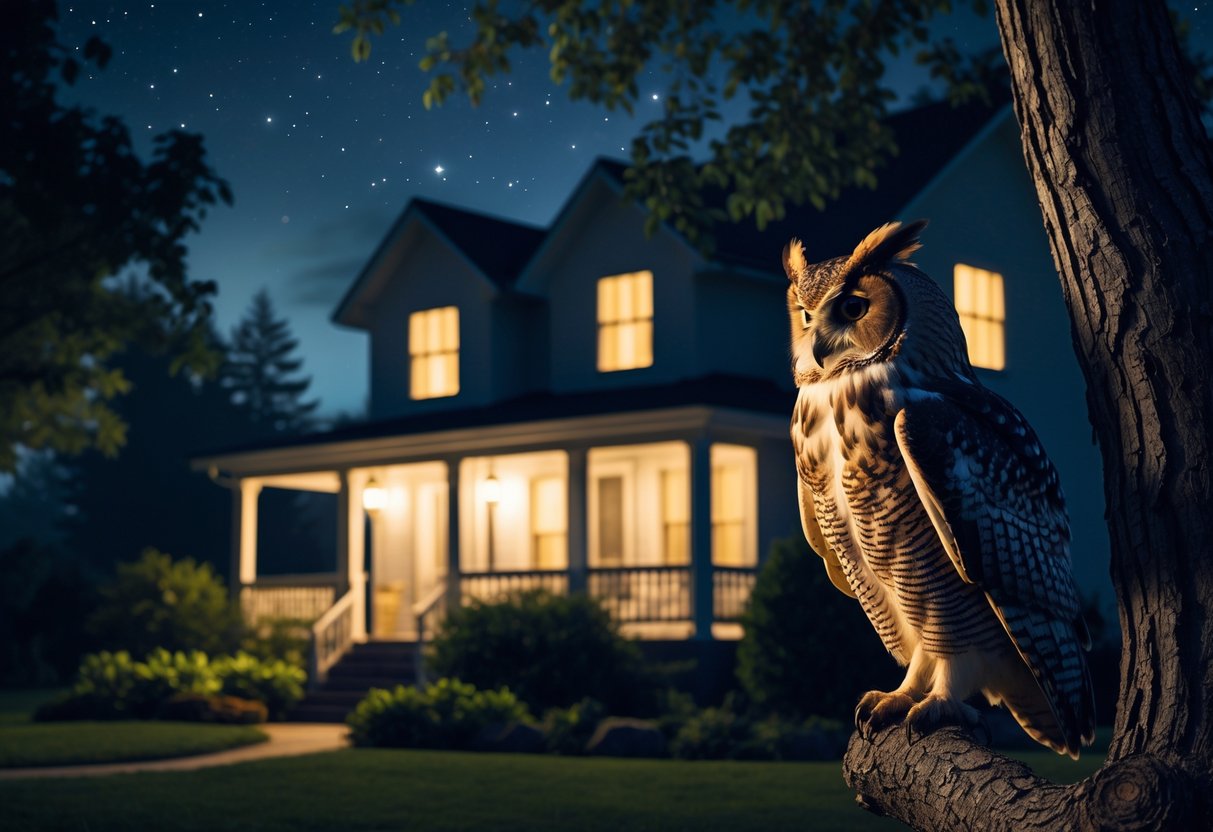
People have connected owls to wisdom and intuition for ages, so when you hear them hoot, maybe it’s a little reminder to trust your gut. In some cultures, an owl’s call feels like a message—maybe guidance, maybe a hint that something in your life is about to change. Whether it’s just nature making noise or something deeper, that sound outside your window is never just background.
You might also find that hearing an owl at night brings up ideas about protection or transformation. If you’re curious about what your feathered visitor might be trying to say, stick around—there’s a lot more to these hoots than you might think.
Meanings and Symbolism of an Owl Hooting Outside Your House

When you catch the sound of an owl hooting near your home, it could mean a bunch of different things. These messages might touch your feelings, your spirit, or even reflect old beliefs from cultures around the world.
Owls often stand for wisdom, change, and a bit of mystery. Their calls take on different meanings depending on where you live and which owl is making the noise.
Spiritual and Emotional Messages Associated With Owl Hoots
An owl’s hoot sometimes feels like a nudge to look inward. Maybe it’s a hint to dig for hidden truths or secrets you’ve been ignoring.
Some people see the hoot as a sign of wisdom or a spirit guide looking out for them. It’s almost comforting, in a strange way.
You might also hear an owl and think about change or transformation. Maybe it’s a push to get ready for something new or to finally face your feelings.
The sound can calm you down during tough times, too. It’s like a gentle reminder to trust your instincts, even if things feel uncertain.
If you’re struggling, an owl’s call might feel like a warning. That doesn’t mean something bad is coming, but maybe it’s time to be careful or brace yourself for change.
Cultural Beliefs and Superstitions About Owl Calls
Cultures around the world see owls in different ways. In some places, people believe owls protect homes and families.
Some folks say owls keep away evil spirits or warn you if danger is close. But in other cultures, an owl’s hoot at night can mean something more serious—maybe even a sign of illness or death.
Still, lots of people today don’t think of owls as bad luck. Instead, they see them as messengers or just fascinating animals.
People who live near forests or in the countryside might have their own stories about owls. City folks might not think about it as much. Local history and family traditions shape these beliefs more than you might expect.
Symbolism of Owls Across Different States and Countries
Owls mean different things depending on where you are. In the U.S., people often connect owls to wisdom and knowledge.
The city of Athens in Greece uses the owl as a symbol for Athena, the goddess of wisdom and protection. That’s pretty cool if you ask me.
Some Native American tribes see owls as guardians and messengers. They might also represent change or a connection to the spirit world.
In Japan, people believe owls bring good luck and keep suffering away. Kind of nice, right?
Old myths and modern ideas mix together here. Where you live really shapes how you feel about that owl hooting outside your window.
Messages and Interpretations From Different Owl Species
Not all owls mean the same thing. For example:
- Barn owls make people think of mystery and the unknown. Their silent flight and ghostly look definitely help with that vibe.
- Great horned owls stand for strength and bravery, so maybe hearing one is a boost to face your problems head-on.
- Screech owls often symbolize alertness and quick thinking. Their sharp calls kind of demand attention.
Your experience with an owl’s hoot can really depend on which species you’re hearing. If you pay attention to the sound and the time of night, you might get a better sense of what the owl is saying.
You can always dig deeper by checking local wildlife guides or even a bit of skylore. There’s a lot out there if you’re curious.
For more about owls and their spiritual messages, check out Owl Hooting Outside Your Window: Revealing the Spiritual Message.
Understanding Owl Behavior and Why Owls Hoot

When you hear an owl hooting near your house, it’s usually about territory or finding a mate. Different owls make different sounds, and if you learn them, you’ll start to get what the owl is trying to say.
Barn owls, for example, don’t hoot like others—they’ve got their own style.
Common Reasons Owls Hoot Near Houses
Owls hoot mostly to claim their space and warn others to stay away. When a male owl hoots, he’s telling everyone this spot is his.
You’ll probably hear more hooting in fall and winter, since that’s when owls set up territories before breeding starts.
Owls also hoot to attract mates. The calls show off their health and that they’ve found a great nesting site.
Sometimes, an owl hoots because it feels threatened. It’s trying to scare off predators. You might even hear harsher noises, like growls or hisses, if the owl is really on edge.
Recognizing the Calls of Local Owl Species
Each owl species has its own voice. The great horned owl, which is pretty common near homes, has deep, rhythmic hoots.
You’ll hear this sound at night when they’re defending their space.
Barred owls have a series of loud, clear hoots that almost sound like a question and answer. Eastern screech owls make softer trills or whistles.
If you listen to the pattern and tone, you can usually figure out which owl is hanging around.
Differences Between Barn Owls and Other Species
Barn owls rarely hoot. Instead, you’ll hear them let out harsh screeches or even a hiss—honestly, it’s nothing like the classic “hoot” people expect.
Usually, they make these sounds if they feel threatened or while they’re out hunting. It’s a bit startling if you aren’t ready for it.
Unlike most other owls, barn owls stay active both day and night. You’ll probably spot them most around dawn or dusk.
They really like open spaces and use those sharp screeches to talk to each other or give a warning. Once you know what to listen for, it’s a lot easier to tell if the owl near your house is a barn owl or something else.
For more about owl hooting behavior, check out Owl Hooting Behavior – Bird Watcher’s General Store.


