
Ever wondered what you should feed an owl? The answer’s actually pretty straightforward: owls mostly eat small mammals like mice and rats, and sometimes birds too.
Owls thrive on a meaty diet, mainly small animals they’d naturally hunt. If you’re caring for an injured owl or looking after one for a bit, giving them the right food really matters.
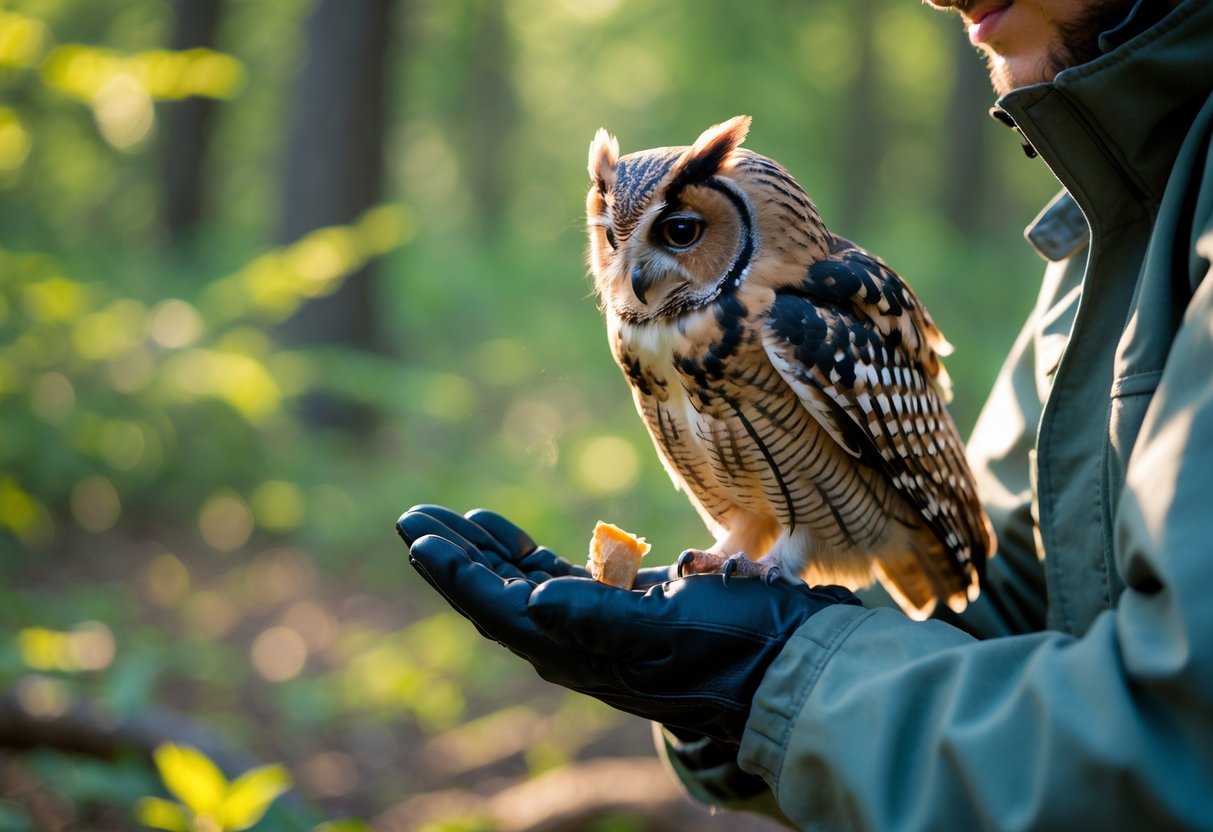
You might think about tossing them chicken or beef, but that’s really just for emergencies or a short-term fix.
They need food with fur or feathers because it helps their digestion work properly.
Most folks who care for owls go for frozen mice or day-old chicks, especially for barn owls, since that’s just about the closest you’ll get to what they eat in the wild.
If you come across an owl in need, figuring out what to give it can be tricky.
Skip grains or seeds—owls are carnivores, and plants just aren’t on their menu.
Knowing what owls eat in nature helps you care for them safely, or maybe even attract them to your backyard if you’re curious about watching them up close.
Natural Diet of Owls

Owls eat meat, but what they hunt depends on their size and species.
Their meals usually include small mammals, sometimes birds or reptiles, depending on what’s available.
Some owls stick mostly to rodents, while others go after birds or even the occasional lizard.
Carnivorous Habits and Common Prey
Owls hunt for meat. Most of them go after small mammals like mice, rats, voles, and shrews.
If the owl’s big enough, it’ll catch squirrels or rabbits too.
Great horned owls, for example, can handle bigger prey—snakes, weasels, and even other birds sometimes.
They hunt mostly at night, using sharp eyesight and nearly silent flight.
Owls swoop down, grab their prey, and finish the job with those fierce talons.
Differences Between Owl Species
Different owls eat different things, depending a lot on their size and where they live.
Barn owls, which are on the smaller side, mostly eat tiny rodents like field voles and wood mice.
Bigger owls, like the great horned owl, have more options—rabbits, squirrels, and sometimes even bigger stuff.
Some owls will eat insects or small reptiles, but most seem to prefer warm-blooded meals.
Urban owls might go after rats or small birds more often, just because that’s what’s around.
Role of Owls in the Food Chain
Owls help keep rodent populations in check. By hunting mice, voles, and rats, they stop these animals from taking over.
Farmers and gardeners actually benefit from owls, since fewer rodents means less crop damage and less disease.
As birds of prey, owls sit pretty high up in the food chain.
They help balance the ecosystem by keeping smaller animals under control.
Special Feeding Behaviors and Digestion

Owls have some pretty unique eating habits.
They grab prey with powerful talons and often swallow it whole.
Their digestion creates pellets—little bundles of fur, bones, or feathers they can’t digest.
Swallowing Prey Whole and Use of Talons
When an owl catches something small, like an insect or mouse, it usually just swallows it down in one go.
Bigger prey gets ripped into smaller pieces first.
Those sharp talons grip and kill prey fast.
The great horned owl, for instance, uses its talons to catch birds, rabbits, and even skunks sometimes.
Talons aren’t just for hunting—they help carry food too.
If it’s a small meal, the owl might use its beak, but bigger animals get hauled off in those strong feet.
This way, the owl can eat safely without dropping dinner.
Formation and Purpose of Pellets
Owls can’t digest bones, fur, teeth, or feathers. After eating, they let these tough bits collect in their muscular stomach, which is called the gizzard.
Inside the gizzard, the owl packs all this indigestible material into a pellet. The result? A small, dense ball that’s honestly kind of fascinating.
This pellet hangs out in the owl’s throat for hours. Eventually, the owl pushes it up and spits it out.
If you look under owl roosts, you’ll probably spot these pellets. Researchers find them super handy for figuring out what owls have been eating.
When it’s time to get rid of a pellet, the owl might pause, stretch its neck, and just let the pellet drop without much fuss.


