
Ever wondered if owls, with those huge eyes and their ghostly quiet flight, might lose their hearing as they age? Actually, owls don’t go deaf. Barn owls, for example, keep their sharp hearing for life, all because they can regenerate ear cells in a way mammals simply can’t.

Their hearing is just incredible—it lets them find prey in pitch-black darkness. This skill doesn’t really fade with age, so their ears stay sharp even when other animals start missing things.
Curious about what makes owl hearing so special, or why they don’t lose it like we do? There’s a lot more to their ears than meets the eye, and science has dug up some pretty wild facts.
Can Owls Become Deaf? The Truth About Owl Hearing

Owls can hear in total darkness, and their hearing doesn’t really fade with age. That’s not something you see in most animals. Their inner ears work differently, letting them pick up high-pitched sounds with impressive accuracy.
Do Owls Lose Hearing With Age?
So, do owls get hard of hearing as they get older? Turns out, they really don’t. Researchers have checked barn owls even at 23 years old and found their hearing still worked perfectly. That’s pretty rare, since mammals usually lose hearing as they get older.
Owls pull this off because they regrow the tiny hair cells in their inner ears—the cells that actually pick up sound. In most animals, these cells get damaged over time and don’t come back. Owls just keep making new ones, so their ears stay fresh.
Barn Owls and Hearing Longevity
Barn owls rely on their hearing to hunt in darkness. Their ears pick up high-pitched sounds that humans and most other animals start to miss as they age. It’s almost like barn owls have a hearing superpower that never really weakens.
This lets them catch prey using just their ears. Their hearing is so tuned-in, they can react to even the smallest noises. The inner ear keeps working well year after year, so their hearing stays reliable.
How Owl Hearing Differs From Mammals
Our ears work by sensing sound with tiny hair cells. Mammals lose these hairs over time, which means hearing loss. Owls, on the other hand, just regrow those hair cells in their inner ears.
Their ears also have a unique shape that helps them hear in three dimensions. Since their ears sit unevenly on their heads, owls can figure out exactly where a sound is coming from. This design lets them hunt at night, even when they can’t see much.
Because of all this, owls almost never go deaf. Their hearing stays sharp, picking up sounds that most mammals can’t hear anymore. If you want to dive deeper into how barn owls keep their hearing, check out New Zealand Geographic.
How Do Owls Hear? Anatomy and Adaptations
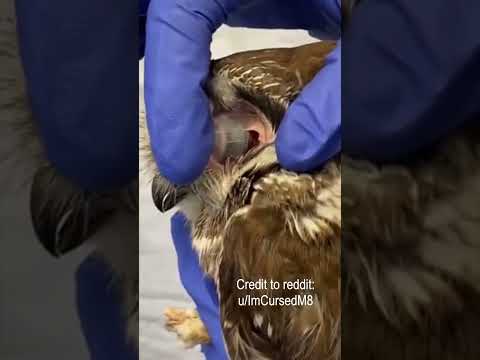
If you want to know how owls listen so well, it helps to look at the special parts of their ears and how their brains process sound. Their ears aren’t like ours—you won’t see them sticking out. Instead, they have hidden ear openings, clever shapes, and brain wiring that lets them catch even the faintest noises.
Outer Ear Structure and Apertures
Owls don’t have those visible outer ears like we do. Instead, their ear openings hide under feathers on the sides of their heads. These can be round or slit-shaped, and some owls have a little flap called an operculum over the opening.
That flap protects the ear from dirt and cuts down on wind noise as they fly. For example, the Tengmalm’s owl has one ear higher than the other. This weird setup helps owls catch sounds more precisely.
Their eardrum inside the middle ear is bigger than what you find in most birds, so they can pick up really soft noises—like a mouse scurrying under leaves.
Role of Facial Disc and Sound Collection
The facial disc is like a built-in satellite dish for sound. It’s that circle of feathers around the owl’s face, and it directs sound right into their ear openings.
This disc does a few things:
- Makes a bigger surface to catch sound.
- Amplifies quiet noises, sometimes by as much as 20 decibels.
- Changes shape with muscles so owls can focus on certain sounds.
So when you see those facial feathers, they aren’t just for looks—they help the owl gather sound and send it to the ears, making sure even tiny noises get noticed.
Ear Asymmetry and Prey Location
One of the coolest things about owl ears: they’re asymmetrical. One ear sits higher or is shaped differently than the other. This helps owls figure out not just left and right, but also up and down.
When a sound hits one ear just a fraction of a second before the other, the owl can turn its head and instantly lock on to where it came from. Scientists call this sound localization.
Because of this, owls hunt in total darkness and still find prey hiding under snow or leaves. Different owl species have different degrees of ear asymmetry, which helps them adapt to their own environments and prey.
Owl Brain and Sound Processing
When the ears pick up a sound, the owl’s brain jumps into action. The medulla—that’s the part in charge—handles an incredible amount of information, using tens of thousands of neurons just for sound.
Your owl’s brain builds a detailed map of a sound’s location. It actually remembers these spots, which lets the bird stay locked in on prey, even if there’s a bunch of other noise in the background.
With that info, the brain can judge distance and direction. That way, the owl swoops down without a sound—thanks to those special feathers that muffle its flight—and doesn’t spook its next meal.
Honestly, it’s pretty wild how owls depend on hearing almost as much as sight when they hunt.


