
If you’re hoping to spot a Powerful Owl, start by checking out its size and color. These owls are pretty big, with dark grey or brown feathers and those unmistakable white markings.
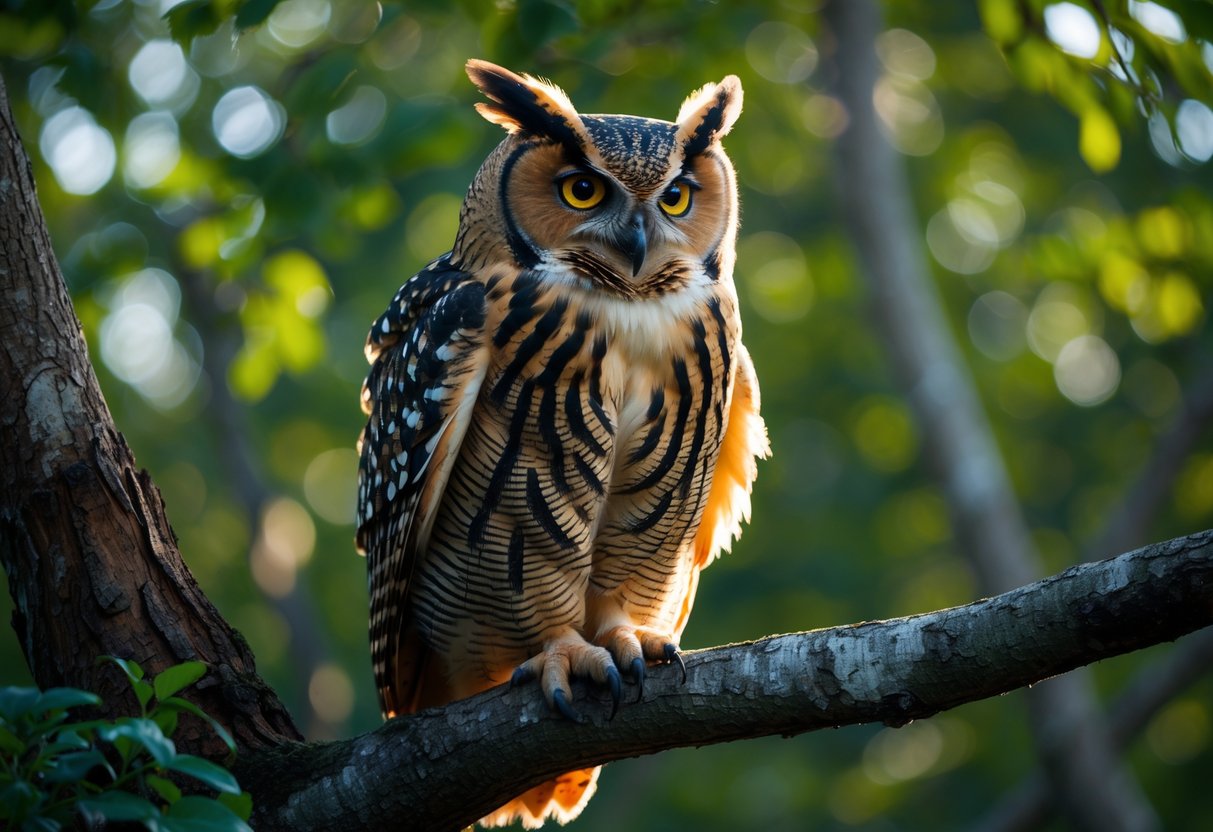
You’ll probably notice their bright yellow eyes set against a dark face mask. Their feet are huge and strong, with seriously sharp talons.
Try listening for their deep, double hoot if you’re nearby. The male’s call is a slow “woo-hoo” that echoes through the forest.
Look for old, tall trees with big hollows. That’s where they usually nest and hang out.
Keep an eye out for signs like fur or bones on the ground, too. Powerful Owls eat medium to large mammals and birds, and they cough up pellets with leftovers. These clues can point you to where the owl’s hiding, even if you can’t spot it right away.
Want more details? Check the guide on spotting a Powerful Owl.
Key Traits of the Powerful Owl

When you try to recognize a powerful owl, its size, colors, and those intense eyes really stand out. It mostly lives in Australia’s old forests.
You’ll see it’s different from other owl species you might come across.
Physical Appearance
The powerful owl holds the title for Australia’s largest owl. You’ll notice its impressive size, with a wingspan reaching up to 140 cm.
Its feathers are dark grey or brown on top, and off-white underneath. Look for those dark V-shaped marks across its chest and belly.
Its head looks a bit small compared to its bulky body, and the tail is rounded. The feathers around the head and neck seem soft and fluffy.
Its feet are yellow and have strong black talons, just right for grabbing prey.
Distinctive Yellow Eyes
One of the most striking things about this owl? Those big, bright yellow eyes.
They give it a piercing, alert look, and help a ton with night hunting. If you ever catch the owl staring, you’ll know exactly what I mean.
The eyes really help you tell it apart from smaller owls, like the barking owl.
Habitat and Range
You’ll usually find the powerful owl in old-growth forests across eastern and southeastern Australia. These forests have the tall trees they need for nesting and hunting.
They keep a pretty big territory and can get quite protective of it. Since they need old trees and lots of forest, spotting one often means the ecosystem’s in good shape.
If you wander through dense forests at night, you might hear its deep, booming call.
For more info, check out Powerful Owl identification.
How to Identify Powerful Owls in the Wild

To spot a Powerful Owl, pay attention to its size, sounds, and how it acts. This owl is big, mostly active at night, and hunts quietly for prey in trees and forests.
Typical Behaviors and Sounds
Powerful Owls keep things quiet during the day, usually resting in dense tree shade. If you see a large owl with a small head, yellow eyes, and dark grey-brown feathers with white bars, you’re probably looking at one.
Their legs are feathered, and those feet? They’re big, with sharp talons. Listen for their deep “woo-hoo” call, which they use to mark territory or talk to mates.
Since they’re mostly up and about at night, you’ll usually find them perched quietly during the day, sometimes clutching prey.
Spotting at Night: Nocturnal Habits
You’ll need to head out after sunset to find Powerful Owls. They’re strictly nocturnal, hunting and moving only at night.
Their flight is nearly silent, thanks to special feathers that cut down on noise. That gives them a real edge when sneaking up on prey.
You’ll find them in forests with old trees for nesting, but sometimes they turn up in suburban parks too. Watch for white droppings or leftover feathers under their roosts.
If you listen carefully for their hooting, you might figure out where they’re hiding during the day.
Hunting Patterns and Prey
Powerful Owls mostly hunt by weaving through the trees at night. They go after medium to large animals, especially possums like the Common Ringtail Possum up in the forest canopy.
Sometimes, they’ll snatch up large bats or even birds that are just trying to get some rest in the branches. When they’re hunting, they swoop in without a sound and grab their prey with those strong feet and pretty intimidating claws.
Usually, they’ll carry their catch back to a branch to eat or maybe to feed their young. Since they need old, dense forests full of trees, you’ll only spot them in areas where wildlife’s still thriving.
If you want more info about their size or habits, check out this page on Powerful Owl identification and behaviors.


