When an owl hoots at you, it’s probably not trying to freak you out or send some mystical message. Most of the time, owls hoot at humans because they see you as a possible threat to their territory or nesting area. That hooting is just their way of saying, “Hey, back off—this is my spot.”
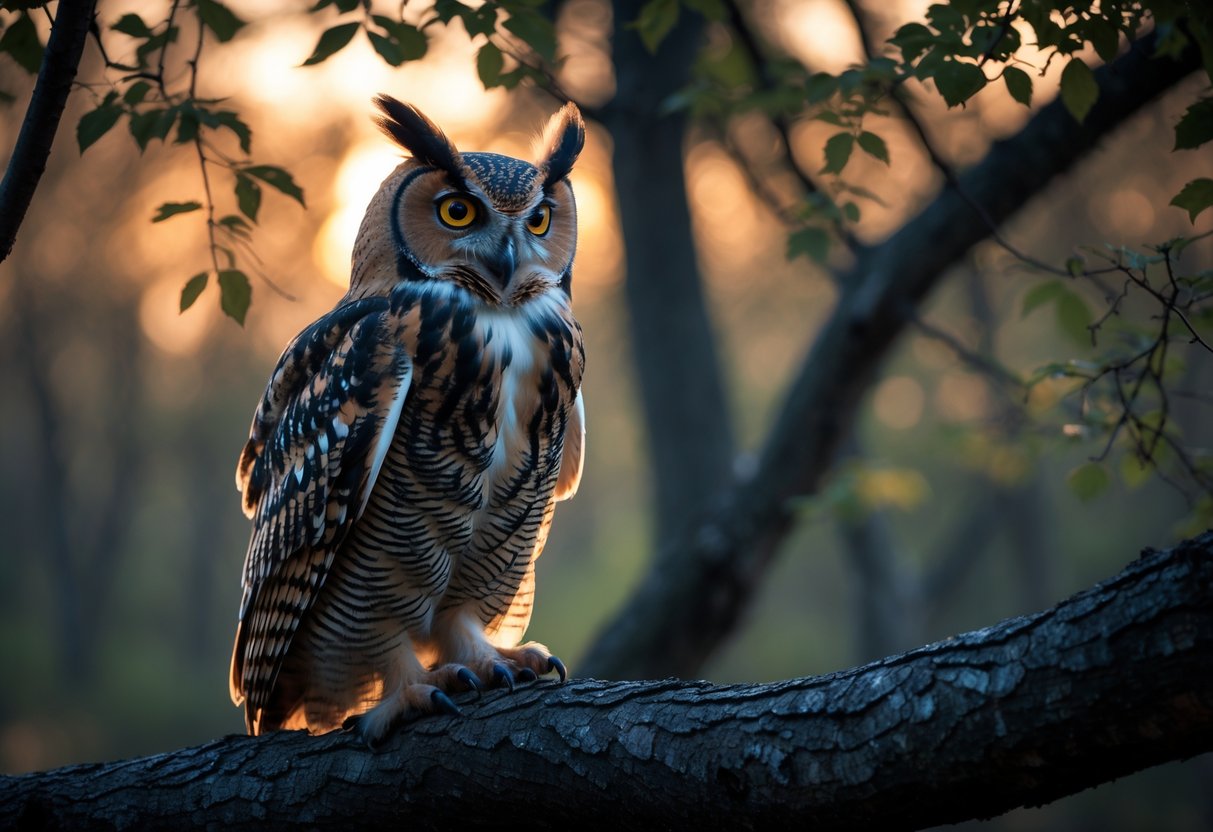
Owls get super protective, especially when it’s breeding season. Their hoots warn other owls and intruders—including us humans—that they’ve claimed this area.
Honestly, it’s not usually personal. They just want to keep their home safe.
If you hear an owl hooting nearby, you’re in their neighborhood. Knowing this, you can give them space and enjoy watching these amazing birds without stressing them out.
Curious about what different owl calls mean? Check out this owl hooting behavior guide.
Reasons Owls Hoot at Humans
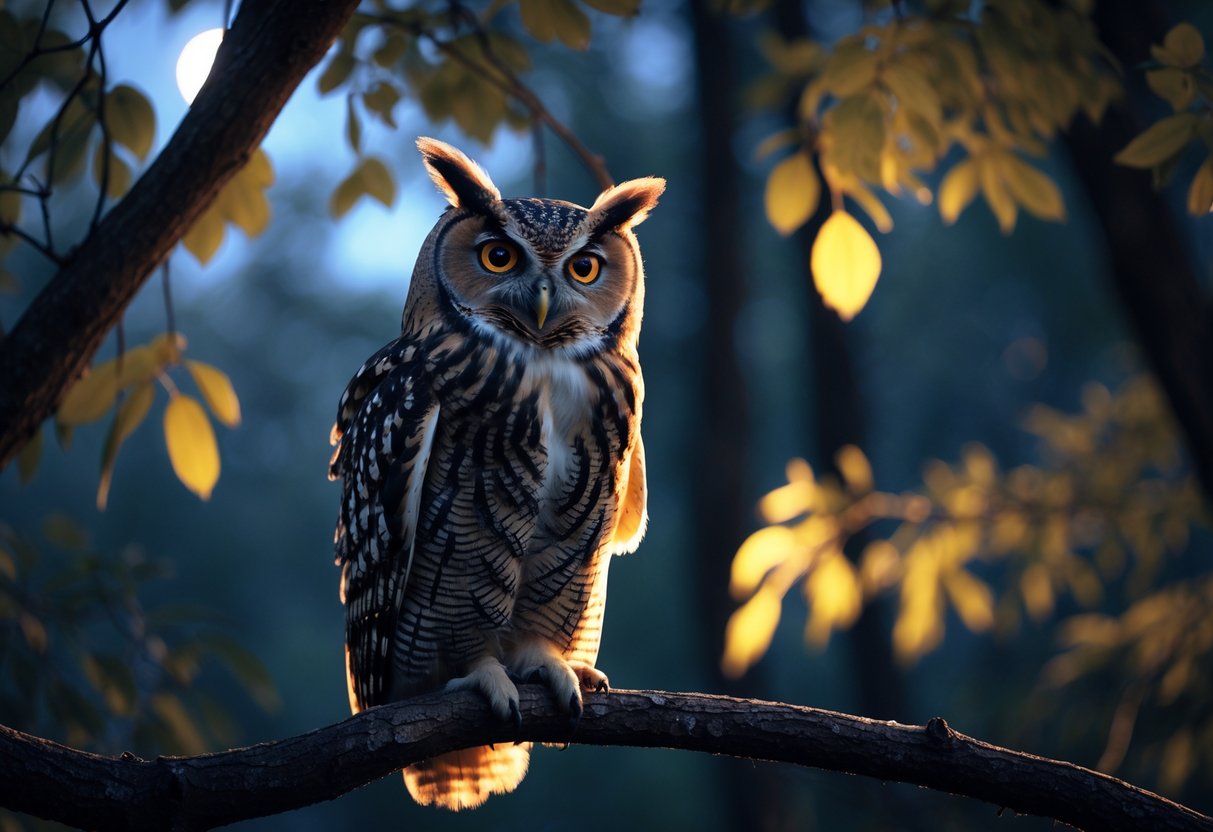
Owls might hoot at you to send a warning, protect their babies, or maybe just because they’re curious. Sometimes, they’ll hoot a lot during mating season to communicate with each other.
Different species—like great horned owls or barred owls—use their hoots in all sorts of ways, depending on what’s going on.
Territorial Behavior and Warnings
Owls hoot to mark where they live. When a great horned owl or a barred owl hoots near you, it’s probably telling other owls—and you—to keep out.
These hoots are basically nature’s version of a “no trespassing” sign.
If you wander too close to an owl’s hunting ground or nest, it might hoot again and again to warn you off. This happens a lot during breeding season, when they’re extra protective.
Some species, like screech owls and long-eared owls, use sharper, more urgent hoots for these warnings.
Protecting Nests and Owlets
Owls hoot to defend their nests and their young. When you hear a barn owl or a burrowing owl hooting loudly, it’s probably trying to scare off a possible predator or alert others.
These hoots help keep their eggs and owlets safe.
Female owls use different calls to talk to their babies. But if a person or animal gets too close, the adult owl will hoot in defense.
Great horned owls, in particular, have a reputation for fiercely protecting their nests.
Mistaken Identity and Curiosity
Sometimes, owls hoot at humans because they think you’re another owl or maybe an intruder. They use their hoots to recognize each other, but they don’t always figure out right away that you’re not an owl.
Owls like the elf owl or the snowy owl might hoot just because they’re curious. They’re nocturnal and often react to strange sounds or sudden movement.
Your presence alone can make them vocalize, even if you’re not doing much.
Communication During Mating Season
During mating season, male owls hoot to attract females or connect with their mates. Great horned owls and barred owls will sometimes hoot back and forth, almost like a duet.
If you notice more hooting around your place in spring or fall, it could be part of their courtship. These mating hoots usually sound more rhythmic and less aggressive than territorial hoots.
They help owls find partners and stay in touch.
Owl Myths, Symbolism, and Human Interactions

Owls have always grabbed our imagination. Their hoots, big eyes, and silent flight pop up in stories and beliefs from all over the world.
If you get what these myths mean, and how owls really use their calls, you might feel a bit more comfortable next time you hear one nearby.
Superstitions and Cultural Beliefs About Owl Hoots
In a lot of cultures, owls symbolize wisdom—think of the “wise old owl” connected to the goddess Athene in Greek myths. You’ll find them in stories as keepers of secrets or knowledge.
But some traditions see owl hoots as warnings or omens of death. For example, in parts of Alabama and Louisiana, people think a screech-owl’s hoot means someone in the family will die soon.
Some Native American tribes saw owls as spirits tied to death or the afterlife. Meanwhile, plenty of people wear owl charms for protection or wisdom.
Owl feathers used to be prized, sometimes used in rituals or thought to have special power. Still, most of these myths don’t line up with how owls actually behave.
Owls mostly hunt small rodents, rabbits, and skunks—not people.
Owl Vocalizations and Nighttime Encounters
Owls use hoots to talk to each other, not to frighten humans. Their calls help them mark their territory, attract mates, or keep in touch with their partners.
Different owl species have their own unique hoots and calls. For example, the little owl and the larger hibou grand-duc (Eurasian eagle-owl) have very distinct hoots.
If you hear an owl hooting outside at night, it’s usually warning other owls to stay away or calling for a mate.
Their huge eyes help them see in the dark, and their silent wings let them hunt without being noticed.
You might spot owls bobbing their heads. They do this to judge distances better, since their tube-shaped eyes don’t move much in their skulls.
Their sharp claws help them snatch up rodents and other prey with surprising accuracy during those nighttime hunts.
How to Respond When an Owl Hoots at You
So, an owl hoots while you’re nearby. First off, just stay calm. The owl probably feels curious about you, or maybe a bit threatened, or it could just be warning other owls in the area.
It’s not trying to hurt you, so there’s no need to panic. Try not to make any sudden movements or loud noises—that’ll just stress the bird out.
Don’t reach out to touch owl feathers. Getting too close to a nest or baby owls isn’t a good idea either. The parents might get defensive if you do, and who could blame them?
If you spot young owls that can’t fly yet, bring your pets inside. That way, you’ll help keep those little ones safe.
Owls are honestly fascinating. They hunt at night, using special claws and all sorts of clever features to survive. They’re not looking for a fight with people.
Sometimes, just listening to their hoots in the dark feels like a rare chance to connect with the wild—pretty magical, if you ask me.
Curious about more owl myths or their real behavior? You can check out the details at the International Owl Center.


