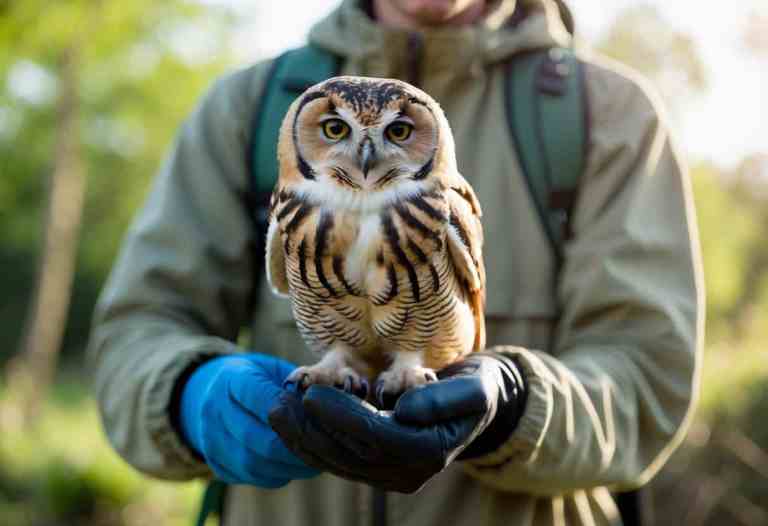
Ever wandered through the UK countryside—or just your own neighborhood—at night and heard that haunting “hoot”? It’s a sound that can feel both eerie and oddly comforting. Owls hoot at night mostly to claim their territory and keep other owls at bay. By hooting, they let others know, “Hey, this is my patch—keep out!”

But there’s more to it. Sometimes owls just want to attract a mate or check in with their family. Each species has its own style of calling, so if you listen closely, you might pick up on who’s talking and what they’re saying.
Understanding why owls hoot can make nighttime walks way more interesting. Next time you’re out, try listening for different hoots—you might start to recognize their patterns.
The Purpose of Owl Hooting at Night

When you hear an owl hooting at night in the UK, it’s not just random noise. Owls hoot to claim space, find mates, and warn others off. The type of hoot can mean different things.
Territory and Communication
Owls often hoot to mark their territory. When a male owl lets out a repeated, rhythmic hoot, he’s basically telling everyone else, “This spot is taken.” It helps avoid unnecessary fights.
Barn owls and tawny owls have really distinctive hoots that cut right through the night air. Their calls send a clear message to other owls to keep their distance.
Owls also use these calls to find each other in the dark. If you pay attention, you might notice several owls each staking out their own area.
Mating and Pair Bonding
During breeding season, male owls hoot to catch the attention of females. Their hoots show off their strength and health. If you hear a soft hoot followed by a reply, you’re probably listening to a bit of owl flirting.
Once they pair up, owls often hoot back and forth. It’s their way of staying close and keeping their bond strong.
Barn owls, for example, keep calling to each other to stay in touch, especially when they’re raising chicks.
Warning Calls and Threat Displays
Hoots can also serve as warnings. When an owl feels threatened, its hoot usually gets harsher or changes pitch. That’s often enough to scare off predators or rivals.
If an owl’s hooting suddenly gets loud, quick, or mixed with screeches, it’s probably protecting its nest or young. Barn owls sometimes add hissing noises to make their point.
These warning calls help owls defend their homes and keep themselves safe at night.
For more details about why owls hoot at night, check out this page on owl hooting and behavior.
Owl Species and Their Nighttime Behaviors in the UK
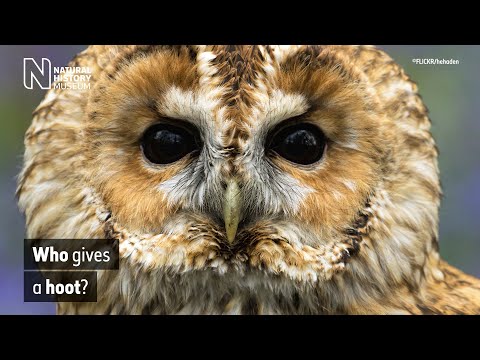
If you listen at night in the UK, you’ll notice each owl species has its own voice. Their calls help them mark territory, attract mates, or just chat with family.
Tawny Owl: The Iconic Hooter
The Tawny Owl is probably the one you’ll hear most often in the UK. Its deep, drawn-out hoots start in autumn and keep going through winter. The male usually starts with a long “hooo,” then adds some softer notes and a clear trill at the end.
Females answer with a different, shorter call, keeping in touch with their partner. Tawny Owls stick to broad-leaved woods, gardens, and parks, and they don’t really wander far from home.
Their hoots make it clear to other owls where the boundaries are. You can learn more on the Barn Owl Trust’s Tawny Owl facts.
Barn Owl: Nocturnal Hunter with Unique Calls
Barn Owls don’t really hoot like Tawny Owls do. Instead, they let out eerie, screeching calls that sound completely different. Sometimes you’ll hear a sharp, hissing scream, which can warn others or help find a mate.
Most of their calling happens while hunting or during mating season. Barn Owls hunt silently at night, thanks to special feathers that muffle their wingbeats.
You’ll spot them in open fields or farmland, often nesting in old barns or church towers. Their ghostly look and strange calls definitely make them stand out.
Little Owl: Daytime and Nighttime Activity
Little Owls are smaller and a bit more active during the day than other owls, but they still call at night. Their sound is a quick series of “kee-wick” or “chuck-chuck” noises.
These calls help them keep track of their territory or talk to their partner. You’ll often find Little Owls in farmland, orchards, or anywhere with scattered trees.
Because they’re active in daylight, you might catch them perched on fence posts or branches. Their calls add a unique touch to the nighttime sounds in rural areas.
Fledging and Juvenile Owl Calls
Young owls—fledglings—make some pretty distinct sounds, though they don’t quite have the power or clarity of adults yet.
At this stage, their hoots sound softer and a bit uncertain. These early calls usually help them ask for food or get their parents’ attention.
As fledglings grow, they start hooting louder and try to claim a bit of territory for themselves. Sometimes, their calls end up attracting nearby adult owls—maybe not always what they want!
This stage matters a lot because young owls are figuring out how to communicate and survive on their own. If you want to dig deeper, check out Birdfact’s explanation of why owls hoot.