
If you’ve ever heard an owl hooting or crying in the dark, you’ve probably wondered what’s going on. Owls cry at night mostly to mark their territory and talk to other owls.
These calls keep other owls away from their hunting or nesting spots. It’s their way of saying, “This is mine, back off.”
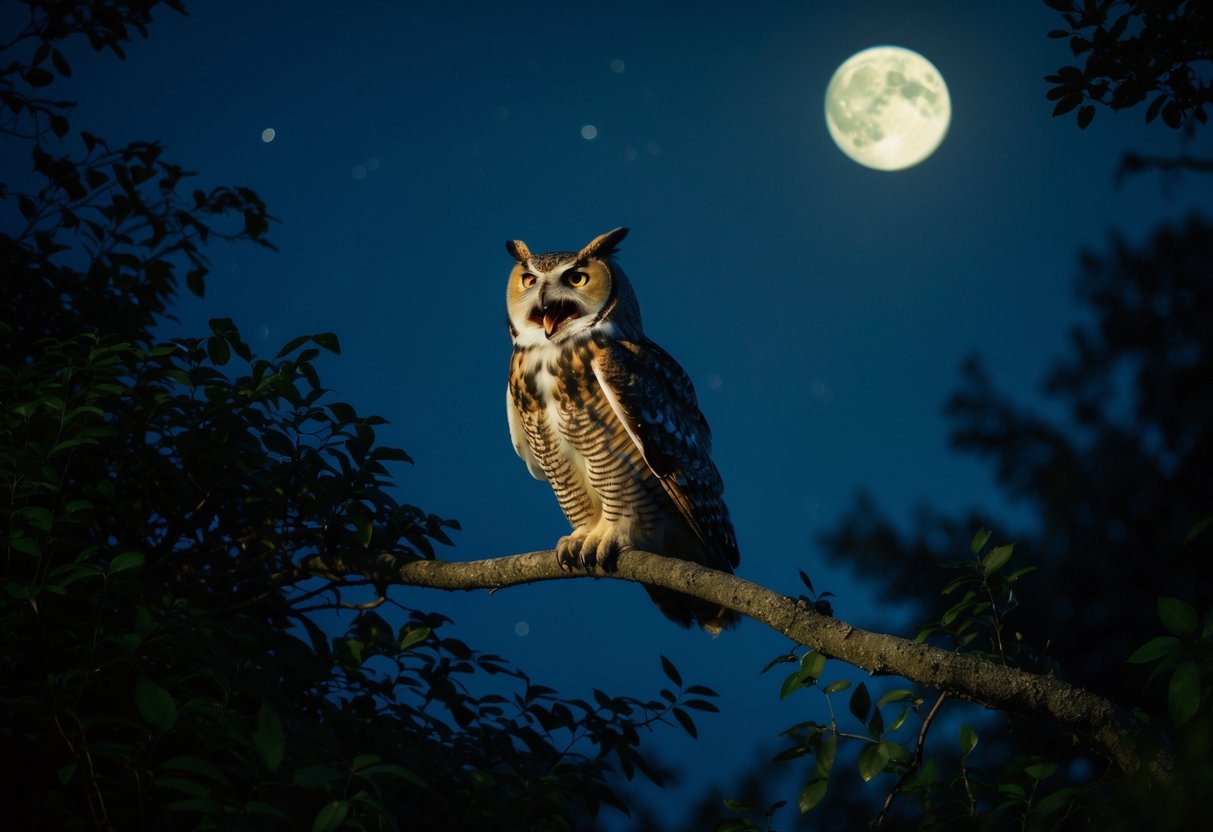
Owls also use their cries when they’re trying to attract a mate or bond with their partner. Sometimes, those sounds you hear are just warnings about danger or signals of distress.
Learning why owls cry at night can make you appreciate these mysterious birds even more. There’s something kind of magical about hearing them.
So, what do all those different owl cries actually mean? Let’s dig in and figure out if an owl is calling for a mate, telling someone to scram, or just chatting with family nearby.
The Reasons Owls Cry at Night
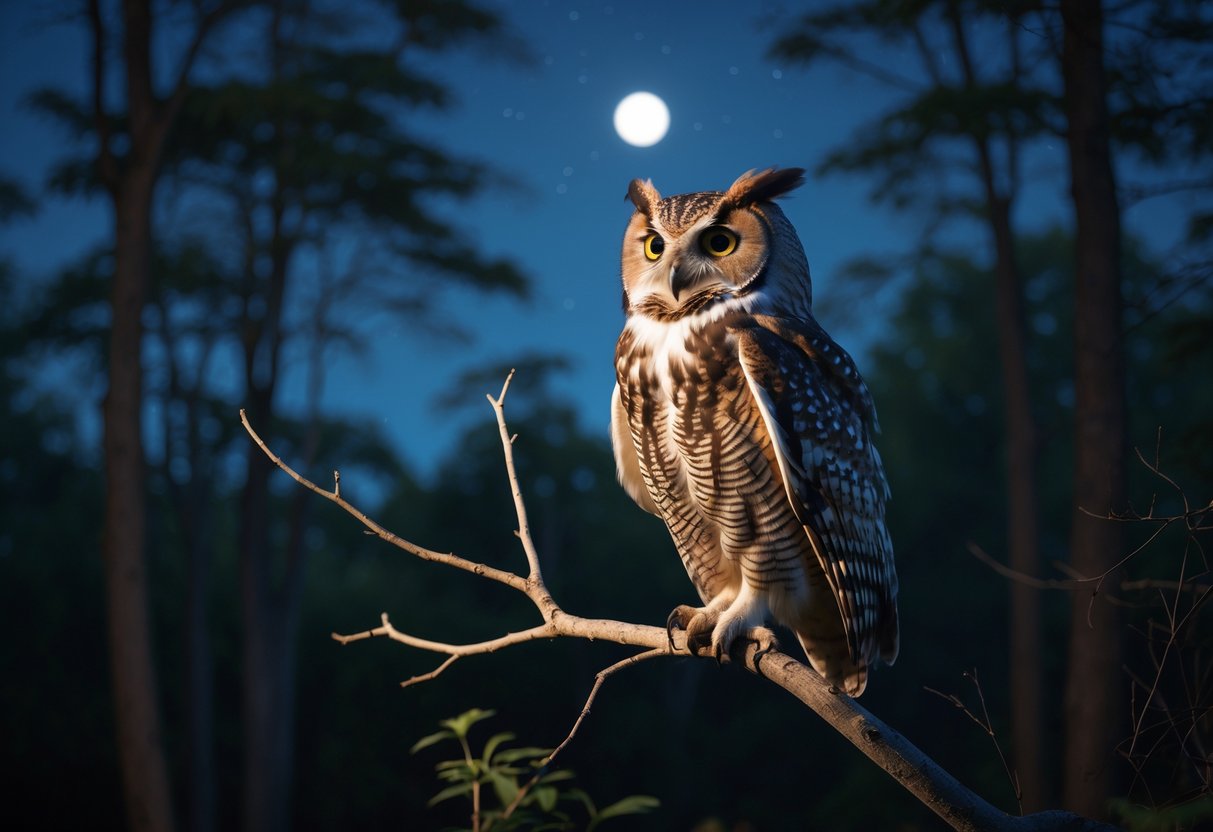
Owls make all sorts of sounds at night, and each one has a reason. Their cries help them claim space, find partners, or warn about trouble.
Different species have their own calls, and the meaning can change depending on what the owl wants.
Communication and Territory
When you hear an owl hooting in the dark, it’s usually telling other owls to stay away. Great horned owls use deep, steady hoots to mark their turf.
This warns others that the area is already taken. Barred owls and barn owls do something similar, using their own unique calls to claim hunting or nesting spots.
It keeps fights to a minimum. If an owl doesn’t defend its territory, it could lose out on food or a safe place to sleep.
Screech owls go for shorter, sharper sounds when they want to warn off rivals. They repeat these calls in patterns, just to make sure no one misses the message.
Mating Calls and Reproduction
Owls also cry at night when they’re looking for mates. Male owls often hoot to show off their health and let others know they’re ready to breed.
Their calls tell potential partners they’ve got a good spot to raise chicks. In fall and winter, you might hear pairs—especially barred owls—calling back and forth.
These duets help the owls bond. It also lets rivals know there’s already a couple in the area.
Some owls use softer or trilling sounds to invite mates closer. Barn owls, for example, have a purring call that encourages females to check out their nests.
Predator Warnings and Defense
When owls feel threatened, they can get loud and harsh. They’ll screech, hiss, or even growl to warn off predators or rival owls.
If a barn owl or great horned owl senses danger near its nest, it might let out a scream to scare off intruders. These warning calls sound way more aggressive than their usual hoots.
You’ll often hear these sharp sounds when an owl is protecting its young or its territory. If you hear that, it’s probably smart to give the owl some space.
This defensive behavior really ramps up during nesting season in spring and summer.
Different Owl Species and Their Night Calls

Owls use their calls to talk with each other, claim territory, and find mates. Every species has its own style, which makes it easier to tell them apart if you’re out at night.
Great Horned Owl Vocalizations
When you hear deep, booming hoots in the night, there’s a good chance it’s a Great Horned Owl. Their call is a steady string of hoots—think “hoo-hoo, hoo-hoo-hoo.”
They’re pretty common across North America and probably the voice you picture when you think “owl.” Great Horned Owls use these hoots to keep other owls out of their area and to attract mates.
Their calls travel surprisingly far through the forest. Sometimes they’ll mix in screams or growls, but the classic hoot is what stands out.
Screech Owl Noises
Screech Owls don’t really hoot at all. They usually make a descending trill that sounds a bit like a tiny horse whinnying.
Mostly, they use this sound to stay in touch with family or warn others to stay away. These little owls are active at night and can live just about anywhere—even in suburban neighborhoods.
During mating season, Screech Owls can be pretty noisy, calling on and off all night.
Barn Owl Screeches
Barn Owls are famous for their downright spooky screams. It’s not a hoot at all—it’s a long, harsh shriek that honestly could be from a scary movie.
They use this scream to warn off other owls and animals. You’ll usually hear it near barns, open fields, or quiet hunting grounds.
Unlike the musical hoots of other owls, the barn owl’s call is meant to send a clear warning. Barn owls live almost everywhere except Antarctica, and their eerie calls are hard to mistake for anything else.
Barred Owl Calls
Barred Owls give a catchy call that almost sounds like a question and answer: “Who cooks for you? Who cooks for you all?” It’s a clear, memorable sound—honestly, once you hear it, you probably won’t forget it.
Sometimes, you might catch pairs duetting with softer hoots, cackles, or even these odd gurgling noises. It’s kind of charming, actually.
You can hear Barred Owls during the day or at night, especially if you’re near forests in the eastern U.S. Their calls seem more varied than what most other owls offer.
When they start calling together, things can get loud and even a little chaotic. It makes for a fun soundscape if you’re out on an evening walk.


