
Owls sometimes show up in your yard and, honestly, they can hang around longer than you’d expect. If you’re wondering what actually gets rid of these night hunters, you’ve got a few options. Bright lights, loud noises, and decoys like fake crows or scarecrows usually work well to make owls leave.
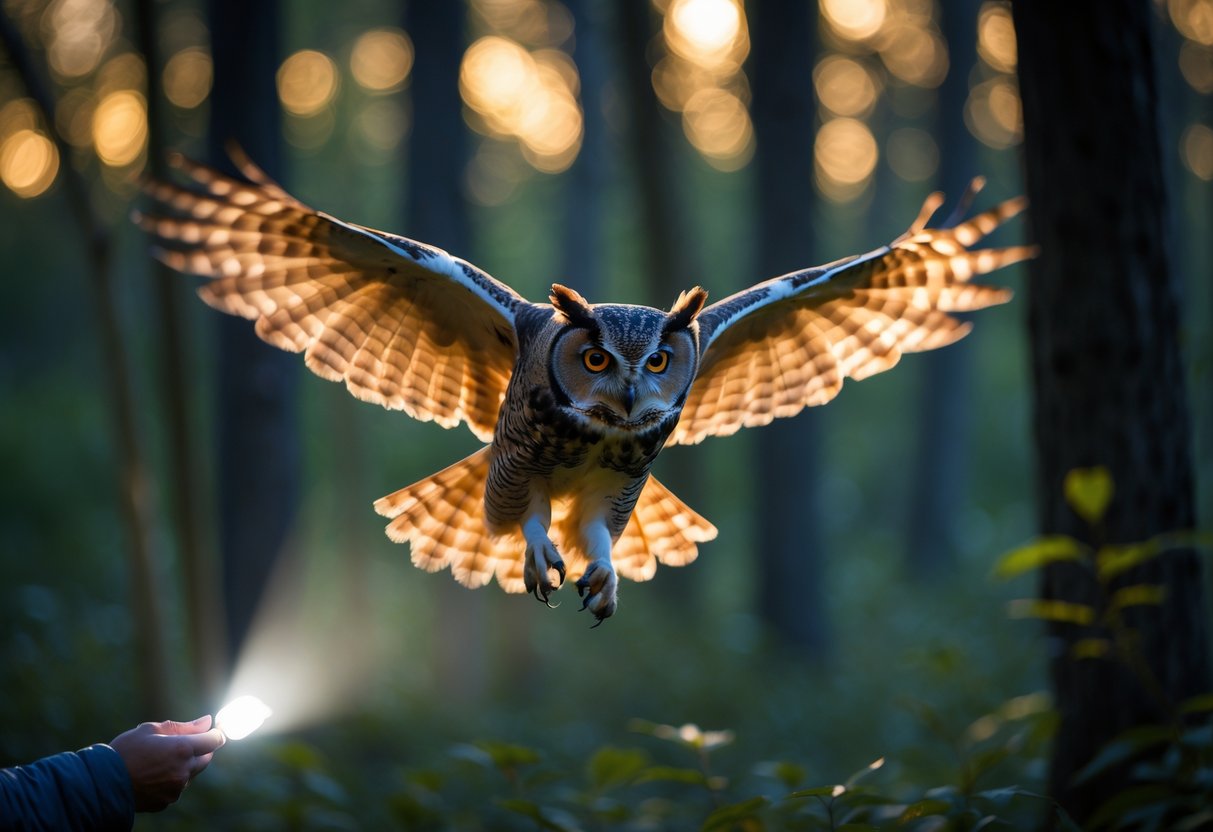
Owls rely on darkness and quiet to hunt, so shining lights in their hunting areas or setting up motion-activated sensors can chase them off. Try removing bird feeders that attract small birds since owls like to hunt those.
Noise works too, and placing fake animals that look like competition can help protect your yard or pets.
If you know what makes owls uneasy, you get more control over your space. Whether you’re worried about your garden or your pets, these simple tricks can help you keep owls away without stressing them out.
For more ideas, you might want to look into motion sensor lights or decoys to make your yard less inviting for owls.
What Scares an Owl Off: Proven Deterrents and Strategies

You can use a few tools and tricks to keep owls away from your property. Some options use sight and sound, while others change the environment so owls just don’t want to stick around.
Visual Deterrents That Repel Owls
Visual bird deterrents freak owls out by making the area look unsafe. Bright colors, flashing lights, and things that move will definitely catch their eye and send them packing.
Hawk decoys work well since they look like a rival predator. If you move these decoys every few days, owls won’t catch on that they’re fake.
Reflective tape, shiny balloons, or globe mirrors bounce light around and confuse owls.
You can put up bird spikes on ledges and rooftops to stop owls from perching comfortably. That way, your place seems less appealing without hurting them.
Audio and Motion-Based Bird Scare Methods
Owls hate sudden loud noises and unexpected movement. You can use noise makers to scare them off.
Try hanging aluminum cans on strings near your yard or chicken coop. When the wind rattles them, the sound makes owls think twice.
You can also clap wooden boards or use alarms and horns. Motion-activated lights or water sprayers add another layer—when an owl comes close, a bright light or a quick spray of water can send it flying.
Remember, you’ll want to change up the noises or lights now and then. If the pattern stays the same, owls might get used to it.
Natural Predators and Environmental Factors
Owls avoid areas where they feel unsafe or when other predators hang around.
If you keep chickens or other small animals, having a rooster nearby can help. Roosters defend their flock and make things tough for owls.
Cutting back tall trees or removing perches near your house gives owls fewer places to hunt from. Clearing out brush, woodpiles, and overgrown spots makes your yard less tempting.
Owls like hunting at night in quiet, dark spots, so keeping your area well-lit can push them away. Some people even use red strobe lights made just for deterring owls.
You can try these steps to make your property less appealing to owls—and you won’t harm them.
For even more tips, check out this guide on how to keep owls away from your yard.
Species Most Affected by Owl Deterrents

Different birds react to owl deterrents in their own ways. Some birds stay away for a while, but others catch on fast if the owl is fake.
If you move the decoy around, you’ll usually have better luck keeping birds away.
Effectiveness Against Crows and Ravens
Crows and ravens are pretty clever. At first, owl decoys—especially if they move—can scare them off. But if the plastic owl just sits there, these birds usually figure out there’s no real danger.
You can get better results by moving the owl or using models that sway in the wind. Crows and ravens also don’t like loud noises or shiny, reflective things paired with owl decoys.
Honestly, if you only use a fake owl and never switch things up, they’ll probably come back soon. Change things around to keep them guessing.
Impact on Starlings, Black Birds, and Swallows
Starlings, blackbirds, and swallows often get spooked by the shape of an owl at first. Plastic owl decoys can keep them from feeding or nesting near your yard—at least for a while.
But these birds learn quickly and might ignore the owl if it never moves or makes noise. A decoy that rotates or moves slowly works better.
Try pairing owl decoys with shiny objects or reflective tape. Sudden movement and bright flashes really bother these birds.
Results for Geese and Woodpeckers
Geese and woodpeckers don’t react the same way to owl deterrents. Geese usually steer clear of places where they spot owls, probably because owls hunt smaller animals, and geese just play it safe.
Woodpeckers, though? They mostly ignore owl decoys. These birds care more about finding a good tree than worrying about a fake owl nearby.
If you’re trying to keep woodpeckers away, you might want to add shiny spinning things or flags next to your owl decoy. Woodpeckers really don’t like sudden movement or bright flashes.
You’ll usually get better results if you mix owl models with other deterrents—think noise, things that move, or reflective stuff.
Curious for more detail? Check out Using Plastic Owls to Scare Away Wildlife to see how plastic owls actually work.


