
Ever wondered if owls actually eat foxes? You’re definitely not alone. It sounds odd since foxes are usually much bigger than what owls go after.
But here’s the thing—some big owls, especially eagle owls, really do hunt foxes. They usually go after young or smaller ones.
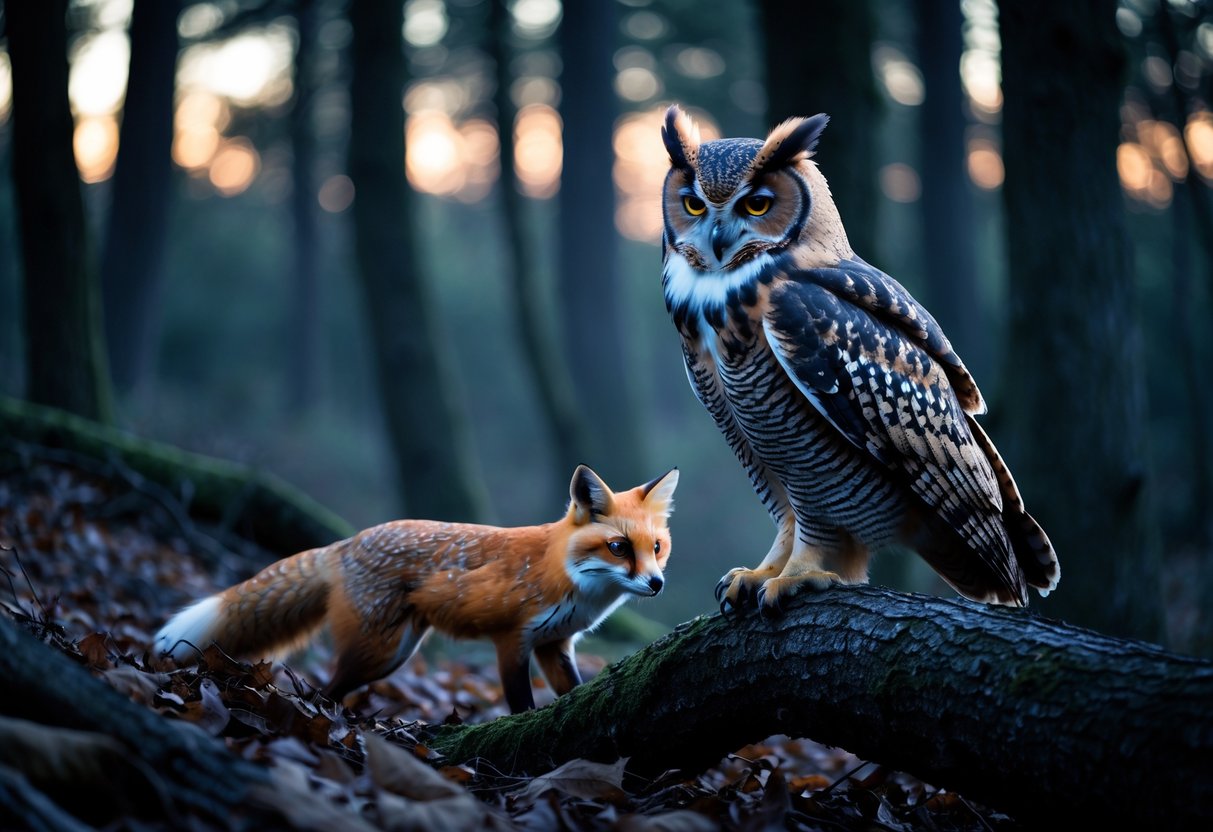
Owls don’t usually eat foxes, but a few larger species will go after fox cubs or yearlings if they can’t find easier meals. So, while it isn’t something you’d see every day, owls can become real threats for foxes under certain conditions.
Let’s dig into which owls might hunt foxes, how often it actually happens, and why it’s more about a lucky chance than a regular habit.
We’ll also look at how these two fit into the bigger food chain puzzle.
Do Owls Eat Foxes?

Owls are tough birds, but they mostly hunt smaller animals. When food gets scarce, some large owls will target young foxes.
Foxes and owls sometimes end up in tense standoffs, each with their own tricks and dangers.
Predatory Behavior of Owls
Most owls hunt small mammals—think mice, rabbits, or even bugs. Their strong beaks and sharp talons let them grab and kill prey pretty efficiently.
Large species like the Eurasian eagle-owl have attacked young or smaller foxes before, though it’s rare.
Owls rely on stealth. They swoop down silently at night, giving prey little chance to run. They almost never go after fully grown foxes, mainly because adult foxes are just too big and can fight back.
Great Horned Owl and Its Prey
The great horned owl stands out as one of North America’s biggest owls. It’s got powerful claws and hunts across a wide area.
Usually, it preys on rabbits, rodents, and birds. Sometimes, though, it’ll go after fox kits—those young foxes that don’t know any better.
Adult foxes move fast and are too large for most owls, even the great horned one. So, if you spot a great horned owl near a fox den, it’s probably watching for the smaller, more vulnerable kits.
This owl’s flexibility with prey really helps it thrive just about anywhere.
Types of Foxes and Their Vulnerability
Not all foxes have the same odds when it comes to owls. Kits or cubs—those little ones—face the biggest risk.
Yearling foxes, not quite fully grown, might get targeted by really big owls too.
Red foxes and other adult types usually get too big and tough for owls to handle. Foxes defend themselves with sharp teeth and quick moves.
Smaller fox species or the younger ones need to stay alert, especially if there are Eurasian eagle-owls nearby. You can check out more about these encounters at The curious incident of the owl and fox in the night-time.
Ecological Relationships Between Owls, Foxes, and Other Predators

Out in the wild, owls, foxes, and other predators like coyotes interact in some pretty complicated ways. Sometimes they compete for food, and sometimes they mess with each other’s routines or spot in the food chain.
These relationships show just how much animals have to adapt to survive.
Competition Between Owls and Foxes
Owls and foxes often go after the same meals—rodents and small mammals. That means they compete, especially when food runs low.
Both are clever hunters, but their styles are different. Owls use silent flight at night, while foxes rely on stealth and bursts of speed.
Owls sometimes eat young foxes, mostly pups near dens. On the flip side, foxes will eat owl eggs or owlets if they find a nest that’s not guarded.
Both animals have to juggle hunting and not becoming someone else’s meal.
Because of this rivalry, owls and foxes tend to avoid places where the other is in charge. That way, they keep out of each other’s way and both populations stay steady.
Role of Coyotes in the Food Web
Coyotes are bigger and stronger than both foxes and owls. They usually sit at the top of the food chain in many places.
Coyotes can hunt foxes, and they sometimes affect owls too by keeping smaller predator numbers in check.
If coyotes lower the number of foxes, owls might find less competition for food. But coyotes also steal or scavenge from owls when they get the chance.
Your local ecosystem really depends on this balance. Coyotes mostly eat small mammals, but they’re not picky.
Because they adapt so well, coyotes end up shaping how other predators live and hunt around them.
How Owls Communicate: Hoots and Other Calls
Owls use hoots and other sounds to talk to each other.
You might hear an owl hoot as it marks its territory or warns others to back off.
Hoots also help owls find mates, especially during the breeding season.
Different species of owls have their own unique calls.
Some owls screech or whistle instead.
These calls sound loud and sharp, so they travel well across the quiet night.
Owls rely on these sounds to avoid fights with other owls or even predators like foxes.
If you listen carefully at night, those calls can tell you a lot about what owls are up to and how they fit into the world around them.
For more about what eats owls and how foxes fit into this, see owl predators and fox interactions.


