
So, you’ve noticed owls hanging around your house and you’re probably wondering what’s up with that. Owls usually show up because your yard offers food, shelter, and water. If rodents or small critters hang out on your property, you’ve basically set up a buffet for these nighttime hunters.
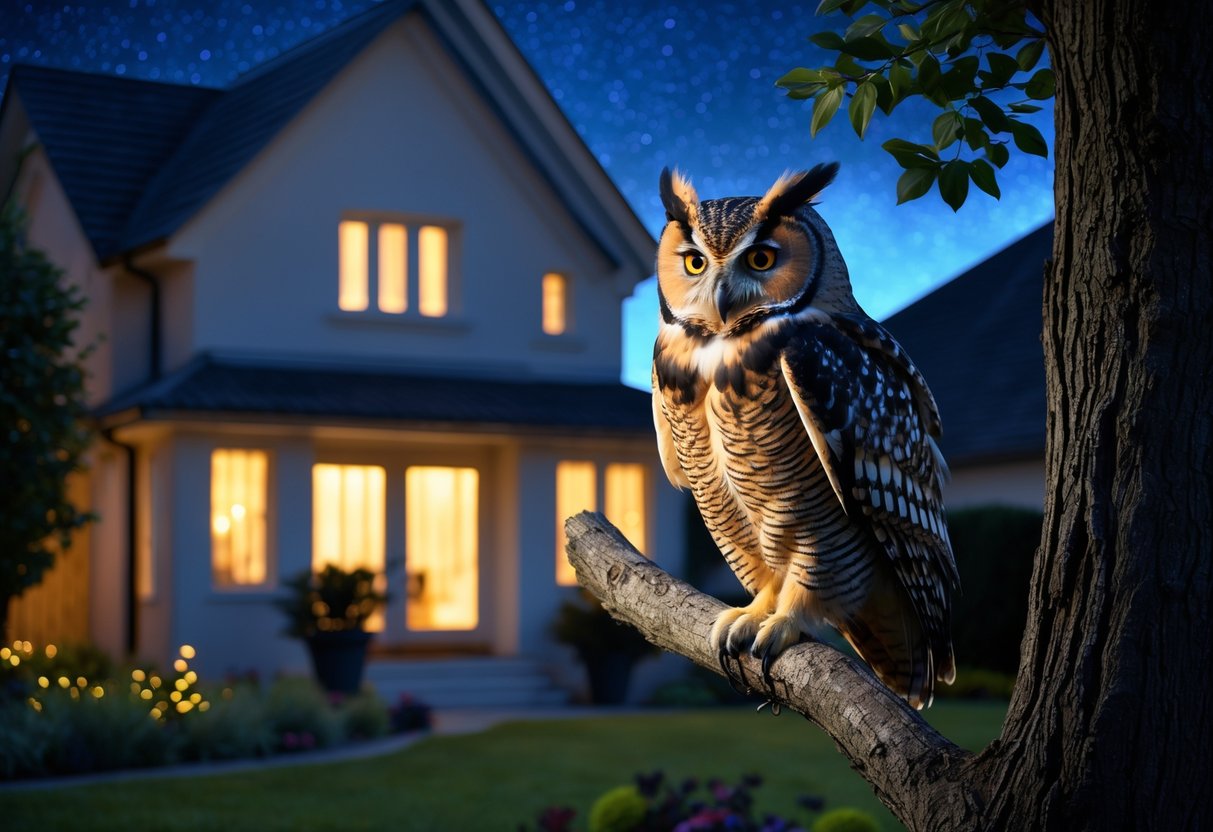
Besides hunting, owls look for places to nest and roost. Trees, sheds, or even just open spaces near your home can seem perfect to them.
When you know what draws them in, you can decide if you want to encourage their visits or gently send them on their way.
Owls really are fascinating. They help control pests and keep the local ecosystem in balance.
Learning what brings them to your place can turn a surprise visit into something kind of cool. For more details, here’s a guide on why owls appear around your house.
Why Owls Visit Residential Areas

Owls come close to homes because they find what they need: food, safe places to rest, or maybe even a yard that just feels right.
Your outdoor lights or the way your yard is set up can sometimes attract them, too.
Different species, like the great horned owl or barn owl, have their own reasons for stopping by.
Hunting for Food Near Your Home
Owls hunt where food is easy to find. If you’ve got mice, voles, or other small rodents running around, your yard looks like prime hunting territory.
Great horned owls and barn owls especially rely on these animals for meals.
A brush pile or garden can bring in rodents, making your place a natural hunting ground.
By leaving those areas, you help owls find shelter for their prey.
Some owls also catch insects or small birds, but honestly, rodents are usually their favorite.
You’ll probably spot owls at dawn or dusk, since that’s when they’re most active.
Suitable Nesting and Roosting Spots
Owls need quiet, safe places to rest and raise their chicks.
They often pick tall trees, old snags (basically dead trees), or nest boxes if you’ve put any out.
Long-eared owls and screech owls sometimes use nest boxes or hollow tree trunks.
If your yard has big trees or just feels peaceful, owls might see it as the perfect spot to roost or nest.
Leaving dead trees standing, as long as it’s safe, helps attract owls.
These spots work especially well for great horned owls raising their young.
Seasonal Migrations and Breeding
Owls might show up during migration or breeding season.
Some species move around depending on the time of year or how much food they can find.
When it’s breeding season, they need safe nests and steady food.
If your area has both, owls may stick around for a while.
Seasonal changes shift owl behavior a lot.
For example, you might see more barn owls in late winter or early spring when they’re nesting and hunting more.
Attracted by Lights and Landscapes
Even though owls love the dark, some get drawn in by outdoor lights because bugs and rodents gather there.
Screech owls might hunt near porch lights where insects swarm.
The layout of your yard matters, too.
If you’ve got trees, quiet corners, and not a lot of commotion, owls might feel welcome.
On the flip side, really bright lights can scare some owls off.
Turning off outdoor lights at night can make things better for nocturnal hunters like the great horned owl.
If you offer food, shelter, and a calm setting, your place might become a regular stop for owls.
Curious about attracting or watching them safely? Check out this info on attracting owls.
Owl Sightings: What They Mean and What To Do

When owls turn up near your place, they bring a lot of stories and symbolism with them.
You might spot different types and maybe you want to watch them without bothering their natural routine.
Myths and Symbolism of Owls
People have seen owls as symbols of wisdom and mystery for ages.
In some cultures, the great horned owl stands for strength and protection.
Others think seeing an owl means you should pay attention to hidden truths or get ready for change.
Barn owls, in some traditions, act as night guardians or guides for souls.
Screech owls, though smaller, remind you to stay alert and trust your gut.
Owls sometimes spook people, but more often, they’re just a nudge to look deeper or listen for guidance.
If you see an owl nearby, maybe it’s just nature—or maybe it’s a little sign to notice what’s happening around you.
Want to dig into the meaning of owl sightings? There’s a lot to explore.
Safely Observing and Supporting Local Owls
If you’re hoping to enjoy the owls around your home, it’s best to do it quietly.
Owls do most of their hunting at night, so keeping lights low and noise down helps them feel safe.
You can support local owls by leaving some trees and natural areas for them to hunt and nest.
If you keep your yard free of rodenticides, you’ll help keep their food safe.
But don’t try to feed or touch wild owls—they need to hunt for themselves.
If you want to watch them, try using night-vision or a red light to avoid disturbing them.
If you ever find an injured or baby owl, call a licensed wildlife rehab center instead of trying to help on your own.
Notable Species You Might Encounter
You might spot these owls near your home:
-
Great Horned Owl: This big owl sports ear tufts and gives off those famous deep hoots. They go after rabbits, squirrels, and, occasionally, even other owls.
-
Barn Owl: You’ll recognize them by their heart-shaped face and how quietly they fly. People often see them gliding over open fields or hanging out near old barns.
-
Screech Owl: These little guys have a bunch of different calls. They’re pretty good at catching insects and tiny rodents.
Every species brings its own quirks and sounds. If you listen closely, you might figure out which owl is hanging around and get a feel for how they fit into your neighborhood.
Curious for more? You can check out examples and details about these owls at What Does It Mean When Owls Begin to Appear Around Your House?.


