
Ever watched your cat get all jumpy or skittish when there’s an owl nearby? You’re not imagining things. Cats get scared of owls because owls are natural predators—those sharp talons and silent wings make them a real threat, especially at night when both animals are out and about. This instinct keeps cats on their toes and helps them avoid trouble with these nighttime hunters.
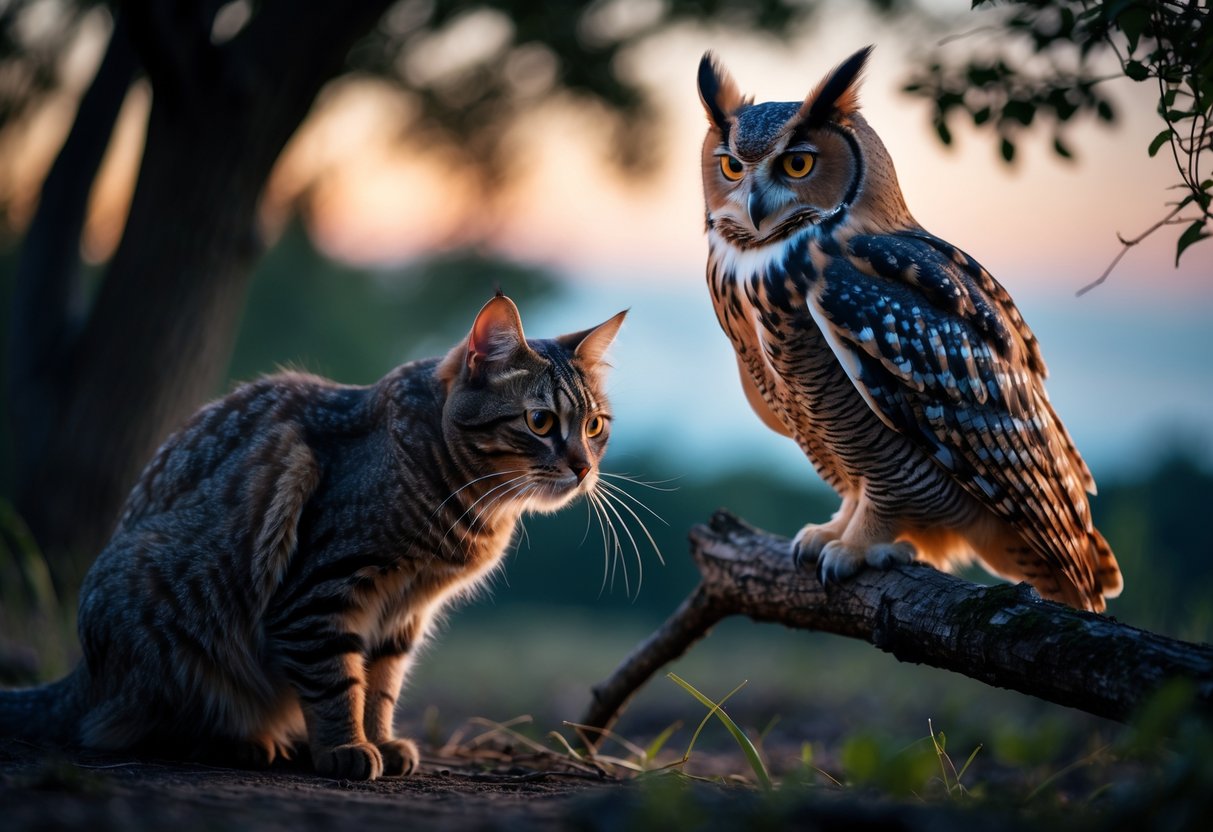
Owls and cats both like to roam after dark, so it’s not unusual for them to cross paths. Owls move so quietly and strike so fast that they can seem almost supernatural to a curious cat.
Most owls won’t go after large cats, but their hunting style and size still make cats wary. It’s just hardwired into them.
If you understand why cats react this way, you’ll have an easier time keeping your pet safe and calm when owls show up in your yard. For more stories and advice, check out this discussion on owls and cats.
Why Cats Fear Owls: Natural Instinct and Predator Awareness

Cats pick up on the presence of owls and react fast because they sense real danger. Their survival instincts kick in, making them stay away from predators.
Sharp senses and the sneaky hunting habits of owls make cats keep their distance. It’s all about staying safe.
Predatory Threats Owls Pose to Cats
Great Horned Owls, in particular, hunt small animals—including cats sometimes. Their strong talons and silent flight make them dangerous hunters at night.
If you have a kitten or a smaller cat, the risk goes up. These birds hunt most actively at dawn and dusk, so that’s when your cat could be in real danger.
Bigger, adult cats usually don’t get targeted, but the threat is enough to keep them on edge. Cats know when to be careful.
Where you live matters too. Owls hang out in wooded spots and rural areas, and if your cat roams there, it’s good to be cautious.
By keeping your cat inside at night, you lower the risk a lot. It’s just one of those things you get used to as a cat owner.
Evolutionary Reasons for Cat-Avoidance Behavior
Cats learned to dodge threats fast over thousands of years. Staying alert to owls helped them survive.
Those who kept away from owls lived longer and passed on their cautious streak. It’s just built into them now.
This isn’t some random fear—it’s a smart, inherited reaction. If your cat freezes or bolts when it sees or hears an owl, it’s just doing what its ancestors did.
Owls attack from above, and cats don’t always see it coming. That’s why even indoor cats might get nervous if they spot or hear an owl outside.
The Senses of Cats: How They Detect Owls
Cats rely on their super-sharp senses to spot owls early. Their hearing picks up even the softest sounds, like an owl’s wings flapping.
Their eyes work well in low light, so they can spot an owl’s shadow or movement at dusk or dawn. Sometimes, just the sound of an owl call or a shadow overhead will make a cat uneasy.
Night vision gives cats an edge, but owls are so quiet that they can still surprise them. Quick reflexes help, but most cats would rather steer clear of owls altogether.
If you want to dig deeper, check out this detailed guide on why cats fear owls.
Encounters Between Cats and Owls in the Wild

Sometimes, cats and owls meet in the wild, and things can get tense fast. Larger owls pose a real threat, while cats rely on their instincts to avoid trouble.
These encounters can change how your cat acts outside. You might notice your cat being extra cautious after a run-in with an owl.
Great Horned Owls as Cat Predators
Great horned owls are big and powerful, with talons that can do serious damage. They sometimes see small or young cats as prey.
These owls hunt mostly at night, and if they’re hungry or feel threatened, they might attack. If your cat goes out after dark, the risk is definitely higher.
Great horned owls move fast and quietly, so cats don’t get much warning. They mostly avoid bigger adult cats, but even those can get spooked.
Their size and strength make them serious predators. It’s smart to keep an eye on your cat during dusk and nighttime.
Outdoor Risks for Feral and Pet Cats
Feral cats and outdoor pet cats face different risks from owls. Feral cats tend to roam more at night, which puts them in harm’s way.
Pet cats might only be outside during the day, but you still need to be careful. Small or young cats are the easiest targets for owls.
An owl’s silent swoop and sharp claws make it hard for a cat to react in time. If you want to keep your cat safe, bring them inside after dark.
Watch for tall trees or roof edges where owls like to perch. It’s a little thing, but it helps keep your furry friend out of trouble.
Behavioral Changes in Cats After Owl Encounters
If you’ve ever seen your cat act strange after hearing an owl outside, you’re not alone. Some cats just freeze up or dash for cover, ears flattened and bodies pressed low to the ground.
Others might get weirdly curious, but they’ll keep their distance—maybe peeking out from behind a window or bush. You might catch your cat’s tail twitching or see their ears swivel toward every hoot or rustle.
Does your cat seem jumpy at night? Try keeping them indoors or letting them hang out on a covered porch. A safe spot can help your cat relax until the owl finds somewhere else to hunt.
Honestly, every cat’s different. Some shrug off the whole owl thing, while others get spooked for days. Just keep an eye out if your cat suddenly starts acting off after an owl drops by.
For more on owls and cats you can visit Are Cats Afraid of Owls: Surprising Facts Revealed.


