
If you’re curious about whether it’s rare to see an owl during the day, well, the answer might surprise you. While most owls come alive at night, some species actually prefer the daylight, and others will hunt during the day if they can’t find enough food after dark.
So, spotting an owl in the sunshine isn’t always as unusual as people think.
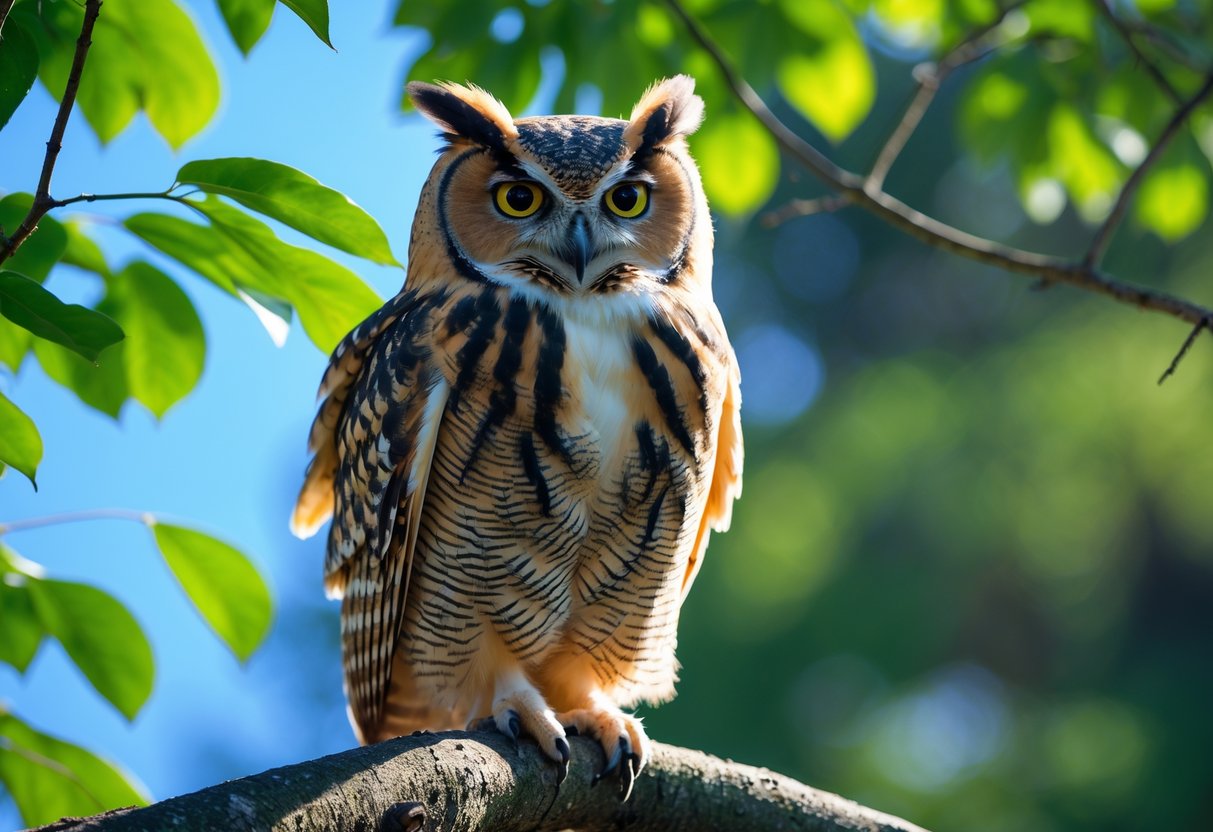
You might bump into owls like the Northern Hawk-Owl or the Snowy Owl in broad daylight since they naturally hunt when the sun’s up. Night-loving owls will also sometimes break their routine and hunt during the day if the opportunity pops up.
That means your daytime owl sighting could be a rare treat, but it’s not unheard of.
If you’ve ever wondered why owls show up in the day or what’s going on when they do, there’s a lot to dig into. Let’s take a closer look at which owls are out when the sun is shining and what drives this behavior.
How Rare Is It to See an Owl During the Day?

Spotting an owl in the middle of the day can feel odd since most owls prefer the darkness. Still, how rare it is really depends on which species you’re looking at and what’s happening around them.
Some owls just don’t mind the daylight as much as you’d expect.
Typical Owl Activity Patterns
Most owls stick to the night, hunting and moving around after dark. You probably won’t catch a glimpse of species like the great horned owl or barred owl in daylight, since they usually rest somewhere quiet and hidden.
But then, there are owls that break the mold. Diurnal or crepuscular owls, for example, are active during the day or around dawn and dusk.
Northern hawk owls and snowy owls, for instance, often hunt while the sun is up.
Sometimes, an owl will hunt during the day if food is tough to find at night. Injured or disturbed owls might also show up when you least expect it.
Species Commonly Seen in Daylight
Some owls just don’t hide as much when the sun’s out:
-
Barred Owl: Mostly nocturnal, but you’ll sometimes see them hunting during the day, especially in winter if food gets scarce. They’re pretty common in forests.
-
Burrowing Owl (Athene cunicularia): These little guys live out in open areas and are often up and about during daylight, so they’re easier to spot.
-
Northern Hawk Owl (Surnia ulula): You’ll find this species hunting mostly in daylight, especially in northern forests.
-
Snowy Owl (Bubo scandiacus): These big white owls live in cold places up north and often hunt during the day, particularly in winter.
-
Northern Pygmy Owl (Glaucidium gnoma): They’re small and quick, and sometimes hunt small birds during the day.
You probably won’t see great horned owls in the day very often, but it does happen. Young owls that haven’t quite mastered hunting yet tend to be more visible in daylight.
Factors That Influence Daytime Owl Sightings
A few things can change your odds of seeing an owl during the day:
-
Season: In winter, prey is harder to catch at night, so owls may hunt more during daylight.
-
Habitat: Owls that live in open spaces, like burrowing owls, are just easier to spot than those hiding deep in forests.
-
Behavior: If owls are nesting or feeding hungry chicks, you might catch them out and about in the day.
-
Human Disturbance: Sometimes, injured owls or those chased by other birds end up active in daylight.
-
Local Food Supply: When mice and other small critters are scarce, owls have to hunt whenever they can, even if that means in the middle of the day.
Knowing about these factors gives you a better shot at finding these amazing birds when you’re out and about. You might catch a glimpse when you least expect it. For more about barred owl daytime activity, you can check out this detailed explanation.
Daytime Behavior and Adaptations of Owls

People usually think of owls as nighttime hunters, but some of them do get active when the sun’s up. Their daytime habits change depending on the species, what they need to eat, and how they stay safe.
You’ll find that they rest in well-hidden places and hunt during the day if their food demands it.
Reasons Owls Are Sometimes Active by Day
Owls like the Great Horned Owl (Bubo virginianus) and Barred Owl (Strix varia) mostly stick to the night, but they’ll come out during the day if food runs low or if their favorite prey is active then.
Species such as the Northern Saw-whet Owl (Aegolius acadicus) or the Long-eared Owl (Asio otus) sometimes hunt in the early morning or late afternoon.
Owls might also adjust their routines if there’s less competition from other raptors or songbirds during the day.
Weather and nearby predators can push owls to change their schedules too. Some, like the Barn Owl (Tyto alba), prefer dawn and dusk but don’t mind hunting at midday when it’s needed.
You might notice, if you ever visit a raptor center or check out research like Project Snowstorm at the University of Minnesota, that owls can be a lot more flexible than you’d think.
Camouflage and Roosting Strategies
When the sun’s out, owls depend on camouflage and clever roosting to stay safe. Spotting them isn’t easy, since they pick places that match their feathers and surroundings.
Owls such as the Great Gray Owl (Strix nebulosa) and Long-eared Owl hide in dense branches or thick leaves near where songbirds hang out. Their soft feathers keep them quiet, and they’ll often roost alone—sometimes in small groups to stay warm or keep an eye out for predators.
You can sometimes find owl roosts near areas with lots of food, since they like to rest close to good hunting spots.
They’ll hide in tree cavities, old nests, or dense evergreens. If you look carefully, you might just spot one in a spot you never expected, since their camouflage makes them almost invisible.
Daytime Hunting and Diet Preferences
Most owls hunt at night, but you’ll find a few species that actually go after food during the day. Hunting in daylight lets these owls catch prey that’s out and about when the sun’s up.
Barn Owls, for example, glide low over open fields. They’re always on the lookout for rodents. Northern Hawk Owls do things differently. They perch up high, scan the ground, and then swoop down in broad daylight.
Owls eat all sorts of things—small mammals like mice and voles, but also insects, frogs, and sometimes even birds. Some owls really go after insects when the sun’s out, turning into insectivores for the day.
These “soft hunters” depend on sharp hearing and keen eyesight. That comes in handy when they’re after songbirds or rodents hiding nearby.
If you’re curious about owls, watching them during the day can be pretty eye-opening. Try visiting a local raptor center or checking out the Cornell Lab of Ornithology. You’ll see firsthand how their hunting styles and diets shift with the time of day.


