
Ever wondered if owls can just move around freely at night? Yeah, they totally can. Owls navigate and hunt in the dark because their eyes have loads of rods, letting them see well even when it’s barely light out. This neat adaptation means they’re out and about while most animals are catching some Z’s.
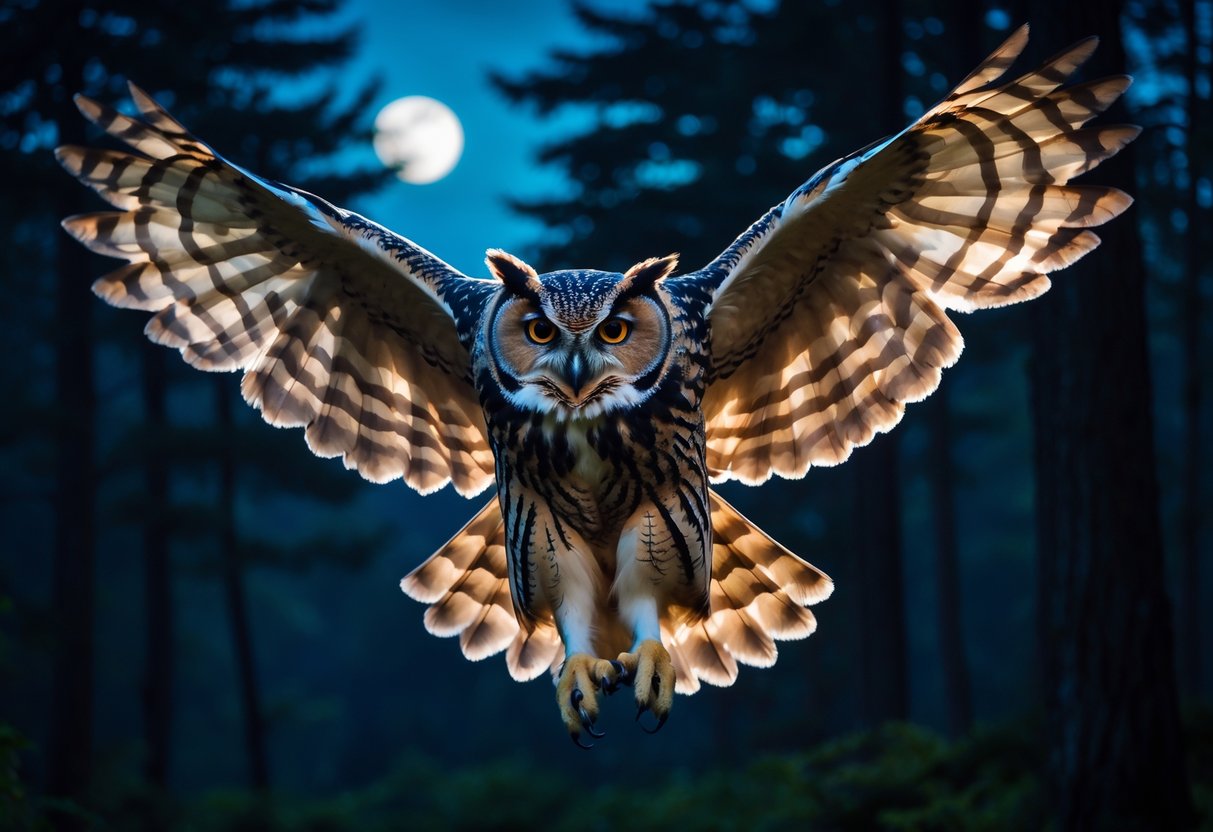
Maybe you’re curious how they manage to move so quietly. Well, besides their awesome night vision, owls have super-soft feathers that hush their flight. That makes sneaking up on prey a whole lot easier.
Learning how owls work at night shows just how unique they are in nature. There’s a lot going on behind those big eyes.
Nocturnal Behavior and Nighttime Movement

Owls stay busiest when it’s dark outside. They rely on special skills to move quietly and hunt at night.
Depending on the species and where they live, their nighttime habits can vary quite a bit.
What Does Nocturnal Mean for Owls?
When we call owls nocturnal, we mean they’re up and active at night. Most owls hunt for food in low light, which helps them dodge daytime predators and avoid a lot of competition.
Their bodies just seem made for nighttime living. During the day, you’ll find them tucked away in tree holes or deep branches, hiding out and resting.
When night falls, they wake up, sleep less, and use those sharp senses to hunt. Not every owl is a pure night owl, but plenty of them count on the dark for safer, easier hunting.
How Owls Navigate and Hunt in the Dark
Owls have these huge eyes that suck in light, so they spot even the tiniest movement. Since their eyes stay put, they turn their heads instead—sometimes almost all the way around.
Their hearing is wild, too. Many owls have ears set at different heights, so they can tell exactly where a sound comes from—even under a pile of snow.
Their wing feathers soak up sound, so when they fly, it’s almost spooky how quiet they are.
Some owl hunting features worth noting:
- Big eyes for seeing in the dark
- Neck that swivels way farther than yours
- Asymmetrical ears to pinpoint tiny noises
- Silent wings for sneaking up on prey
Differences Between Nocturnal and Crepuscular Owls
Some owls stick to the night, while others prefer dawn and dusk. Crepuscular owls get moving when it’s not quite bright but not pitch black either.
Take the Great Horned Owl—it hunts at night and during those in-between hours. Barn Owls, on the other hand, usually hunt when it’s fully dark.
If you want to spot an owl, think about what time it is and which species live nearby. Their habits really depend on what works for them.
You can check out more about these behaviors at Nocturnal Adaptations of Owls or see which owls are up during the day at Owl Facts – Science Trek.
Special Adaptations for Night Mobility

Owls are just built for smooth, quiet movement in the dark. Their flight, hearing, and vision all work together to make them some of the best nighttime hunters around.
These features help owls like the barred owl or great horned owl move around safely after sunset.
Silent Flight and Hearing Abilities
You probably won’t hear an owl flying overhead. Their soft wing feathers have tiny fringes that break up air noise, letting them flap without a sound.
This helps species like the great gray owl and snowy owl sneak up on prey.
Their ears play a big part, too. Owls like the barn owl and long-eared owl have ears at different heights, so they can tell where every little sound comes from—even if it’s under leaves.
That way, they catch prey without being seen or heard.
Unique Vision and Head Movement
An owl’s huge eyes take up most of its skull, which gives it incredible night vision. Owls like the northern hawk owl and saw-whet owl can see clearly even in almost complete darkness.
But since their eyes can’t move around, owls turn their heads instead. Thanks to extra neck bones, species like the northern saw-whet owl and great horned owl can rotate their heads up to 270 degrees.
This lets them watch for prey or danger without moving their whole body.
Talons, Camouflage, and Survival Strategies
Your sharp talons make awesome tools for catching and holding prey in the dark.
Owls like the short-eared owl use those strong claws to grab animals fast and almost silently.
Camouflage matters a lot when you need to stay hidden at night.
The barred owl’s striped feathers blend right in with tree bark. And if you look at the snowy owl, its white feathers help you vanish in snowy places.
These patterns really help you avoid predators and sneak up on prey.
With all these tools, you can fly quietly, listen for the tiniest sounds, or just stay hidden in plain sight.


