
Ever wondered if owls actually like being around people? You’re definitely not alone. Owls are wild raptors, and honestly, they don’t usually want to hang out with us.
Most owl species keep to themselves and avoid people. They rely on their instincts, so they act pretty cautious. Most won’t put up with much handling or close contact.
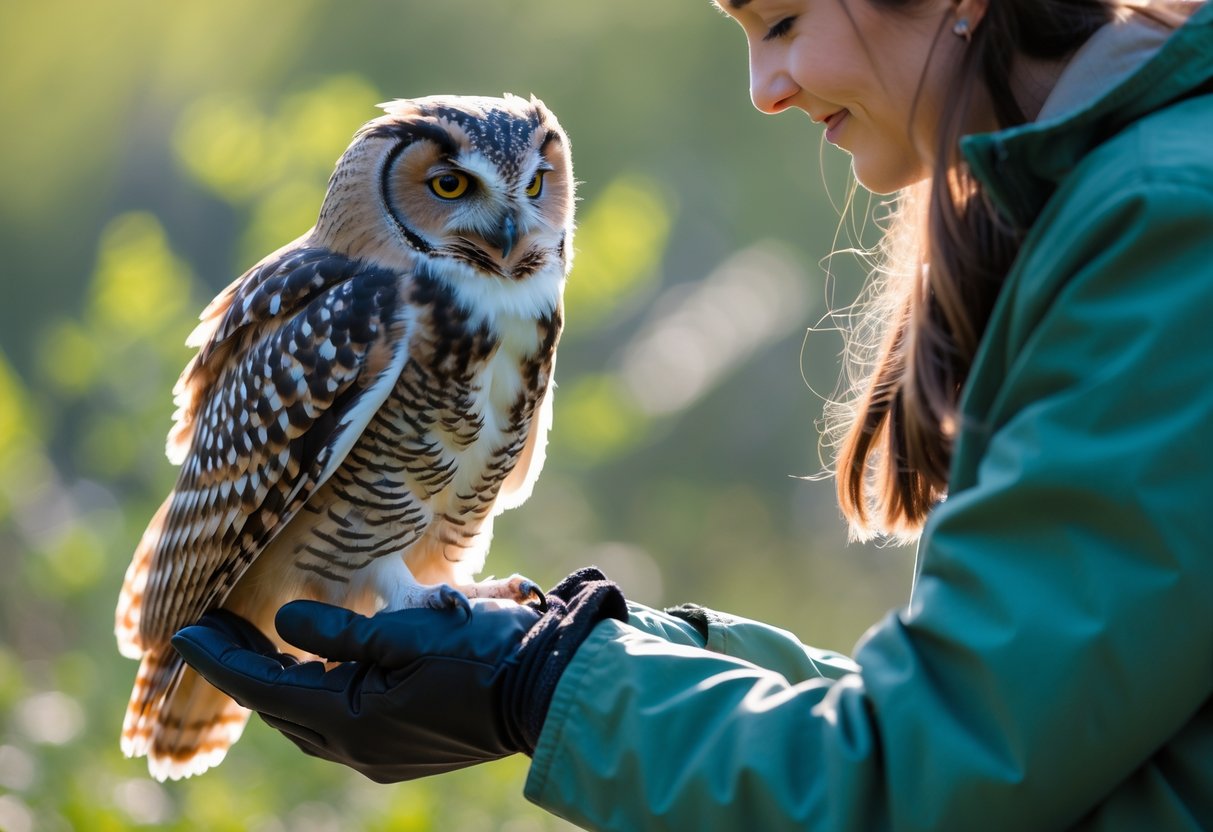
Some owls raised by humans might seem comfortable or even affectionate. That’s rare and takes a lot of time and patience.
Wild owls usually see us as a threat. If you approach too closely, you’ll probably stress them out or scare them off.
It’s important to understand how they behave so you can respect their space. That way, you won’t disturb them in their own world.
How Do Owls React to Human Presence?

Owls react to people in all sorts of ways, depending on where they live and how they grew up. Some owls avoid people completely.
Others might tolerate us, or even seem curious. If you watch their body language, you can usually tell if they’re calm or stressed.
Wild Owls Versus Captive Owls
Wild owls like the great horned owl, barred owl, and burrowing owl usually keep their distance. Most wild owls act wary because they see people as possible threats.
They might freeze, stare with wide eyes, or just fly away if you get too close. Loud noises or sudden moves? Yeah, they hate that.
Barn owls and elf owls often hide during the day since they’re mostly active at night.
Captive owls—like those in rehab centers—sometimes get used to people. They might seem more relaxed or not fly off as quickly.
Even then, captive owls still need space and gentle handling. If you see them preening or stretching, they’re probably comfortable.
But if they’re staring wide-eyed or fluffing up, they’re uneasy and need a break.
Signs of Stress in Owls
Owls show stress through their body language and actions. If an owl’s eyes are wide and the pupils are tiny, it’s probably scared or super alert.
Sometimes owls blink really fast (the “go-away” blink) to warn you off.
You might notice an owl holding its feathers tight or keeping its head down. Some, like barn owls, shake their heads or fan their wings to threaten.
Stressed owls—like great horned or barred owls—might bob their heads or look around quickly, getting ready to fly. In warm weather, a stressed owl might even start panting.
Imprinting and Socialization in Owls
Occasionally, owls become friendly with people through imprinting. This happens when a young owl grows up around humans and starts to see them as family.
Imprinted owls might follow people, call out, or even beg for food. You’ll sometimes see this with great horned or barn owls raised by hand.
Socialized owls can look affectionate, but wild owls don’t act this way naturally. Imprinting actually makes survival harder for them if they rely too much on people.
It’s always best to watch wild owls from a distance. Feeding them? Not a good idea—it puts their natural behavior and safety at risk.
If you’re curious about observing owls the right way, check out respectful owl photography and observation.
Owl Behavior Around People by Species

Different owl species respond to humans in their own way. Some get used to us if they live nearby.
Others stay shy or even stressed, no matter what. Knowing how each species acts makes it easier to enjoy them without causing problems.
Great Horned Owl Encounters
The Great Horned Owl (Bubo virginianus) sometimes acts surprisingly tolerant of people, especially in cities or suburbs. You might spot one that doesn’t fly off even if you walk by.
Some even nest near houses and seem unbothered by daily noise.
If you see one preening or stretching, it’s probably calm. But if its eyes go wide or it looks ready to fly, it’s time to back off.
It’s better to keep your distance and stay quiet so you don’t upset it.
Barn Owls and Human Interaction
Barn Owls (Asio flammeus) usually act shy, but you can find them near farms or open fields where people work. They avoid close contact and might show threat signs if disturbed—like lowering their head, rocking, or fanning their wings.
If you notice a Barn Owl acting nervous, give it some space. They tend to avoid people more than Great Horned Owls do.
Since Barn Owls hunt at night, seeing one during the day is rare and might mean it’s been disturbed or isn’t feeling well.
Other Notable Owl Species Near People
Some smaller owls, like the Northern Saw-whet Owl and Western Screech-Owl, sometimes get used to people. If you move quietly and slowly, these owls seem to tolerate your presence a bit more.
Snowy Owls and Short-eared Owls hunt during the day, so you might spot them more often. Still, they want plenty of space.
Owls such as the Great Gray Owl, Boreal Owl, and Northern Pygmy-Owl tend to steer clear of humans. If you feed them or get too close, you can really stress these birds out.
It’s best to watch quietly and keep your distance. Respecting their space helps keep owls safe—and honestly, it just feels right if you care about them. Curious for more? Check out respectful owl photography and observation.


