
When you hear an owl hooting at night, it’s not just making noise for the heck of it. Owls hoot to send out important messages—like marking their territory or keeping close with their mates. That simple sound actually means a lot in the quiet darkness.
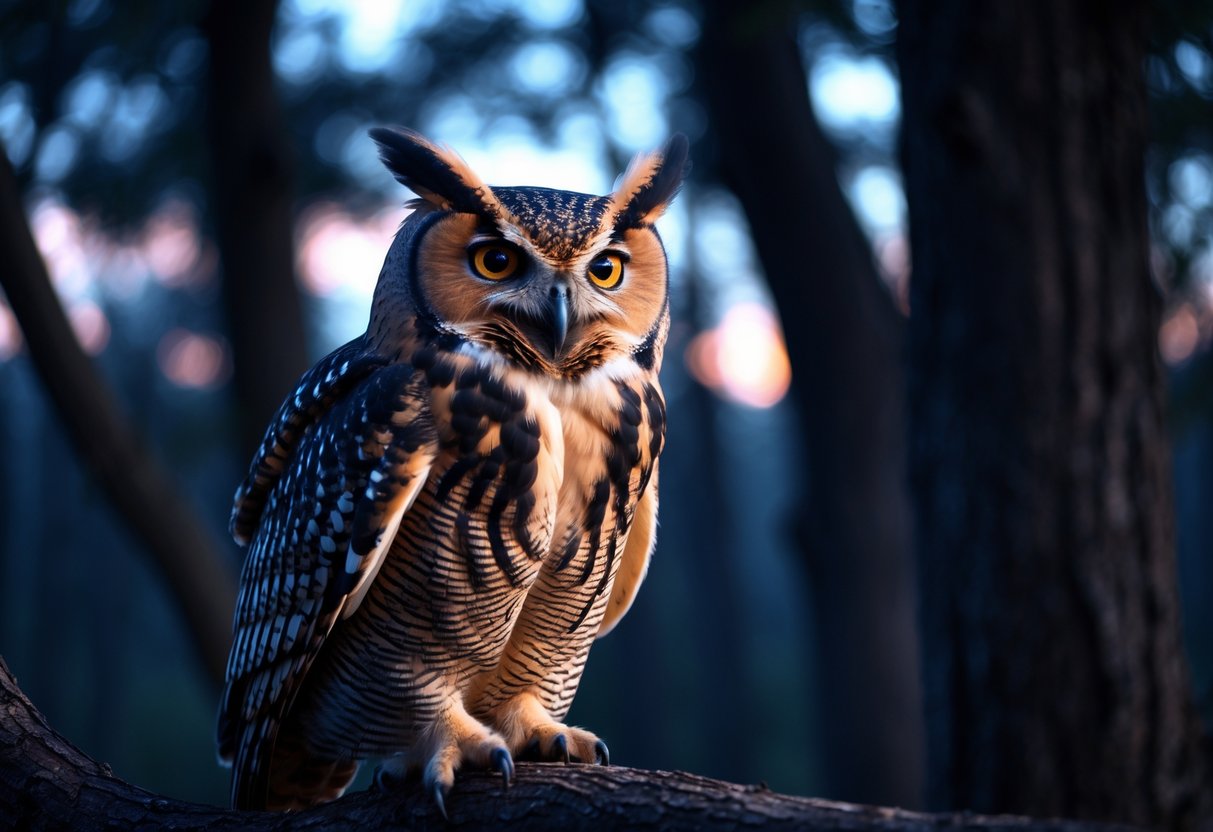
Your neighborhood owl might be telling others to back off or just letting everyone know where it lives. Sometimes, owls hoot together in pairs, especially during breeding season, to keep their bond strong.
If you know what those hoots mean, listening at night can get a lot more interesting. You might even start to feel like you understand these mysterious birds a little better.
Primary Reasons Owls Hoot

When you hear an owl hoot, there’s a reason for it. Owls use hoots to claim their space, attract a partner, or warn others about danger.
Each hoot carries a message that matters to the owl’s life.
Territory Marking and Defense
Owls hoot to claim their territory and keep others at bay. When a great horned owl hoots at night, it warns other owls that this spot is already taken.
A deeper, louder hoot sends an even stronger message. That way, they can avoid unnecessary fights.
Barred owls do this too, hooting to set their boundaries. Local owls are just protecting their hunting grounds and nests with these calls.
If another owl ignores those hoots, the resident owl gets louder or more aggressive. This back-and-forth lets you know there’s some action happening.
You’ll probably hear these hoots most at dusk or late at night, when owls are up and moving.
Mate Attraction and Pair Bonding
Hooting plays a big role when owls look for mates. Male great horned owls usually start with a long hoot, then a few shorter ones.
This pattern signals to females that someone’s nearby. If a female answers with her own call, that’s the start of a pair bond.
After they mate, owls keep hooting to stay close. Sometimes you’ll hear duets, with each owl answering the other from a distance.
It’s kind of sweet—like sending love notes through the night.
Warning Calls and Alarm Signals
Owls also hoot to warn about danger. If one spots a predator or something sketchy, it might let out a sharp or loud hoot to tip off others.
That helps keep everyone safe. Sometimes you’ll hear a sudden, odd-sounding hoot that just means, “Heads up!”
Great horned owls especially stay alert and use their hoots to warn about risks. Barred owls have their own alarm calls too, letting others know if there’s trouble or an intruder.
Your local owl might be saying, “Hey, something’s not right.”
Types of Owl Hoots and Their Meanings

Owls use different hoots for different reasons. The sounds change by species, who they’re talking to, or even if it’s a young owl learning the ropes.
Each hoot gives you a clue about what’s going on with the owl.
Species-Specific Hoot Patterns
Every owl species hoots in its own style. The Great Horned Owl has a deep, rhythmic “hoo-hoo-hoo hoo hoo” that marks its territory and shows rivals it means business.
The Barred Owl sounds more like it’s asking a question: “Who cooks for you? Who cooks for you-all?” That pattern makes it easy to spot in the woods.
The Northern Saw-whet Owl doesn’t really hoot—it lets out a high-pitched, rapid trill. That call helps it announce itself without being too obvious.
If you pay attention, you can start to recognize owls just by their unique sounds.
Duets and Communication Between Pairs
When two owls pair up, their hoots turn into a conversation. They might call back and forth, matching or mixing up their hoots.
That keeps their bond strong and shows they’re sharing the same territory. For example, Great Horned Owls often hoot in duets during courtship.
That tells other owls they’re a couple and ready to mate. Barred Owls have their own male and female calls, using them to keep in touch through the night.
These duets sound way more peaceful than the loud, aggressive hoots used to warn away rivals.
Juvenile and Non-Hoot Vocalizations
Young owls don’t start out hooting like the adults. Instead, they’ll use whistles, chirps, and some pretty soft sounds to grab their parents’ attention.
These calls can tip you off if there are owlets nearby or if they’re hungry and asking for food. As they get older, juvenile owls might try out hooting, but honestly, it’s pretty mixed in with screeches or little trills.
Some owls throw in non-hoot sounds too. You might hear hisses or growls when they feel threatened.
Take a Barred Owl, for example. If it’s scared or guarding its nest, it might hiss to warn you off.
If you listen closely, you can start to pick up on the mood and age of the owls just by the sounds they make.


