
Ever wonder if owls hear better than humans? The answer’s honestly pretty obvious: owls have way sharper hearing, especially for certain sounds and directions. Their ears help them pick up tiny noises we’d never notice, which is why they can hunt in pitch darkness.
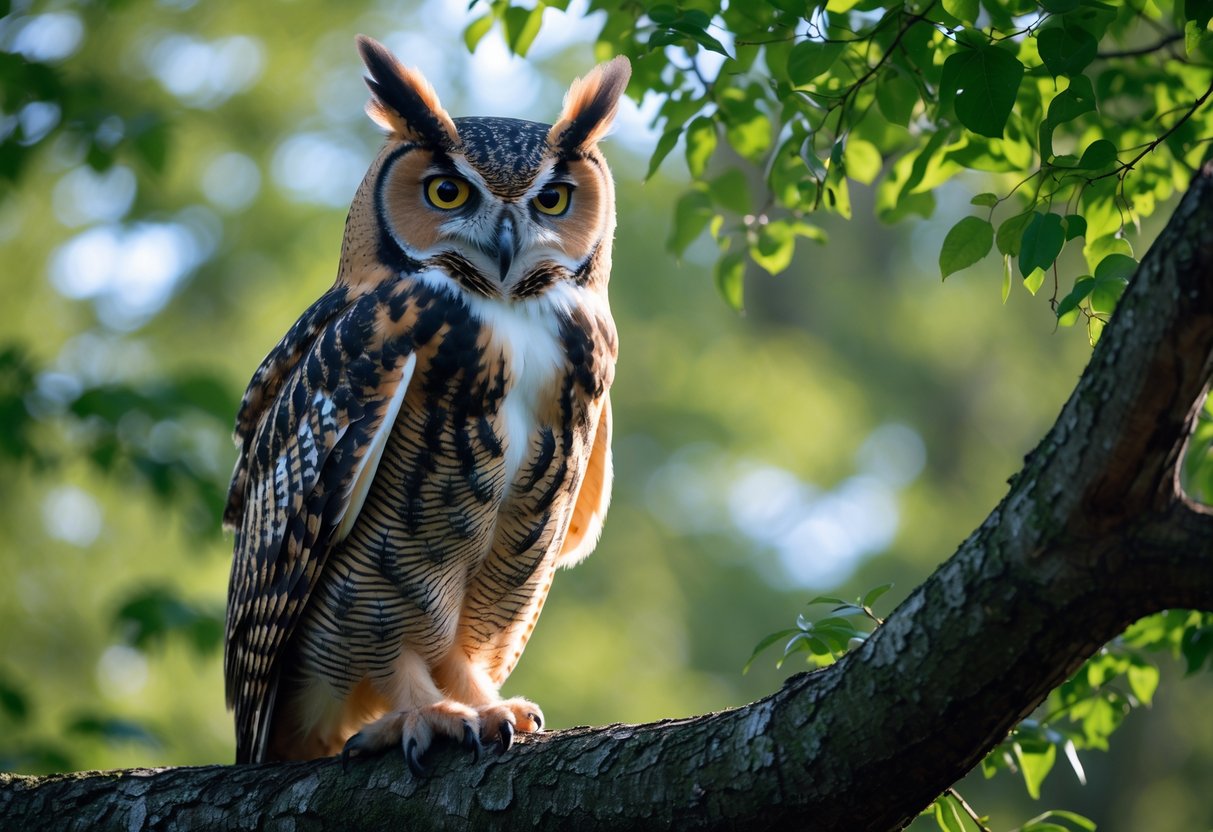
What’s wild about owl hearing is how their ears sit unevenly on their heads. This odd setup lets them figure out not just if a sound’s coming from the left or right, but also above or below.
Humans just can’t do that as well, and it gives owls a serious advantage when they hunt.
Most people think owls just use their eyes, but honestly, their hearing matters even more. It lets them catch animals hiding under snow or leaves.
Let’s dig into how owls use this superpower in the wild and why it’s so important for them.
Owl Hearing vs Human Hearing

Owls and humans both hear a ton of sounds, but owls pick up quieter noises and figure out where they’re coming from much better. Their ears and faces are built for listening, especially when it’s dark out.
How Owl Hearing Compares to Human Hearing
Humans can hear a wide range of sounds, but owls can pick up much softer noises, especially between 0.5 to 10 kHz. Owl hearing is about ten times more sensitive than ours at some pitches.
This lets them hear tiny movements like a mouse sneaking through leaves.
Owls also notice tiny differences in how fast a sound reaches each ear. They can pinpoint where a sound comes from in just 0.00003 seconds.
Humans, even with good hearing, can’t match that level of detail.
Anatomy of Owl Ears and Facial Disks
Owls hide their ears under feathers on the sides of their heads, and the ears usually aren’t lined up evenly. This uneven placement lets them figure out where a sound is coming from in three dimensions—left, right, up, down.
Their facial disk acts like a funnel. It grabs sound waves and pushes them toward the ears.
It’s kind of like a satellite dish, but for sound.
Some owls can even move the feathers around their faces to tweak the shape of the disk. This helps them focus on sounds they care about most.
How Owls Use Sound to Hunt
Owls rely on sound when they hunt. They can hear prey moving under leaves, snow, or thick grass.
When an owl hears something, it turns its head so the sound hits both ears at the same time. That tells it exactly where the noise is coming from.
Owls keep their heads locked on the sound as they fly. If prey moves, they shift their flight in real time.
Just before they strike, they spread their talons and go for the catch. This kind of accuracy is what makes owls such expert nighttime hunters.
If you want more details on how owl ears work, check out this page: Owl Ears & Hearing.
Unique Hearing Abilities of Different Owl Species

Owls show off some pretty wild hearing tricks to help them find prey, even when it’s tough. These skills change depending on the species and where they hunt.
You’ll see how the great horned owl, short-eared owl, and eastern screech owl each use their ears in their own way.
Great Horned Owl Hearing Adaptations
The great horned owl has crazy good hearing that lets it catch prey moving under leaves or snow. Its ears sit unevenly on its head, which helps it figure out where sounds come from, both sideways and up or down.
Their facial feathers form a disc shape, working just like a satellite dish to scoop up sound waves.
This owl can tell if something is above or below it, not just left or right.
Since these owls often live in thick forests or even near people, their hearing lets them hunt quietly and grab small mammals or birds, even when it’s pitch black.
Short-Eared Owl Sound Detection
Short-eared owls usually hunt at dawn and dusk in open fields. Their ears are also uneven, but set up to pick up low-frequency sounds really well.
That’s perfect for finding rodents hiding in the grass.
Their ear openings hide under feathers, which protect them from wind and noise but still let important sounds through.
These owls listen for tiny rustles or movement, not loud noises. Their sharp hearing helps them track down prey, even if it’s hiding under grass or snow.
Eastern Screech Owl Listening Skills
The eastern screech owl hangs out surprisingly close to home, usually in wooded spots or even right in the suburbs.
Its hearing? Honestly, it’s incredible—these owls pick up the faintest rustles from insects, tiny mammals, or birds.
You might notice their small ear openings, tucked away under soft feathers. Those feathers don’t just look nice; they guide sound straight to the owl’s ears.
With this setup, the owl can figure out exactly where a little mouse or cricket is hiding in the dark.
The screech owl also tilts its head when it hears something interesting. That head tilt helps it zero in on the source, making it a shockingly effective night hunter—even if it’s just outside your window.


