
Owls look like they totally own the night, gliding quietly through the trees. But honestly, when it comes to rain, they’re not as tough as you might expect.
Maybe you’ve wondered if owls can handle getting wet, or if rain really messes with their flying and hunting. The short answer? Yep, owls get wet, and their feathers don’t keep out water like some other birds, so rain actually makes flying a lot harder for them.
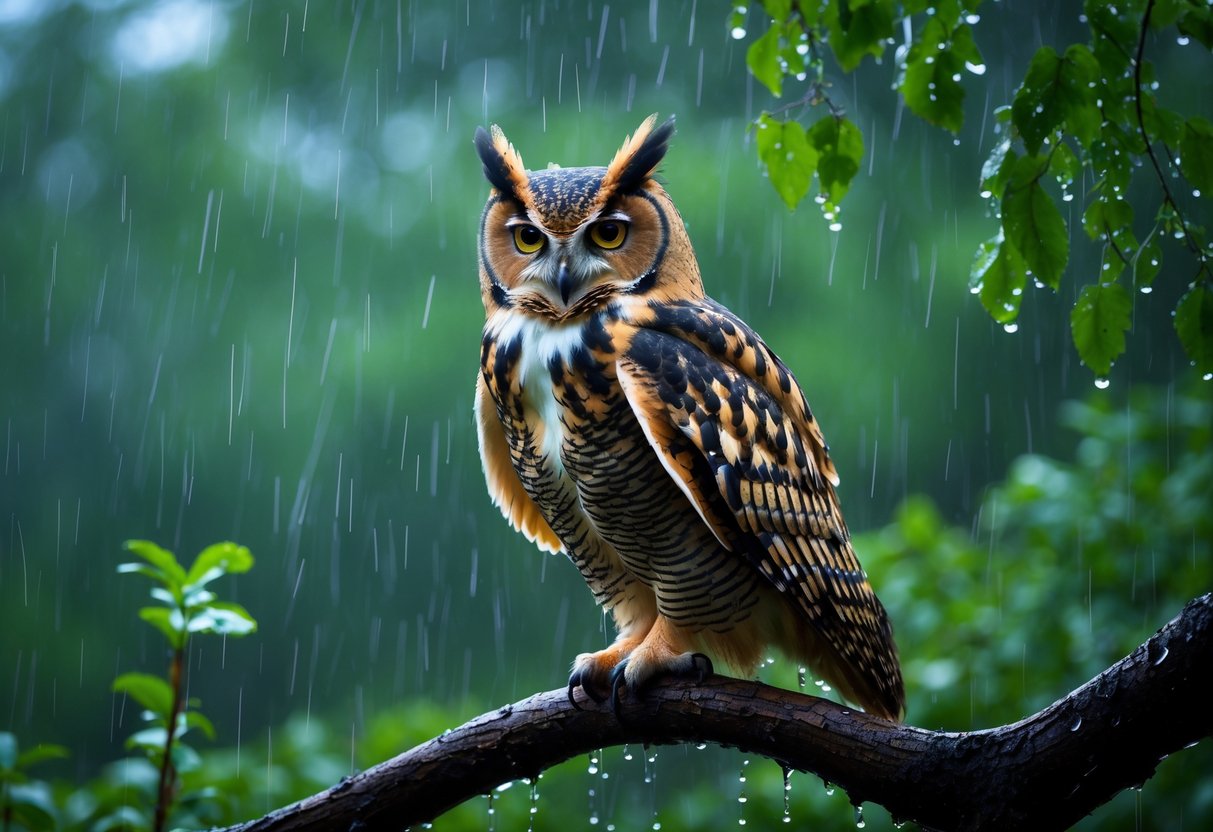
Their feathers feel soft and help them fly silently, but rain just soaks right in. When an owl gets drenched, it loses that quiet flight and might even have trouble getting off the ground.
So, owls usually avoid heavy rain and often stop hunting during storms to stay safe and dry.
If you spot an owl just sitting still on a rainy day, now you know why. Seeing how rain affects owls can really change how you look at these birds.
You might even find yourself watching for how they deal with wet weather out in the wild.
Can an Owl Get Wet? The Truth About Owl Feathers and Rain

Owls have feathers that are nothing like waterbirds such as ducks. Their feathers stay soft for silent flight, but that means water soaks in easily.
So, when it rains, owls get wet—sometimes way too wet to fly or keep warm.
How Owl Feathers React to Water
Owl feathers soak up water fast, since they don’t have waterproof oils. Ducks gave up silence for waterproofing, but owls did the opposite.
Rain just sinks into those fluffy feathers, instead of rolling off. The feathers get heavy and stop doing their job.
That softness is great for stealth, but it’s not so great when it rains.
Why Owls Are More Vulnerable to Getting Wet
Owls steer clear of heavy rain because their feathers can’t block water. When wet, their feathers turn dense and soggy, making flying tough.
You might catch owls hiding in trees or under leaves when the weather turns bad. Wet feathers make their flight noisy and slow.
Rain really becomes a problem for owls, especially if they need to hunt or get away from danger.
Consequences of Wet Feathers for Owls
If an owl gets soaked, it faces a few big problems. Wet feathers make flying smooth and silent almost impossible.
That can keep an owl from catching food or escaping quickly.
Damp feathers also steal warmth, especially when it’s chilly out. Owls lose heat faster when wet, since their feathers don’t repel water like a duck’s do.
So, owls search for shelter during storms to stay warm and dry.
You can check out more about how owls deal with water on this page about owl waterproofing and rain sensitivity.
How Owls Cope With Wet Conditions

Owls don’t have waterproof feathers like ducks, so wet weather gives them a real challenge.
You’ll see them use different tricks to stay dry and avoid getting totally soaked.
Sheltering Behaviors During Rainy Weather
When it starts pouring, owls like the great horned owl pick a covered spot—a thick branch, heavy leaves, anything with shelter.
They’ll sometimes hold out their wings or fluff up to help themselves dry off a bit faster.
Owls skip flying in heavy rain because their soft feathers soak up water and make silent flight almost impossible. You might spot them just waiting for the rain to let up before they go back to hunting.
Nesting Strategies to Avoid Getting Wet
Owls pick nesting spots that help them stay dry. High trees or tree cavities work best for keeping out the rain.
Great horned owls especially like places with thick branches or natural covers to keep rain away from their eggs or chicks.
These choices just make sense—they help keep nests from flooding or getting too wet during storms.
What Happens When Owls Fall Into Water
When an owl falls into water, things can get risky pretty fast. Their feathers feel super soft and help them fly quietly, but honestly, they aren’t built to handle water at all.
Water soaks their feathers almost instantly. The poor owl gets heavy and can’t really fly, so escaping predators becomes a huge challenge.
Sometimes, you’ll see an owl preening like crazy afterward, trying to dry off and get back in the air. Curious about how owls deal with getting wet in general? There’s a pretty detailed explanation here: how owls manage rain.


