
Owls have a reputation as quiet hunters, but maybe you’ve wondered if they actually make noise while flying. Honestly, most owls fly almost silently—and that’s all thanks to some pretty amazing features on their wings and feathers that muffle sound. This stealthy flight gives them a big advantage when sneaking up on prey.
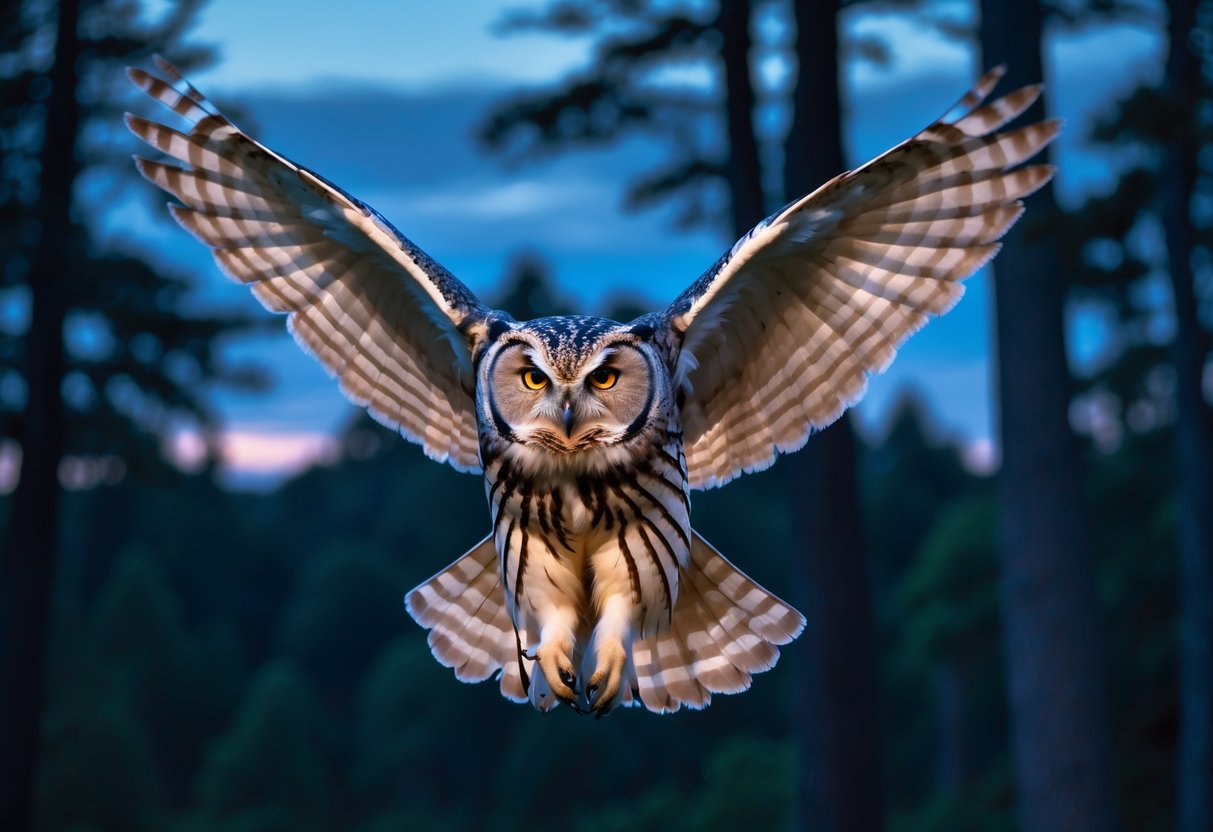
When an owl flaps its wings, the broad shape and soft feathers work together to break up air turbulence and soak up noise. So, you probably won’t hear an owl in flight, especially at night when they’re out hunting.
Sometimes, young owls or those working extra hard might make a bit of noise, but honestly, most of the time their flight is basically silent.
Curious about how owls pull off this silent flight? Or why it matters so much for survival? Keep reading—you’ll see some of the coolest ways nature has turned these birds into masters of sneaky, almost invisible flight.
Do Owls Make a Noise When Flying?

Owls really stand out because they can fly almost without a sound. Their wings and feathers just aren’t like other birds’—and that helps them sneak up on prey in the dark.
Owls usually don’t make noise in flight, though they do have plenty of other sounds in their toolkit. If you get why silent flight is so important, you’ll see exactly how owls use this trick to survive.
How Owl Flight Differs from Other Birds
Ever notice how owls don’t sound like other birds when they’re flying? The secret’s in their wings and feathers.
Owls have wings that are pretty big for their body size. That lets them glide slowly and gently, which means less flapping and less noise.
The leading edge of their wings has these little comb-like serrations that break up the air and reduce turbulence. Normally, that turbulence would make a lot of noise.
Their feathers feel soft and almost velvety, and the trailing edge of the wing has tiny fringes that soak up even more sound.
Put all that together, and you get a bird that’s way quieter than most raptors. At night or in the woods, you’ll almost never hear their wings.
Noises Made By Owls Outside of Flight
Owls might be silent in the air, but they’re not silent all the time. You’ll hear hoots, shrieks, whistles, and other calls depending on the species.
They use these sounds to talk to mates, warn rivals, or mark their territory.
When owls have to flap harder or climb quickly, you might catch a faint flapping noise, but it’s nothing compared to the loud wingbeats of other birds. Sometimes, their talons make a bit of noise grabbing prey, but the wings stay quiet.
So, owls aren’t always silent, but when it comes to flying, they’re almost invisible to the ear. That’s a huge deal when hunting.
Why Silent Flight Matters for Owls
Silent flight is key for owls—it’s how they catch dinner. If their wings made noise, rodents and small animals would hear them and bolt.
Owls mostly hunt at night, and that’s when their quiet flying really pays off.
Flying silently also helps owls hear better. Because they aren’t making much noise themselves, their ears can pick up the tiniest rustle from prey nearby.
That’s a big advantage, since owls rely on their sharp hearing to hunt in the dark.
In a way, their silent wings work like a stealth tool. It’s pretty fascinating how their feathers evolved to cut down noise and boost their hunting skills.
You can check out more about how this works in this owl silent flight experiment.
Owl Species, Habitats, and Flight Adaptations

You’ll find owls just about everywhere, and each species has its own features for flying quietly. Their bodies and feathers are custom-built for stealth.
That lets them sneak up on prey like voles, small birds, or insects without making a sound.
Physical Adaptations for Quiet Flight
Owls have wings that make silent flight possible in a few clever ways. Their big wings let them glide slowly and smoothly, which keeps noise down.
The front edges of their wings have tiny comb-like serrations that split up the air and stop those loud swooshing sounds.
Their feathers are soft and velvety, which helps soak up any noise when the feathers rub together. The back edges of the wings have soft fringes that smooth out the airflow even more.
You might spot some owls with ear tufts or bright yellow eyes, but honestly, those don’t change how noisy their flight is. It’s really all about the wing and feather design.
Habitats Where Silent Flight Gives Owls an Advantage
Owls turn up in all sorts of habitats—grasslands, fields, meadows, marshes, you name it. Silent flight helps them hunt in places full of noise and movement.
Take the short-eared owl (Asio flammeus), for example. It hunts over open fields and grasslands where small animals like voles and insects live. Flying quietly lets it swoop in without warning.
In marshes or thick woods, silent flight is even more important. It helps owls sneak up on small birds or mammals that would hear other birds coming.
In darker or wide-open places, being quiet just means more successful hunts.
Notable Species and Their Silent Flight Abilities
Different owls handle silent flight in their own ways. The barred owl and great horned owl really stand out here.
Both of these big owls somehow manage to glide quietly through forests at night. The great horned owl, for example, sneaks up on mammals and birds thanks to its silent wings.
The snowy owl lives in cold places and hunts across open tundra or meadows. Its thick, soft feathers help it stay extra quiet.
Each species tweaks its wings to match the sounds in its environment. So, if you spot an owl with ear tufts or those piercing yellow eyes, you can bet its silent flight helps it survive.
You can dig deeper into how owls pull off this trick at the National Audubon Society’s silent flight explanation.


