
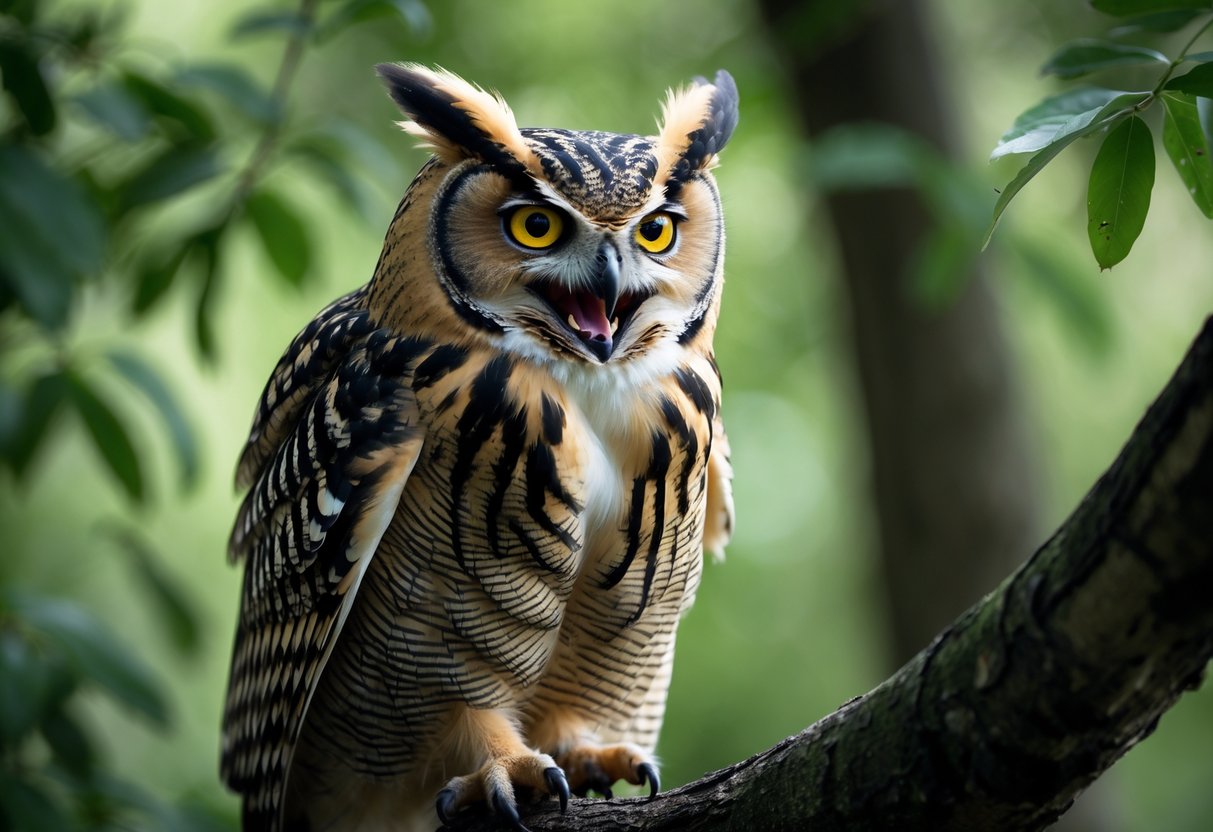
When owls get angry or feel threatened, they make it pretty obvious—if you’re paying attention. You’ll hear loud barks, rattling calls, and maybe see them spread their wings or puff up their feathers to look bigger and meaner.
Sometimes, they clack their bills or even fly right at whatever’s bothering them. Push them too far, and they don’t hold back.
If you’re out in Oregon and spot an owl, you might catch these behaviors firsthand, especially if you wander near their nests. Owls use body language and a mix of sounds to warn you before things escalate.
Learning these signs really helps you figure out what the owl wants—usually just some space.
How Owls Show Anger and Aggression

When owls get mad, they don’t exactly hide it. You’ll notice changes in their feathers, eyes, and how they move around.
They show warning signs before they get more aggressive, so if you’re watching, you’ll see it coming.
Physical Signs of Anger in Owls
An angry owl often stiffens up and pulls its feathers in tight. If the owl has ear tufts—like a barred or great horned owl—they’ll stick straight up.
Their eyes might narrow, or you’ll see their pupils shift, which shows they’re tense.
Some owls raise those little rictal bristles near the beak when they’re upset. A squint or narrowed eye also tells you the owl feels threatened.
Even the northern saw-whet owl, though it’s tiny, flashes these signs when it wants you to back off.
Aggressive Owl Behaviors
When they’re really mad, owls get active. They might swoop or dive-bomb anything they see as a threat, using those sharp talons.
You might hear bill clacking—a quick snapping of the beak that screams high alert. Some owls bark or rattle, sounding much more intense.
Great horned owls, in particular, let out loud, warning hoots when they’re worked up.
Owls get especially fierce defending their nests. If you see this near young owls, best to move away fast.
Warning Signals and Defensive Displays
Owls warn before attacking, using both sounds and posture. They often start with soft, single-note calls, then ramp up to louder barks or whinnies if they’re still bothered.
You’ll see them stand tall and thin, with ear tufts raised to look bigger. Snowy owls, for example, flare their feathers and hold their wings out a bit to seem larger.
Sometimes, an owl squints to avoid direct eye contact but still keeps you in view. All these signs mean the owl feels threatened.
If you notice these, it’s smart to back off calmly and give them space.
Want to dive deeper? Here’s a detailed explanation of stress in owls.
Notable Angry Owls and Where It Happens

If you hang out near woods or parks, you might catch owls showing clear signs of anger. Their behavior shifts quickly when they feel threatened, especially around people or pets.
Watching for these changes can help you steer clear and keep things peaceful.
Barred Owl Aggression in Human Areas
Barred owls live surprisingly close to towns and neighborhoods. Get too near their nest or hunting spot, and you’ll probably hear loud hoots or even a hiss.
They don’t just make noise—they use body language too. You might spot them puffing up or spreading their wings to look bigger.
If you see these moves, it’s time to step back and let them be.
Barred owls usually keep their distance from people, but if you look like a threat, they react fast. Knowing their warnings helps you watch them without causing any trouble.
Great Horned Owl Encounters
Great horned owls are larger and way more assertive. If you wander close to their nest, expect deep hoots or sharp hissing.
They might snap their bills or even strike if they feel boxed in.
Their stiff posture and raised ear tufts are dead giveaways that they’re upset. These owls defend their nests boldly, sometimes even dive-bombing intruders.
If you notice these warning signs, don’t stick around. Give them lots of space and keep a safe distance—trust me, it’s better for both you and the owl.
Owl Attacks in Oregon
Oregon doesn’t see many reports of owl attacks, but people sometimes run into trouble when they get too close to nests. If an owl thinks its babies are at risk, it’ll swoop in or even go for a strike.
Great Horned Owls and other medium or large species usually get involved in these incidents. These owls start by making loud calls or flapping their wings as a warning.
If you’re out in Oregon’s forests, keep an eye out for these warning signs. Hearing barking or bill clacking? It’s probably best to back away slowly.
Try not to approach nests, and you’ll likely avoid any problems.
You can check out more about owl attacks at Owl Attacks – Ornithology.


