
So, you’re thinking about having a pet owl in the UK? Before you get carried away, you’ll want to know the rules. You can own an owl legally if it was bred in captivity and you have proof you got it the right way. Wild owls are strictly off limits. Usually, you don’t need a licence for a captive-bred bird.
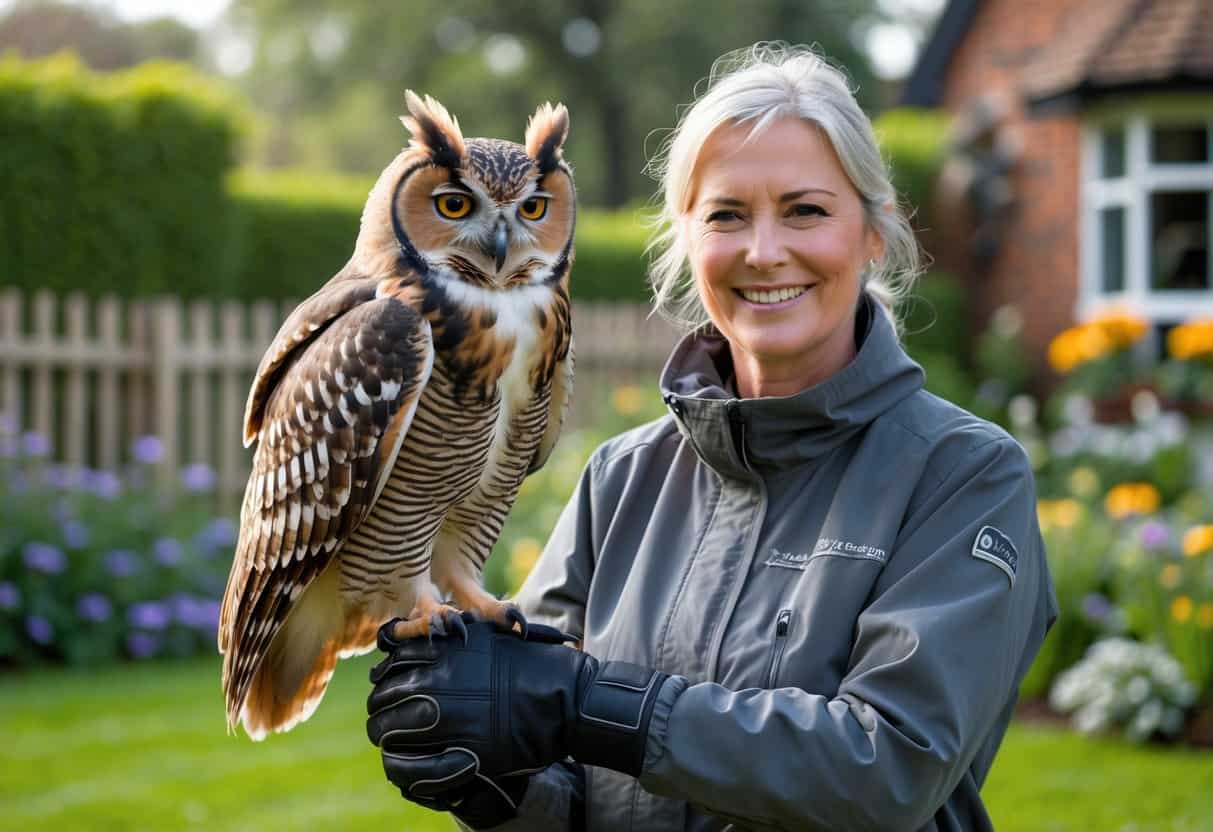
But here’s the thing: owls aren’t easy pets. They need a special diet, lots of space, and someone who knows what they’re doing. Owls can get noisy, and with those sharp talons, they’re not exactly cuddly or safe for everyone.
If you want to know what looking after an owl really takes, stick around. Plenty of experts actually warn against keeping them as pets.
Owls might seem magical—maybe you’ve dreamed about one since reading Harry Potter. Still, they’re wild animals with needs most people can’t meet. If you love owls but aren’t up for the responsibility, you could always support them by sponsoring one at a sanctuary.
Is It Legal to Have a Pet Owl in the UK?
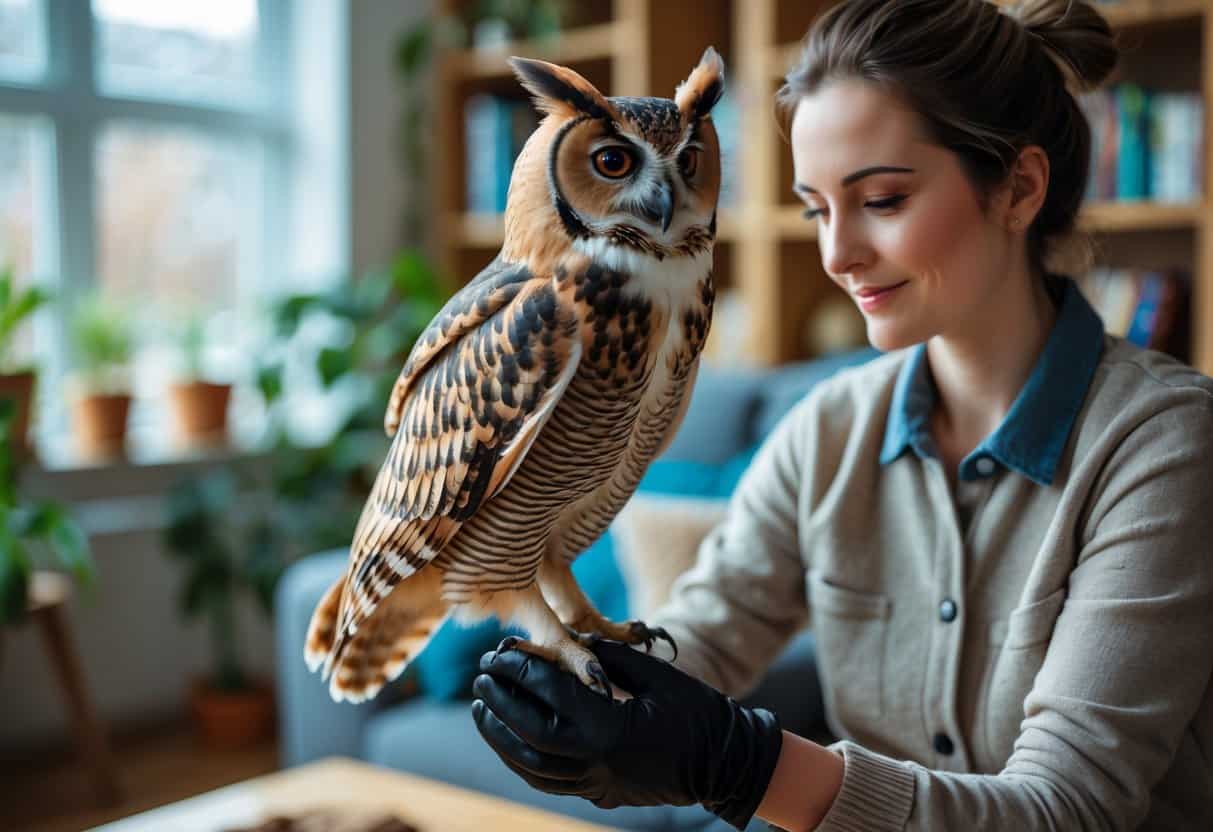
If you want to keep an owl as a pet in the UK, you have to follow some strict rules. These cover which owls you can own, what paperwork you need, and how you prove you got the bird legally.
Relevant UK Laws and Permits
To keep an owl legally, you’ll often need a licence. The law treats owls as wild birds, even if someone bred them in captivity.
You should check if your owl species needs special permission. For example, captive-bred Barn Owls usually come with an Article 10 Certificate. This certificate proves the owl was bred legally. Without it, owning or selling the owl could land you in trouble.
If you want a Bird of Prey like a Snowy Owl (Bubo scandiaca), you have to register it with the authorities. Sometimes, you might need to train under a licensed falconer to meet all the legal requirements.
Wildlife and Countryside Act Restrictions
The Wildlife and Countryside Act 1981 bans taking owls or their eggs from the wild unless you have a licence. You must show proof that your owl came from a legal source.
The Act also lists protected species and sets rules to stop people from releasing owls back into the wild. For example, the law bans releasing captive-bred Barn Owls.
You need to keep your owl securely so it can’t escape. If you let a non-native owl loose, you could face a fine or even prosecution.
Always keep records showing how and when you got your owl. That way, you can prove legal ownership if anyone asks. For more details, check out the Barn Owl Trust.
What You Need to Know Before Keeping an Owl at Home
Keeping an owl is nothing like having a dog or cat. These are wild birds with very specific needs.
You should be ready for the time and effort it takes to keep them safe and healthy.
Daily Care and High Maintenance Needs
Owls need attention every single day. They’re active at night and can get pretty loud, which might annoy everyone in your house.
Their feathers have to stay clean and dry to work properly. You can’t handle them like you would a pet parrot.
You’ll need a large aviary so your owl has enough space. That aviary should protect them from bad weather and predators.
Remember, raptors like great horned owls or snowy owls have strong talons and beaks. If they feel threatened, they can hurt you.
Cleaning their living area is also a must. Owls make waste that smells really strong, so you have to keep things clean to stop illness.
Challenges with Feeding and Diet
Owls eat whole prey—think mice, rats, and small birds. Feeding them means you need access to frozen or live animals, which can be tough or uncomfortable for a lot of people.
You have to keep their diet consistent to keep them healthy. Regular birdseed or pet food won’t cut it.
Their feeding schedule is different, too. Most owls hunt at night, so you might find yourself feeding them when everyone else is asleep.
Each owl species has its own diet needs. For example, snowy owls might want something different than a great horned owl or a gyrfalcon.
Suitability of Different Owl Species
Honestly, not every owl can handle life in a home. The great horned owl and snowy owl, for example, grow pretty large and need a ton of space.
You also have to consider their hunting instincts. These birds don’t just eat seeds—they want to hunt, and that’s tough to replicate indoors.
Barn owls might look a bit less intimidating since they don’t have ear tufts, but let’s be real: they’re still wild at heart. They just don’t settle into domestic life.
Even smaller owls, which might seem more manageable, still need plenty of space and someone who really knows what they’re doing.
If you can’t provide that kind of environment, it’s probably not a good idea to keep an owl. You could always reach out to places like the Suffolk Owl Sanctuary for advice about different species and what they actually need.


