
When an owl comes to your house, it could mean all sorts of things, honestly. Your culture, beliefs, and even your mood might shape how you see it. Some folks say owls bring wisdom and good luck. Others? They might see them as warnings or omens.
Most people agree that an owl showing up signals some kind of change or message—sometimes it’s about wisdom, or maybe someone thoughtful is about to enter your life.

You might find all sorts of stories about owls. For some, spotting one nearby means good fortune or a fresh start. For others, it’s a nudge to pay closer attention or reflect on something that’s been on their mind.
Owls feel mysterious, right? They’re night creatures, which only adds to their reputation.
People everywhere seem to agree that an owl’s visit matters, no matter what you believe. Maybe you’ll want to dig deeper into what it could mean for you. If you’re curious, there’s plenty out there about why an owl in your house is considered lucky—or not.
What to Do When an Owl Comes to the House
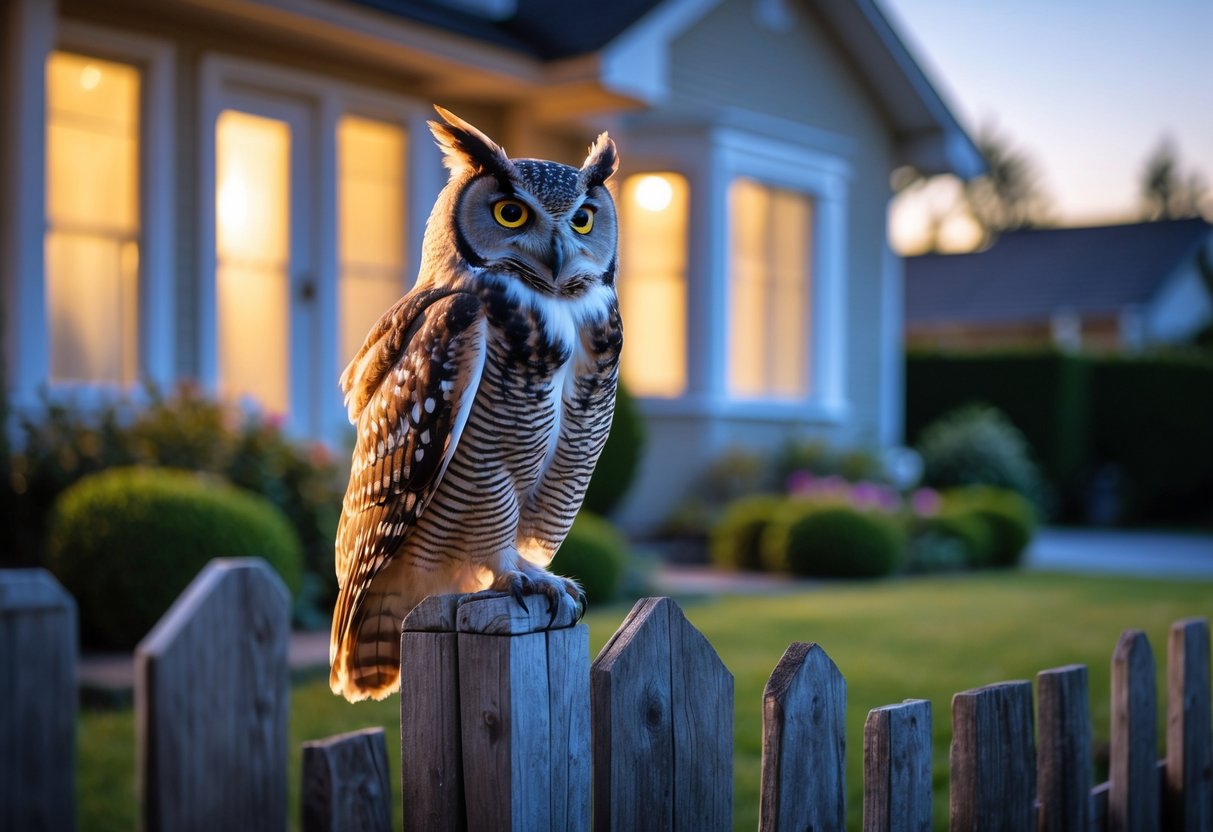
When an owl drops by your house, stay calm. Don’t rush.
You’ll want to keep yourself and the owl safe. Figure out what kind of owl you’re dealing with, and try to read its behavior. Sometimes, you’ll need help from someone who knows what they’re doing.
Safety and Immediate Actions
First things first: don’t touch or grab the owl. Their talons and beaks are sharp, and they won’t hesitate to defend themselves.
Keep your pets and kids away. No need to add chaos to the mix.
Check if the owl got stuck inside. Open your windows and doors so it can escape.
If it’s outside, just give it space. Try not to make loud noises or shine bright lights—owls are night birds, and bright lights can really throw them off.
If you see feathers on the ground or the owl looks hurt, don’t poke at it. Keep things quiet and dim.
If you have to help, use a ventilated box to gently contain the owl—don’t touch it directly. This helps keep the bird calm.
Identifying Common Owl Species That Visit Homes
Knowing which owl you’re looking at can help you decide what to do. Barn owls, with their heart-shaped faces, show up a lot in the countryside. They’re usually calm but don’t like being caught.
Great horned owls stand out because of their size and ear tufts. They hunt well and can get defensive if you surprise them.
Long-eared owls and little owls are smaller. They’re not as aggressive, but you still need to be careful.
Snowy owls don’t visit often unless you live somewhere cold. In Europe, you might spot a European eagle owl or hibou grand-duc—they’re big and their deep hoots are hard to miss.
If you want to get specific, check the owl’s size, color, and those ear tufts. Listen for its hoot. Just don’t get too close.
Interpreting Owl Behavior and Health
Owls hang around houses for a bunch of reasons. Sometimes they’re hunting, sometimes they’re lost, or maybe it’s nesting season.
If an owl keeps coming back or tries to get inside, it might be protecting a nest or its territory.
Watch out for owls that don’t fly away when you approach. If it looks weak, has wounds, or seems confused, it probably needs help.
You might see odd behavior—hooting at night or fluttering by your window. That could mean it’s stressed or lost.
Take a few notes about what the owl does. If you call a wildlife expert, they’ll want to know.
Skip feeding it. Owls need specific diets and usually hunt live prey.
When to Seek Wildlife Assistance
If you notice the owl’s hurt, trapped, or acting sick, reach out to a local wildlife rehab center or animal control. They know how to handle these situations.
Move quickly if the owl can’t get off your property or seems injured. Trying to help on your own can make things worse.
If you find an owl egg or baby owlets, leave them alone. The parents usually come back if you don’t disturb things.
Wildlife experts can tell you if the owlets need help. You can find their contact info online or through your local government.
If you’re asked to hold the owl for a bit, keep it somewhere dark and quiet.
Giving the owl space and working with the pros keeps everyone safer—owl included.
Symbolic, Cultural, and Historical Meanings of an Owl Visiting a Home

When an owl visits your house, it stirs up all sorts of old stories and beliefs. Different cultures have seen owls with a mix of fear, respect, and sometimes even wonder.
People often say owls stand for wisdom or mystery. Sometimes, though, they’re seen as a warning. It really depends on where you’re from.
Traditional Beliefs and Superstitions Around Owls at Home
In some places, folks believe owls bring bad luck or even warn of death. That idea comes from ancient tales connecting owls to darkness and the unknown.
But it’s not all doom and gloom. The Little Owl—Athene in ancient Greece—stood for wisdom and protection. People even made owl charms for their homes.
In certain cultures, owls kept away evil spirits. Hearing an owl hoot near your window? Some say it’s a message to pay attention or brace for change.
Other times, though, owls just show up because they feel safe or found something to eat.
Spiritual and Personal Significance of Owl Encounters
If an owl visits, you might feel like it means something personal or spiritual. Many see owls as messengers or guides from another realm.
They could be nudging you to look deeper or handle a situation with more wisdom.
People often say an owl’s visit marks a time for transformation or uncovering hidden truths. Their quiet flight and sharp vision make them symbols of insight.
Some folks take an owl’s presence as a sign to trust their gut.
Whether it’s a burrowing owl or a snowy owl, spotting one can make you pause and notice what you’ve been missing. Sometimes, an owl reminds you to look beneath the surface.
Owl Symbolism Across Global Cultures
People have looked to owls for thousands of years. You can even spot them in ancient cave paintings, where early humans connected owls with mystery and the unknown.
Some Native American stories use owls to warn kids—basically telling them to stay inside at night. Meanwhile, in places like Greece, folks saw owls as wise, especially since Athena, the goddess of wisdom, had one.
Stories about snowy owls pop up in colder regions. These birds seem to represent endurance, surviving where most creatures wouldn’t bother. Folk tales sometimes even mention owl broth, which people thought could heal you.
All over the world, owls stand for different things:
- Wisdom and knowledge
- Protection and guidance
- Warnings or omens
If an owl visits your home, knowing these meanings might help you figure out what’s up. Curious for more? Check out owl symbolism across cultures and myths.


