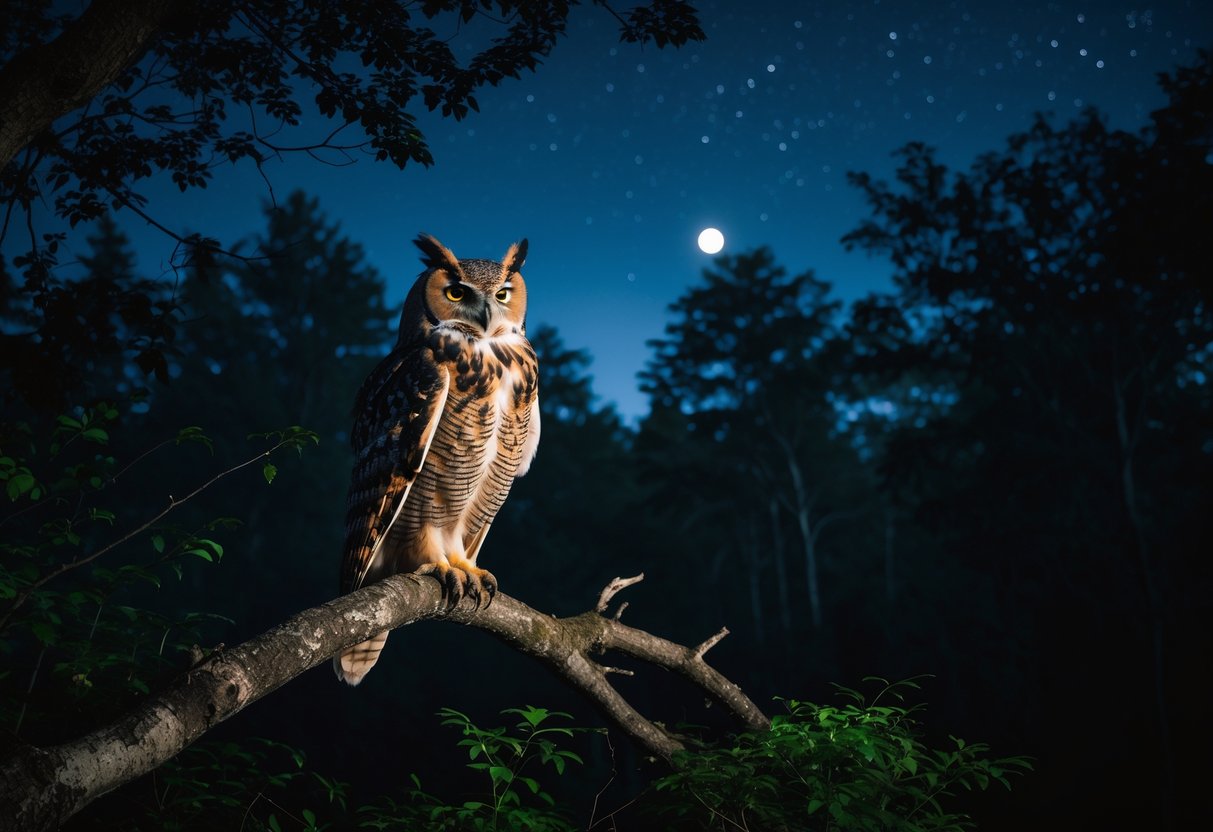
Spotting an owl at night feels mysterious, doesn’t it? Usually, it means something important is going on.
If you catch sight of an owl after dark, maybe it’s a nudge to trust your gut and get ready for some positive changes. Owls have this reputation for wisdom and sharp senses, so maybe they’re just reminding you to notice things you’d normally miss.
Owls can also stand for protection. Maybe your spirit guide or a loved one is sending a quiet message that you’re not really alone.
Whether it’s a sign of luck, a little push toward something new, or just a gentle reminder to stay calm and wise, an owl’s visit at night can really mean something special.
If you’re curious about why owls show up when the world is dark and quiet, you’ll find that different cultures and beliefs have all sorts of ideas about it.
What It Means to See an Owl at Night

Seeing an owl at night means different things depending on your background and what you believe. Owls aren’t just night birds; people often think they bring messages about wisdom, change, or sometimes warning.
Cultural Beliefs and Superstitions
In many parts of the world, people link owls to superstitions about death or bad luck. Some Native American tribes believed hearing an owl’s call meant death was close by.
Other tribes saw owls as protectors or guides for souls moving on. In ancient Rome and Greece, owls had mixed reputations.
Romans often took an owl’s hoot as a bad sign, maybe even a sign of death. The Greeks, though, saw owls as wise and victorious, especially since they connected them to the goddess Athena.
These days, some folks still get nervous when they see owls at night, but others see them as signs of new beginnings or personal growth.
Symbolism of Owls in Different Cultures
People often use owls to symbolize wisdom or insight because they see in the dark, catching things others miss. You’ll even spot owls on graduation cards, representing learning and intelligence.
Across the world, some cultures believe owls act as messengers or spiritual guides. Some say owls watch over us or help us uncover hidden truths.
Other groups think owls stand for transformation, guiding us through life changes. Different owl species can mean different things too.
The great horned owl, for example, often stands for power and bravery. Barred owls, on the other hand, come across as gentle night watchers.
Common Myths vs. Scientific Facts
Let’s clear something up: the idea that owls bring bad luck or harm is just a myth. Owls are simply nocturnal birds, so they’re active when it’s dark—no dark magic involved.
They don’t predict doom or death. Science shows that owls have amazing night vision and hearing, which makes them efficient hunters after dark.
That’s probably why people see them as wise or insightful instead of dangerous. If you hear an owl during the day, don’t worry.
Some species, like the barred owl, hoot even when it’s light out, especially if it’s cloudy or they live near people.
Want to dig deeper? Check out more about spiritual meaning of owls.
Nocturnal Behavior and Characteristics of Owls

Owls have some wild traits that help them thrive at night. Their eyes, feathers, and hunting skills work together so they can find prey quietly in the dark.
Let’s look at how these features help certain owls rule the nighttime hours.
Why Owls Are Active at Night
Most owls hunt and move around after sunset. This way, they avoid fighting with daytime predators for food.
You’ll usually see Great Horned Owls and Barred Owls out hunting when it’s dark. Being active at night lets them use their sharp hearing and vision to catch prey like mice, which are also more active then.
Some owls prefer dawn and dusk—these are called crepuscular. Hunting at these times helps them find food when their prey is out and about.
Owl Eyesight and Night Vision
Owls have big, forward-facing eyes, which gives them great depth perception, kind of like us. Their eyes are packed with rod cells, so they see really well even when it’s dark.
But their eyes can’t move much in their sockets. You might notice Barn Owls or Screech Owls with glowing eyes at night.
That’s because a reflective layer behind their retina bounces light back through, making their night vision even better.
Besides their eyesight, owls rely on sharp hearing. Their ears sit at different heights on their heads, which helps them pinpoint sounds—even when prey hides.
Silent Flight and Hunting Techniques
Owls have feathers that let them fly almost silently. The edges of their wings are soft and a bit ragged, so they don’t make much noise when they glide.
This silent flight lets them sneak up on prey like mice or small birds. When it’s time to hunt, owls use all sorts of techniques.
Great Horned Owls might sit quietly, watching, then swoop down fast. Barn Owls often fly low over fields, listening for movement with their silent wings.
Long-eared Owls hunt by perching and then pouncing. Short-eared Owls sometimes hover and scan the ground before diving in.
All these different styles help owls catch food in all sorts of places.
Notable Nighttime Owl Species
A lot of owls really come alive after sunset. The Great Horned Owl hunts with impressive strength and often goes after skunks. Its thick feathers actually block out the smell, which is honestly kind of wild.
The Barn Owl stands out for its heart-shaped face and its almost uncanny hearing. You might spot one gliding low over a field at night, searching for prey.
Barred Owls usually stick close to forests. If you’ve ever heard that classic “who cooks for you” hoot in the dark, that’s probably them.
Screech Owls are on the smaller side, but they’re fierce hunters when it comes to insects and little critters. They blend in so well, you might not even notice them perched nearby.
These owls all have their own tricks for surviving at night. Think sharp talons, silent wings, and eyes that catch every flicker of movement. Some, like the Barn Owl, even prefer nesting in barns or old buildings—makes sense, right?
Curious about how owls see in the dark or what they get up to at night? Check out About Owls at the Owl Research Institute.


