
Owls don’t just let out those mysterious hoots for nothing. When you hear an owl calling at night, it’s actually talking about things that matter a lot to them.
They use their calls to claim territory, find a mate, protect their home, and even talk to their babies.
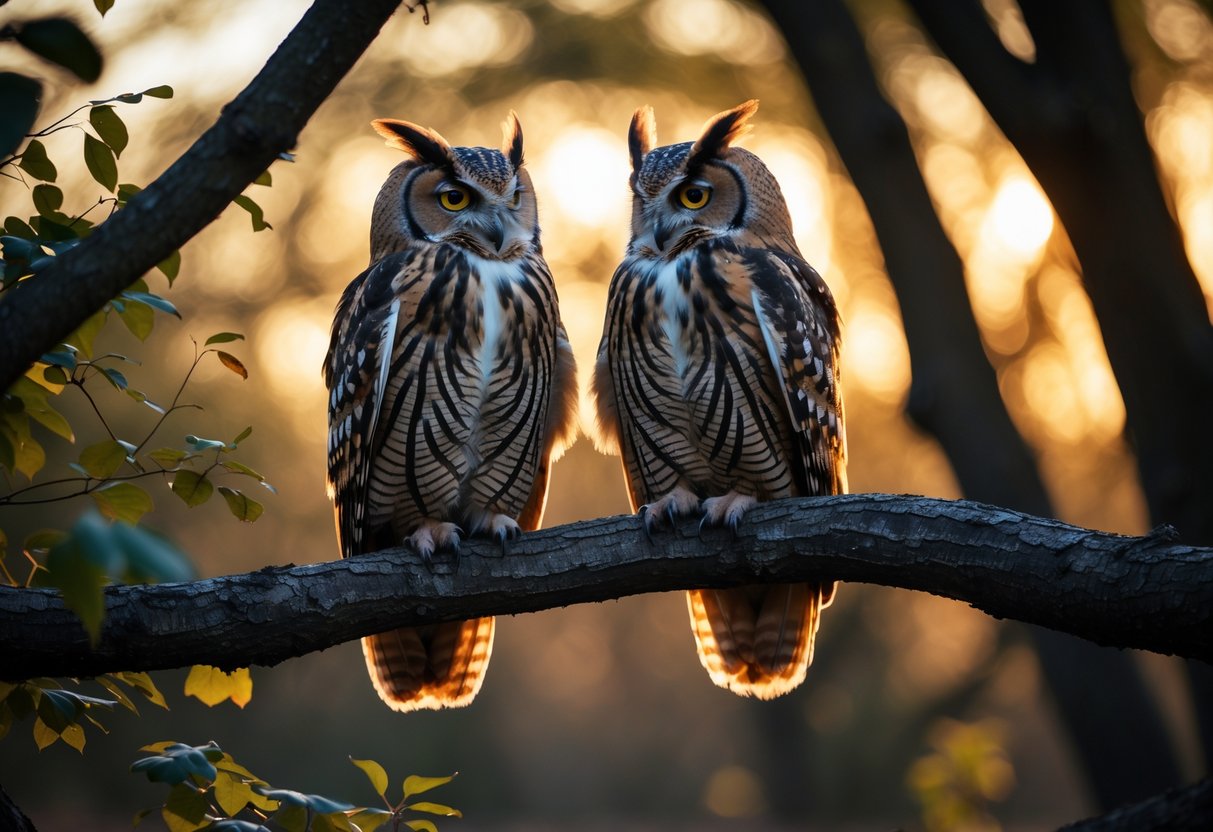
Ever wonder what all those different hoots, whistles, or weird hisses mean? Owls have a whole range of sounds, and each one sends a message.
Some hoots basically say, “This is my space.” Others are like a romantic duet between owl couples. It’s almost like you’re eavesdropping on their private chats.
As you keep reading, you’ll start to pick up on these nighttime conversations. Whether it’s the steady call of a great horned owl or the quick chatter of a tiny elf owl, you’ll get a peek at what owls are saying when they hoot.
The Purpose of Owl Vocalizations

Owls call out to share important info. You’ll hear them marking their space, calling out to partners, or warning about danger.
Each call does a specific job in their quiet world.
Territorial Defense Through Calls
When an owl hoots, it’s usually trying to protect its home. Great horned owls give a deep, rhythmic “hoo-h’HOO-hoo” to warn others to stay away.
These calls act like a “no trespassing” sign for any owl nearby.
Owls keep the peace by calling from their favorite perches. The sound carries far, marking the edges of their territory.
If another owl wanders in, you might hear hisses or beak snaps as a warning.
Northern saw-whet owls toot over and over to say, “This is my spot.” These vocal signals help prevent fights.
If you pay attention, you can figure out where an owl’s territory begins and ends.
Mating and Courtship Communication
Owls get creative with their sounds when they’re looking for love. Sometimes you’ll hear a duet, where the female starts with a hoot and the male answers.
This back-and-forth helps them grow closer.
Great horned owl pairs hoot together to show they’re a couple. Barred owls have that famous “who-cooks-for-you” call, and they’ll string together long sequences to show affection.
During courtship, males often get louder or speed up their calls to impress the females. These vocal gestures are basically owl love letters.
If you hear these sounds, chances are an owl couple is forming or just strengthening their bond.
Warning and Alarm Signals
Owls don’t always keep things friendly. When they feel threatened, their calls get sharp and loud to scare off trouble.
Burrowing owls hiss like rattlesnakes to keep predators away. Barn owls let out long hisses to protect their nests and warn off intruders.
Great horned owls mix in hisses, beak snaps, and sometimes even eerie cries when they get angry. They make these noises to send a clear message without needing to fight.
Harsh or fast calls mean an owl feels threatened and is on high alert.
If you’re curious about more owl sounds, check out 10 Sounds Owls Make and What Each Means.
Types of Sounds and Messages in Owl Communication
Owls have a bunch of ways to “talk” to each other. Their sounds send out warnings, mating calls, or just help them stick together.
You can start to recognize these noises and figure out what owls might be saying nearby.
Hoots, Screeches, and Whinnies
Hooting is probably the owl sound you know best. The Great Horned Owl’s deep “hoo-hoo-hoooo” is a classic.
Owls use hoots to mark territory or attract a mate. When you hear it, the owl is either claiming space or looking for company.
Screeches are those high, sharp sounds. Young owls or stressed-out owls tend to screech.
Barn Owls, for example, screech when they feel threatened or scared.
Whinnies are softer, almost musical calls. Owls use these to bond or during courtship.
Eastern Screech-Owls often make these trilling whinnies, and honestly, they sound a bit like gentle laughter.
Bill Clacking and Physical Sound Signals
Owls don’t just rely on their voices. They use their bodies to make sounds, too.
Bill clacking happens when an owl quickly taps its beak. This usually means the owl is irritated or wants others to back off.
Some owls flap their wings loudly or scrape with their talons. These sounds can warn predators or send messages to other owls nearby without a single hoot.
These non-vocal sounds might be quieter, but they still matter. They help owls communicate in close quarters or when they want to keep things subtle.
Species-Specific Vocal Patterns
Every owl species has its own quirky way of calling.
Take the Great Horned Owl, for instance. It hoots slowly, leaving more space between each hoot. Honestly, that call just cuts through the night air.
Some other species? They might sound like they’re laughing or even cheeping. Barred Owls sometimes let out a call that kind of sounds like, “Who cooks for you?” It’s weirdly charming.
These different rhythms and tones really depend on where the owls live and what they’re up to. If you start to notice these patterns, you can figure out which owl is nearby—and maybe even guess what it’s trying to say.


