
Ever wondered if owls actually sleep? Yep, they definitely do. Owls usually sleep for about 10 to 12 hours during the day because they’re most active at night. That downtime gives them the energy they need for all that nighttime hunting.
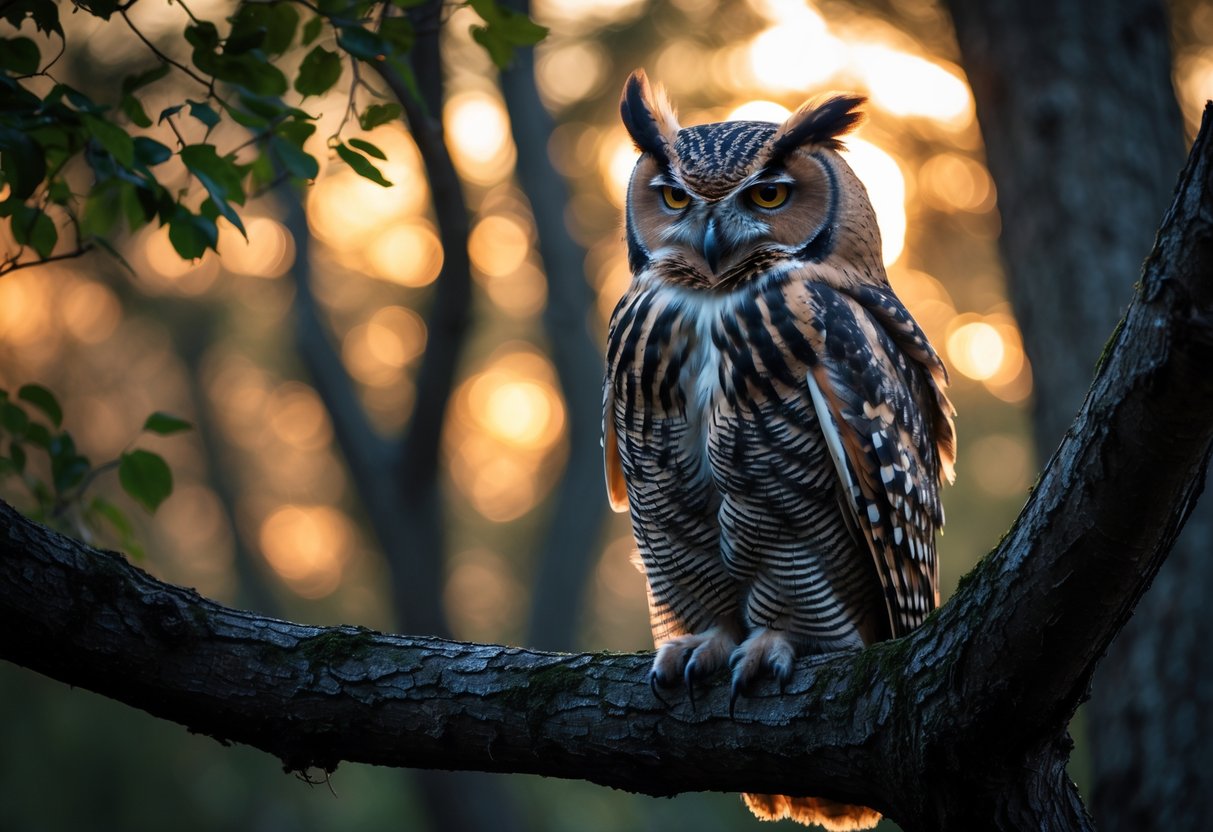
You might picture owls snoozing like other birds, standing on a branch with their eyes closed. Adult owls often sleep this way, picking safe spots high in trees or tucked into hollows.
Baby owls do things differently. They usually sleep lying down, kind of like little human babies. They need extra rest to grow strong muscles and fluffy feathers.
Once you start learning about how owls sleep, it’s hard not to be fascinated by these mysterious nighttime birds. Whether they’re perched quietly or curled up on a branch, owls have some quirky habits that help them stay safe and ready when night falls.
When and How Do Owls Sleep?

Owls don’t all sleep the same way. Their species and age make a difference.
Some owls stay up all night, while others might be out and about during the day. Most spend about 10 to 12 hours sleeping every day.
Where they rest changes too. It depends on their habitat and whether they’re adults or just young fluffballs.
Are Owls Nocturnal or Diurnal?
Most owls are nocturnal—they’re awake at night and catch some shut-eye during the day. But not every owl follows this rule.
- The Barn owl and Great horned owl hunt mostly after sunset.
- Snowy owls and Northern hawk owls are diurnal and stay busy during daylight.
- Some, like the Barred owl, don’t stick to one schedule and can be active day or night. Scientists call them cathemeral.
Owls basically adjust their sleep and hunting times to match when their favorite snacks are out.
Owl Sleep Patterns and Duration
Owls typically rack up 10 to 12 hours of sleep each day. When they sleep, they close their eyes but usually stay alert for any danger.
Their sleep comes in two main types:
- Slow-wave sleep—that’s the deep rest
- REM sleep—the brain gets busy, dreams might happen, but owls don’t move their eyes since their eyes stay fixed in their skulls.
Most owls perch upright when they sleep, gripping branches with those strong claws. They pick quiet places so nothing disturbs their nap.
Where Do Different Owl Species Rest?
Owls pick sleep spots that fit their size and surroundings.
- Little owls, like screech-owls, tuck themselves into tree cavities or birdhouses.
- Larger owls, such as Great horned owls, prefer high tree canopies.
- Burrowing owls are oddballs—they sleep underground in burrows they dig or borrow.
If you want to spot a resting owl, it really depends on the species and its neighborhood. They always choose calm, hidden spots to avoid predators during those long daytime naps.
Baby Owl Sleep Habits
Baby owls don’t sleep like the grown-ups. Instead of perching, young owls usually just lie flat.
This lets their muscles rest and grow. Most of the time, they sleep in nests, but as they get older, they start trying out sleeping on branches while gripping tight.
Their sleep is crucial for growing up strong. Since baby owls can’t fly well yet, they count on the safe places their parents pick out.
This special way of sleeping helps them get the rest they need to survive and thrive.
Unique Sleep Habits of Notable Owl Species

Owls rest in ways that really fit their lifestyles and habitats. Some sleep hidden high in trees, while others pick open or even downright odd spots.
These habits help them stay safe and ready for their next hunt.
Barn Owl Daytime and Nighttime Rest
Barn owls love quiet, sheltered spots for daytime sleep—think old buildings, tree hollows, or barns. You’ll usually find them roosting in cool, dark places, staying out of sight from predators.
When night falls, barn owls get busy. They hunt silently, thanks to sharp hearing and impressive night vision.
This owl usually sleeps around 10 to 12 hours during daylight. When they rest, barn owls stand upright but always keep themselves tucked away under cover.
Long-Eared and Short-Eared Owl Roosting Behavior
Long-eared owls stick to dense trees or thick bushes during the day. Their feathers blend right in with the branches, so spotting them isn’t easy. They sleep standing up, barely moving, hoping no one notices.
Short-eared owls break the mold a bit. They’re active both day and night, especially around sunrise and sunset. Sometimes you’ll find them resting in open fields or grasslands.
They don’t always sleep in trees—sometimes they just plop down on the ground.
Barred Owl and Great Horned Owl Sleep Adaptations
Barred owls like hollow trees or dense forests for their naps. If you catch one sleeping, you might see it sitting tall, maybe with its head tilted back or forward.
They keep themselves well hidden during the day to steer clear of threats.
Great horned owls act similarly but usually pick higher, safer spots with lots of cover. Their thick feathers help them stay warm and quiet while they rest.
Both types rest close to their hunting grounds, so they’re ready to swoop out as soon as darkness falls.
Burrowing Owl and Eurasian Eagle Owl Resting Patterns
Burrowing owls usually rest in underground burrows or just out in open fields.
Honestly, it’s kind of surprising—they aren’t strictly nocturnal. These little owls hunt during the day and at night, so their sleep schedule gets pretty flexible. They don’t really stick to long, uninterrupted naps.
The Eurasian eagle owl stands out as one of the biggest owls around. It likes to rest in sheltered rocky spots or tucked-away forested areas.
During the day, these massive owls sleep for hours and barely move at all. Since they’re so large, they always choose places where they feel safe from anything that might try to mess with them.


