
Ever found yourself near an owl that looks stressed or scared? Knowing how to help can really make a difference.
Try gently scratching the top of its head—this often helps an owl relax. I’ve noticed that speaking softly and moving slowly around them keeps their anxiety down.
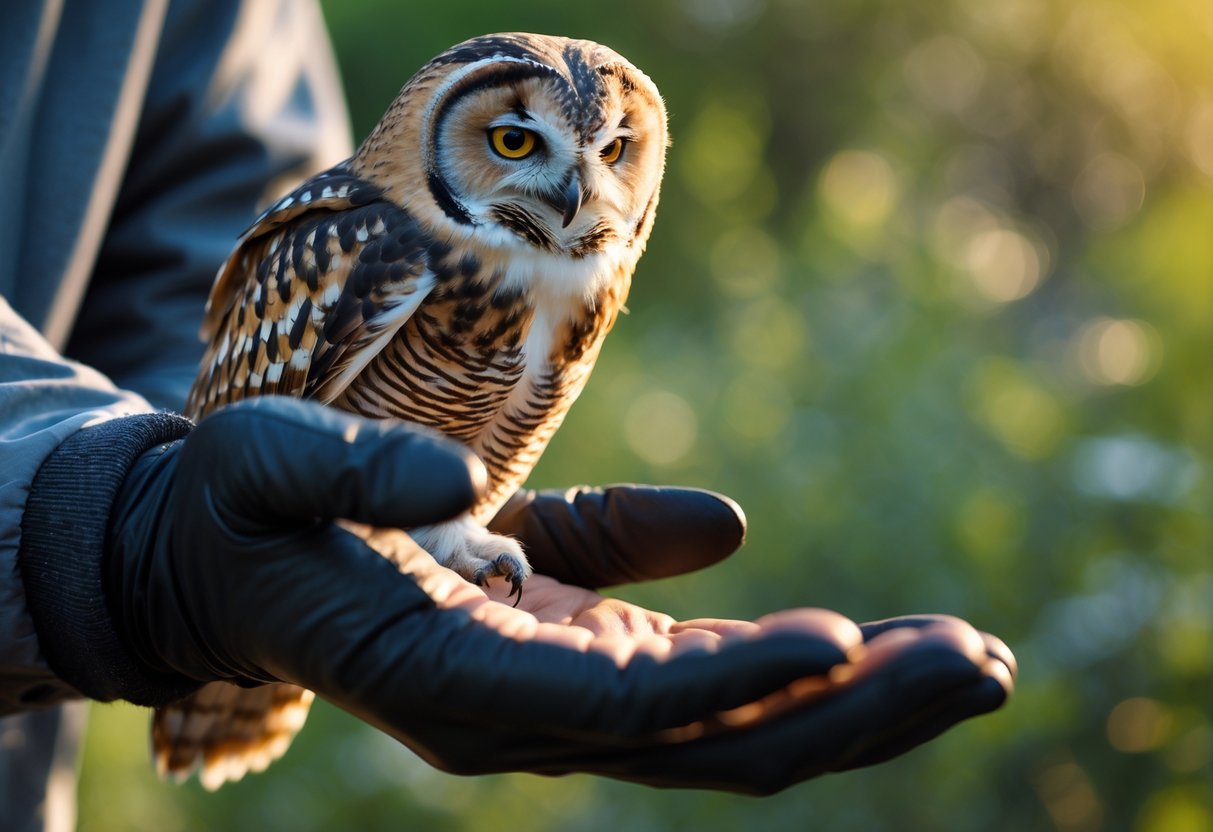
Owls pick up on every little sound, and they’re quick to react to sudden moves or loud noises. If you create a quiet spot and gently drape a light blanket or towel over the owl, you’ll probably see it calm down a bit.
This simple approach gives the owl a sense of safety while you figure out what to do next.
Recognizing Stress in Owls
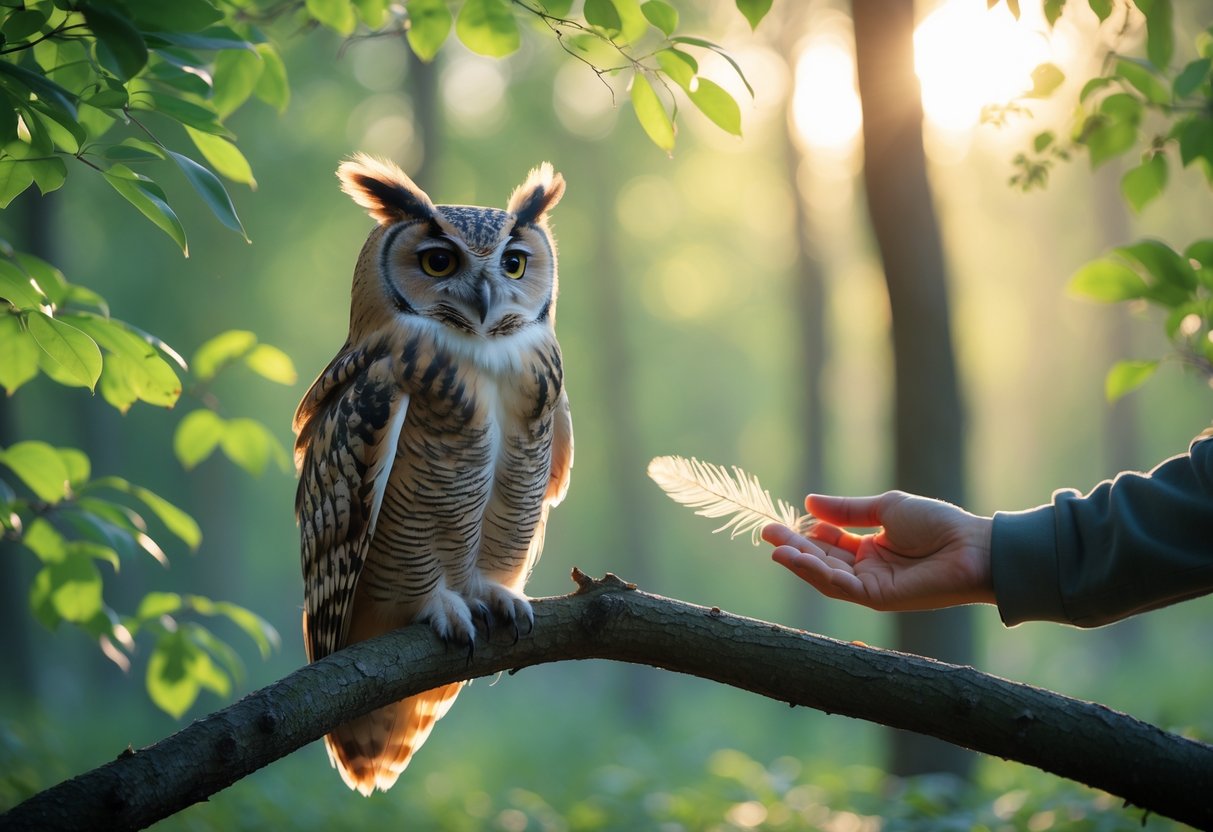
Owls show stress in all sorts of ways. If you know what to look for, you can stay calm and help them out.
You’ll spot changes in their behavior, body language, or even the sounds they make. Different species act a bit differently, so it’s handy to know their quirks.
Common Signs of Owl Distress
A stressed owl might freeze or try to hide. Watch for fluffed up feathers—that could mean it’s cold or upset.
If you see it spreading its wings wide or raising head feathers, it’s probably trying to look bigger and warn you away.
Sometimes, an owl will close its eyes tightly or blink slowly to self-soothe. Odd movements like pacing or head bobbing? Those usually mean it feels threatened.
If the owl stops reacting or just seems oddly quiet, it’s probably really stressed. Give it some space and keep your movements slow.
Vocal and Visual Clues to Watch For
Listen for loud screeches, hisses, or sharp repeated calls—those usually mean the owl’s on edge. Sometimes, if an owl suddenly falls silent, that’s a sign of fear too.
You might catch an owl staring at you with wide, alert eyes. That intense look means it feels threatened.
Look for defensive postures—spreading wings, raising ear tufts (if it has them), or puffing up its chest.
If you notice any of these, the owl’s telling you it’s uncomfortable. Staying quiet and moving slowly really helps.
Species Differences: Barred, Barn, and Snowy Owls
Barred owls tend to use hooting and territorial calls, but they’ll sometimes scream if they’re stressed. They also fluff up their feathers and stare with those big eyes.
Barn owls, with their heart-shaped faces, usually freeze up when they’re nervous. They might spread their wings a bit or avoid looking at you. Sometimes they’ll let out a faint hiss.
Snowy owls ruffle the feathers around their head and neck when they’re upset. They often stand with wings half open and get pretty loud if they feel threatened.
It’s good to know these differences so you can read each owl’s mood. If you want more details, check out respectful owl observation tips at the International Owl Center.
Effective Ways to Calm Down an Owl
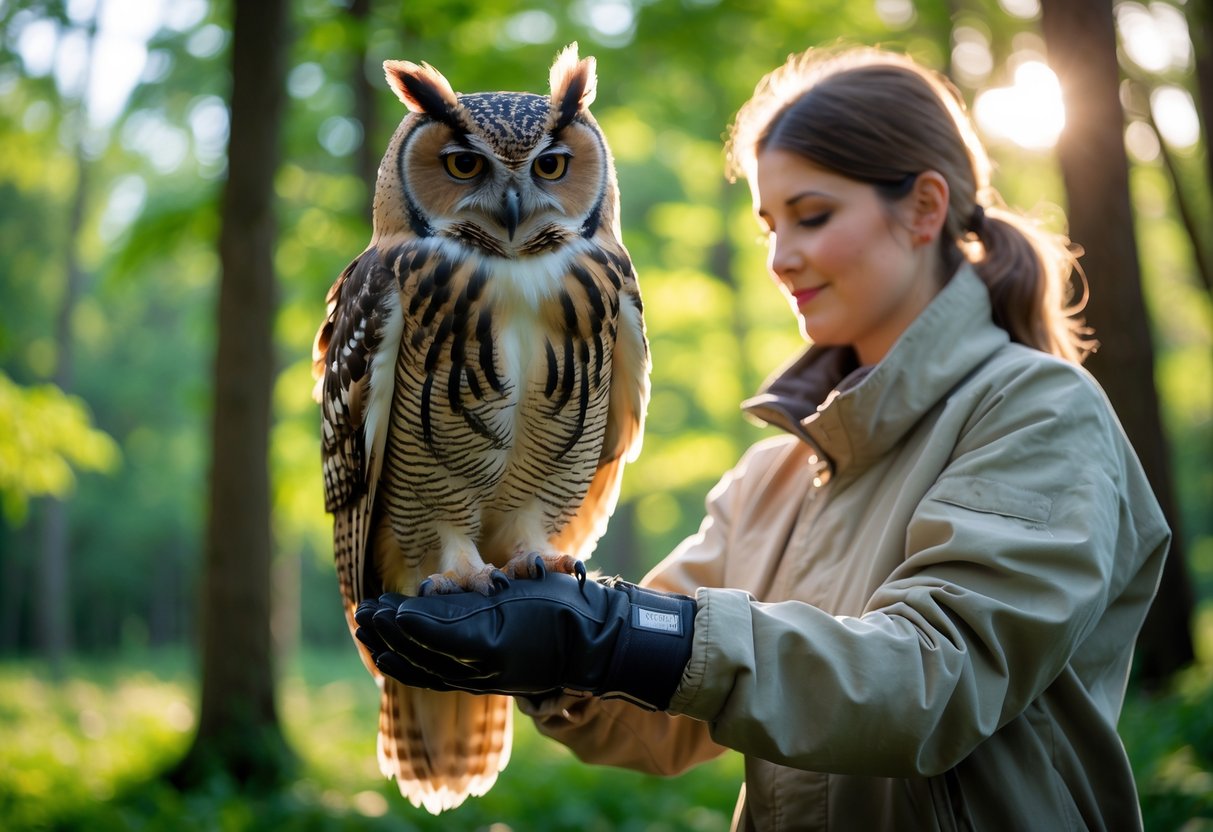
If you’re near a wild owl that’s agitated, your calm, gentle actions matter. Knowing how to approach and soothe an owl can really help.
Sometimes, it’s best to call a wildlife rehabilitator for help.
Approaching Wild Owls Safely
Move slowly and keep quiet when you approach a wild owl. Quick movements or loud sounds will just make things worse.
Keep your hands low and try not to stare directly at the owl—eye contact can feel threatening.
If you spot an owl on the ground or think it’s hurt, put on thick gloves to protect yourself. Use a soft towel or cloth to gently cover the bird before picking it up.
This calms the owl and keeps its wings tucked in so it doesn’t get hurt.
Only step in if the owl clearly needs help. Healthy young owls learning to fly might look helpless, but their parents are usually close by.
Soothing Techniques: Touch and Space
Owls pick up on your tone and energy, so speak softly. If you need to touch the owl, do it gently and cover it with a blanket or towel for security.
Give the owl as much space as you can. Place it in a dark, quiet box with a soft cloth at the bottom.
This setup helps the bird relax while you wait for professional help.
Try not to handle the owl more than necessary. “Tame” owls are often just weak, and too much attention can make things worse.
When to Contact a Wildlife Rehabilitator
If the owl looks injured or you find an adult that won’t fly away, reach out to a wildlife rehabilitator right away. These folks have the training and permits to care for wild owls.
Don’t try to treat or feed the owl yourself. They need special care—sometimes antibiotics, fluids, or help with broken bones.
If you can’t get the owl to a rehab center, call them for advice. Many have volunteers who can come pick up injured birds.
Tips for Observing Great Horned and Eastern Screech-Owls
Great horned owls and eastern screech-owls notice people pretty easily. If you’re watching them, try to keep noise down and don’t make any sudden moves.
Grab some binoculars or use a zoom lens so you can watch from farther away. Skip the bright lights and definitely avoid flash photography at night—those things can really bother the owls.
If you hear loud screeches or see them flapping their wings quickly, that’s a sign they’re stressed. Just back off and give them some room.
Don’t get too close to their nests. You’ll help keep the owls calm and wild that way.
Want more info? Check out the International Owl Center for tips on helping and observing wild owls.


