
Have you been hearing an owl hooting outside your window at night? It’s hard not to wonder why it keeps going. Owls hoot mostly to claim their territory and warn other owls to back off. That loud call helps them protect their space, especially during breeding season when they get extra protective of their nests.
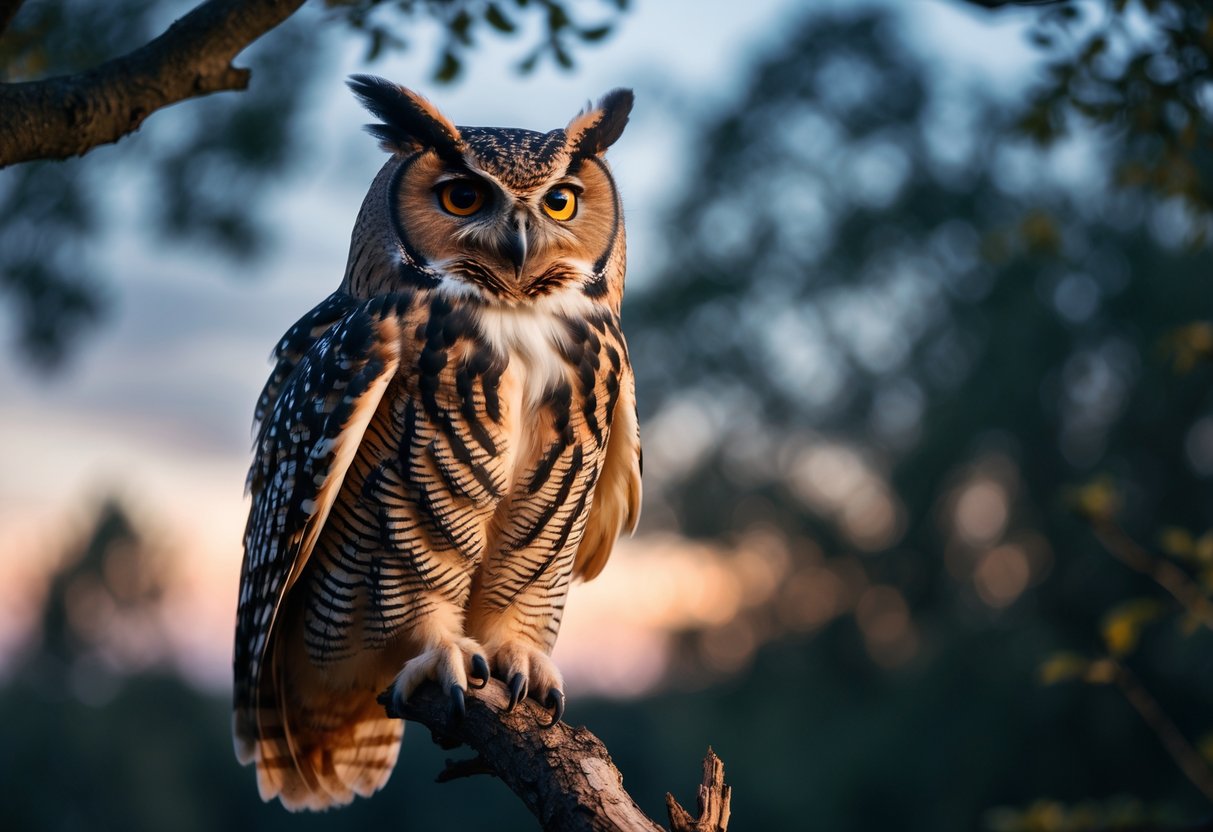
Owls also hoot to attract a mate or talk to each other. Sometimes you’ll hear pairs hooting back and forth as part of their bonding. If you know why an owl keeps hooting, you might start to appreciate these nighttime sounds a bit more, instead of just finding them annoying. Curious about what those hoots really mean? Let’s dig into how owls talk to each other and why their calls matter.
Key Reasons Owls Hoot Repeatedly

Owls hoot for a few clear reasons tied to their behavior and survival. Their calls help them mark spaces, find mates, and keep families connected.
You’ll notice different patterns depending on the time of year and the owl species.
Territory Defense and Communication
Owls hoot mainly to claim their territory. When you hear a hoot every 15 to 30 seconds, the owl is usually warning others to stay away.
This matters most during breeding seasons when owls guard their nesting area, especially where they might lay eggs.
The great horned owl, for instance, uses a deep, rhythmic hoot to let others know it owns the space. This reduces fights or confusion over hunting grounds.
Owls also hoot to share danger or let others know where they are.
Mating Calls and Attracting Partners
Male owls hoot to attract females during mating season. They call louder and more often to show off their strength and health.
Some species, like the North American screech owl, actually duet—males and females hoot back and forth to find each other.
This back-and-forth helps pairs build a strong bond before they lay eggs. If you hear a bunch of hoots together, you might be listening to a pair connecting.
Parent-Offspring Communication
Hooting keeps family members in touch. Female owls use certain calls to get their young to answer, making it easier to find each other in the dark.
Young owls, freshly hatched, may hoot or make other noises to ask for food.
This system helps parents keep track of their babies and keep them safe, even when they can’t see each other.
The sound patterns change depending on the owl species, but family groups usually use softer or quicker hoots.
Seasonal Patterns in Hooting
You might notice owls hoot more in certain seasons. On cold, clear nights, their hoots travel farther and sound sharper since there’s less foliage to block the sound.
Great horned owls, for example, are easier to hear in fall and winter.
Owl hooting peaks during breeding season, when territory defense and mating matter most. Outside of that, hooting slows down as owls focus on hunting and staying hidden.
If an owl hoots during the day, it’s pretty unusual since most owls stick to nighttime.
If you want to dive deeper into why owls hoot so much, check out this owl hooting behavior guide.
Owl Hooting Behaviors and Species Insights

Owls use hooting to communicate in a bunch of ways. Their calls can show who’s around, attract mates, or warn others to stay away.
Different species have their own hooting styles. Males and females often sound different, too.
Sound Differences Between Male and Female Owls
Male and female owls usually have distinct hoots. Females often have higher-pitched calls, even if they’re bigger than the males.
This pitch difference helps owls recognize each other and strengthen their bond when they hoot together.
You might hear pairs of owls, like barred or spotted owls, calling in duets. These duets go back and forth, almost like a conversation.
If you listen closely, you can sometimes tell if you’re hearing one owl or a pair working together.
Great Horned Owl Vocalization Details
The great horned owl is famous for its deep, rhythmic hooting. Its call usually sounds like four hoots: hoo-h’HOO-hoo-hoo.
This pattern repeats and lets everyone know who owns the territory.
You’re more likely to hear great horned owls at night, especially during mating season in winter.
They’ll hoot louder on cold, clear nights when the sound carries far. These owls also scream or make other noises if they’re defending nests or warning off threats.
Human Interactions and Misconceptions
A lot of people just assume owls hoot because they’re spooky or mysterious. Honestly, that’s not really the case—owls mostly hoot to talk to each other, not to freak anyone out.
You might catch a sound during the day and wonder if it’s an owl. But chances are, it’s probably another bird, like a mourning dove. Their calls can sound a lot like hoots, though they’re usually out and about when the sun’s up.
If you figure out why owls hoot, you’ll probably find their calls more interesting—and you won’t fall for all those myths. If you’re curious and want to dig in a bit more, here’s a owl hooting behavior guide that breaks it down.


