
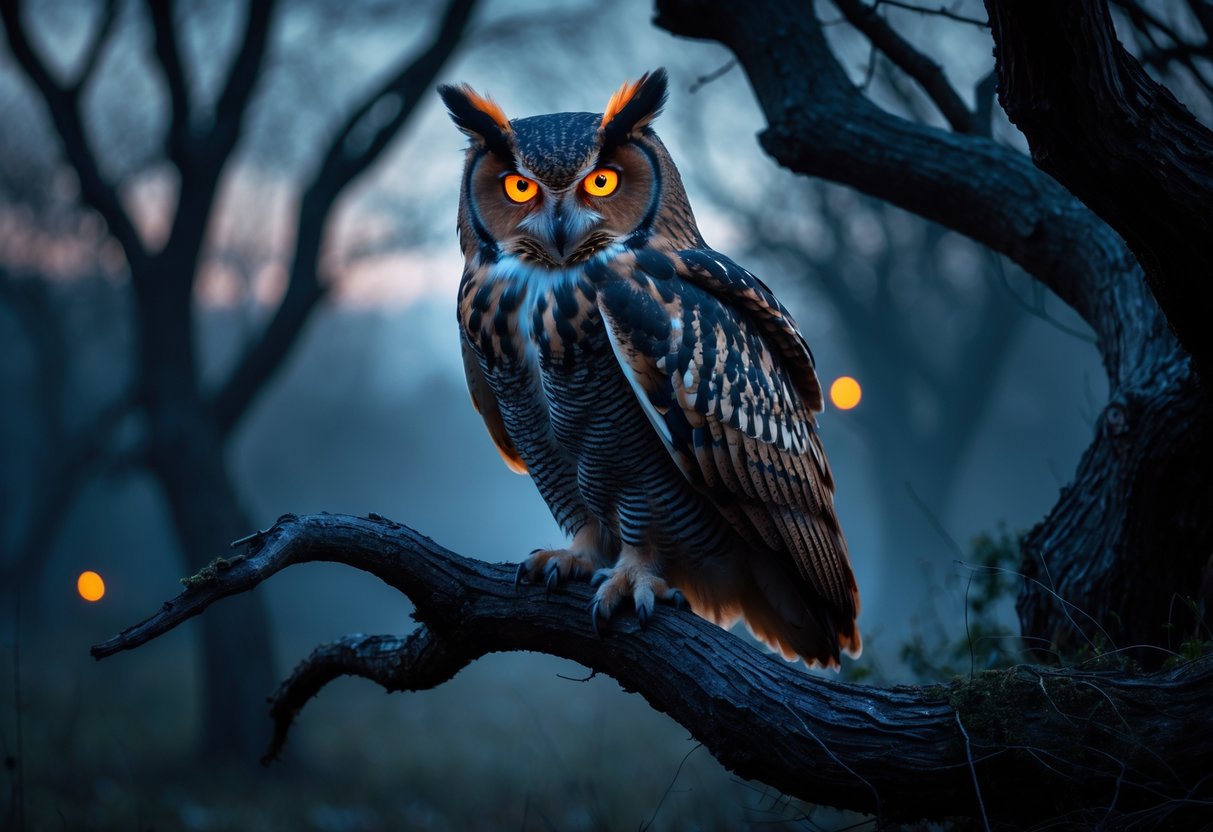
Ever wondered which demon gets tied to an owl? It’s Stolas. People usually picture Stolas as a crowned owl with long legs, though sometimes he shows up as a raven or a man. He leads 26 legions of demons as a powerful prince of Hell.
But Stolas isn’t all about creepy vibes. He teaches things like astronomy, the uses of herbs, and even the secrets of precious stones.
That mix of wisdom and mystery makes him a standout in demonology.
Owls have always symbolized wisdom and mystery across cultures. Learning about Stolas and his ties to these birds gives you a peek into how these symbols mixed with old demon legends.
If you’re curious about this owl demon’s story, stick around to learn more.
Stolas: The Owl Demon in Demonology

Stolas shows up a lot in demonology and always gets linked to owls. You’ll spot stories about his origins, what he looks like, and his appearances in books and shows.
His image brings together wisdom and a certain mysterious charm.
Origins and Lore of Stolas
You’ll find Stolas in old demonology books like the Ars Goetia. He rules as a Great Prince of Hell and leads 26 legions of spirits.
He teaches astronomy, herbs, and precious stones, so he’s not your average demon.
His name might come from the Greek word for owl or maybe a Latin word connected to clothing, hinting at his royal vibe. Some tales claim he was once an angel who fell during the War in Heaven.
Apparently, he used his knowledge of the stars to guide the rebel forces.
People often connect Stolas to ancient owl symbols, which represent both wisdom and darkness. This gives him a deeper, almost regal presence among demons.
Physical Appearance and Symbolism
Stolas usually takes the form of a crowned owl with long, skinny legs. This look ties him to wisdom and the night.
Sometimes, he shows up as a black raven or even as a man, depending on the story you read.
That owl crown really drives home his importance, giving him a royal or magical flair. In demonology, owls stand for secrets and knowledge that might be dangerous.
Stolas’s ability to change form means he can come across as wise or a bit unsettling, which fits his role as a teacher of hidden things.
His connection to clothing is subtle, but you can see it in his crown and sometimes a robe-like look, adding to his noble air.
Stolas in Art, Literature, and Popular Culture
You’ll see Stolas drawn as a big crowned owl in lots of demon books. Artists use this look to highlight his royal and mystical side.
In grimoires and stories, he’s the one teaching forbidden knowledge about stars and plants.
Modern pop culture brings Stolas to life in shows like Helluva Boss. He keeps his owl features but also gets more emotional and even playful at times.
That makes him feel more relatable, but his love for books and learning stays true to his roots.
He blends old-school demon traits with a modern twist, which keeps him interesting. If you want more, check out Stolas’s demonic profile.
Owl Symbolism, Mythology, and Spiritual Associations
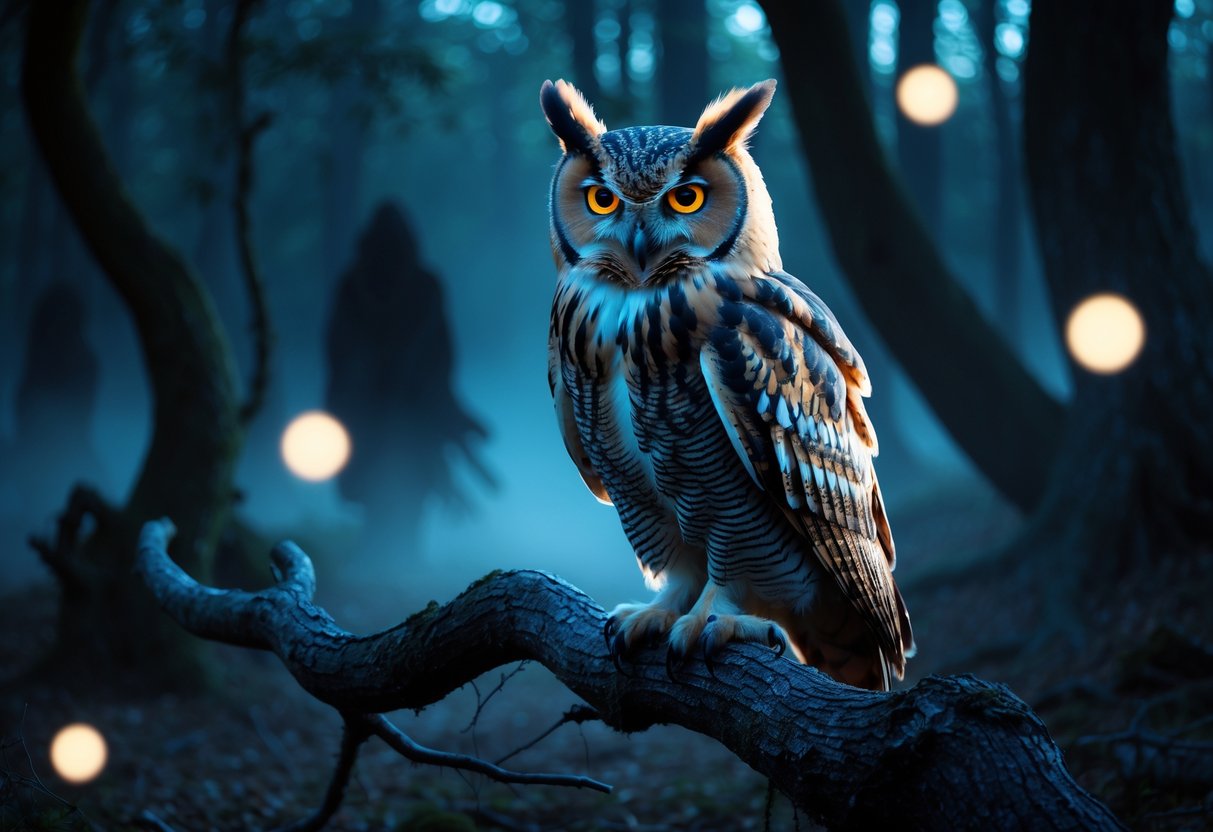
Owls usually stand for mystery and wisdom, but in some places, they’re seen as symbols of darkness or danger.
Their strange looks and behaviors have inspired all kinds of stories and beliefs.
Owls in Folklore and Superstition
In a lot of cultures, people see owls as wise and knowledgeable. The Greek goddess Athena, famous for wisdom and war, always has an owl by her side.
But in other parts of the world, owls get a bad rap. Some Middle Eastern stories link them to death and destruction.
You’ll also run into beliefs that owls carry evil spirits or warn of danger at night. Some legends say owls bring bad news or misfortune.
So, whether owls are good or bad? It really depends on who’s telling the story.
Famous Owl Species Linked to Legends
A few owl species really stand out in myths. The great horned owl is known for its big ear tufts and powerful vibe, often seen as a night guardian.
The eagle owl, one of the largest owls, gets admired for its strength and sharp eyesight. Some tales use it as a symbol of clear vision.
The barn owl, with its ghostly white face, is often linked to spirits or the afterlife. Its silent flight just adds to the mystery.
In some cultures, people even call it the “white owl” and think it brings spiritual messages or warnings.
Physical Traits: Ear Tufts and Distinctive Features
Have you ever noticed that some owls sport feather tufts that look like ears? Others just don’t have them at all. These ear tufts aren’t real ears—they just help owls blend in or maybe send signals to other owls.
The great horned owl and the eagle owl really stand out with their big tufts. Meanwhile, the barn owl skips the tufts and shows off a smoother head shape.
Owls have those huge eyes and sharp beaks, which help them hunt and get around in the dark. It’s probably why they look so wise—or maybe a little spooky, depending on who you ask. That mysterious vibe definitely fuels all those old stories and legends.
If you pay attention to these details, you might start to see how their looks tie into the meanings people give them in different cultures.
For more on owl myths, see owl symbols in owl myths and legends.


