
Ever wondered if owls like being petted? You’re definitely not the only one. Owls are fascinating, but their behaviors and needs don’t really match those of dogs or cats. Figuring out how they feel about touch helps you understand them better—and keeps you from stressing them out.
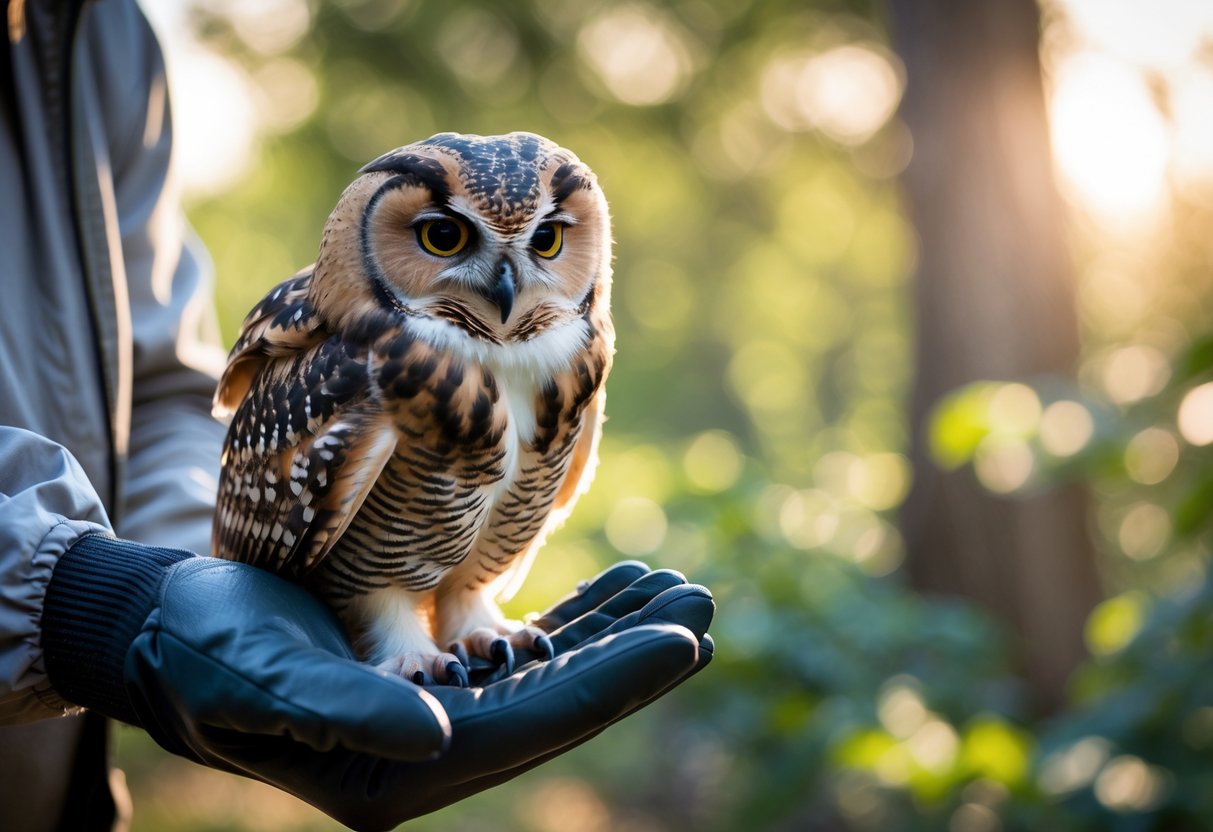
Most owls really don’t like being petted and often find it stressful or uncomfortable. Wild owls and those in captivity both tend to avoid human touch. If you try to pet one, it’ll probably move away or act defensively.
Maybe you’re wondering about exceptions or how owls raised by people behave. A few owls might tolerate gentle petting, but that’s rare and takes special care. It’s important to respect these differences so you don’t harm or upset them.
Do Owls Like Being Petted?
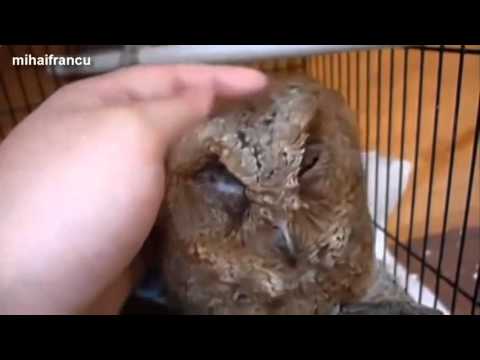
Owls don’t usually enjoy being petted the way some pets do. Their feelings about touch depend on their species, upbringing, and comfort around people. Watching their body language gives you clues about how they’re feeling.
Natural Reactions of Owls to Petting
Most owls, like great horned owls and snowy owls, dislike being touched. They live alone in the wild and rarely enjoy close contact. If you reach out, the owl may back away or even snap if it feels threatened.
Petting can stress an owl out because it’s just not something they experience in nature. This stress might show up as panting or strange high-pitched noises. Sometimes, you’ll see their pupils get big and small quickly, which means they’re not comfortable.
Even barn owls raised by people often act uneasy when strangers touch them. Their feathers are super sensitive, and oils from human hands can damage them, sometimes leaving bald spots that take months to heal. It’s safest to avoid touching owls unless you really know the bird.
Differences Between Owl Species
Each owl species reacts to touch in its own way. Great horned owls, for example, tend to be more aggressive and less tolerant of petting. Snowy owls might look calm, but they still don’t like being stroked.
Barn owls, sometimes raised in captivity, might accept gentle handling more than wild owls. Some owners handle barn owls for care or training, but that doesn’t mean the owl enjoys it. Trust plays a big role here.
In owl cafés, where several species live together, stress can get even worse. Large owls near smaller ones might feel threatened and dislike being touched even more. No matter the species, owls aren’t really pets and deserve respect for their wild nature.
Behaviors That Indicate Comfort or Stress
You can figure out how an owl feels by paying close attention to its actions. If an owl preens itself or stands still without trying to leave, it might feel comfortable—usually only with someone it knows well.
Panting, hissing, or sudden changes in pupil size all signal stress. The owl might try to fly off, make loud noises, or hold its feathers tight. These signs mean the owl wants space and doesn’t want to be touched.
If an owl fluffs up its feathers and lowers its head, it’s probably warning you to stop. You shouldn’t force contact. Give the owl room to calm down. Respecting these signals keeps the bird safe and less stressed.
Want to know more about how owls react to humans? Check out this article about owls and petting.
Considerations for Human-Owl Interaction
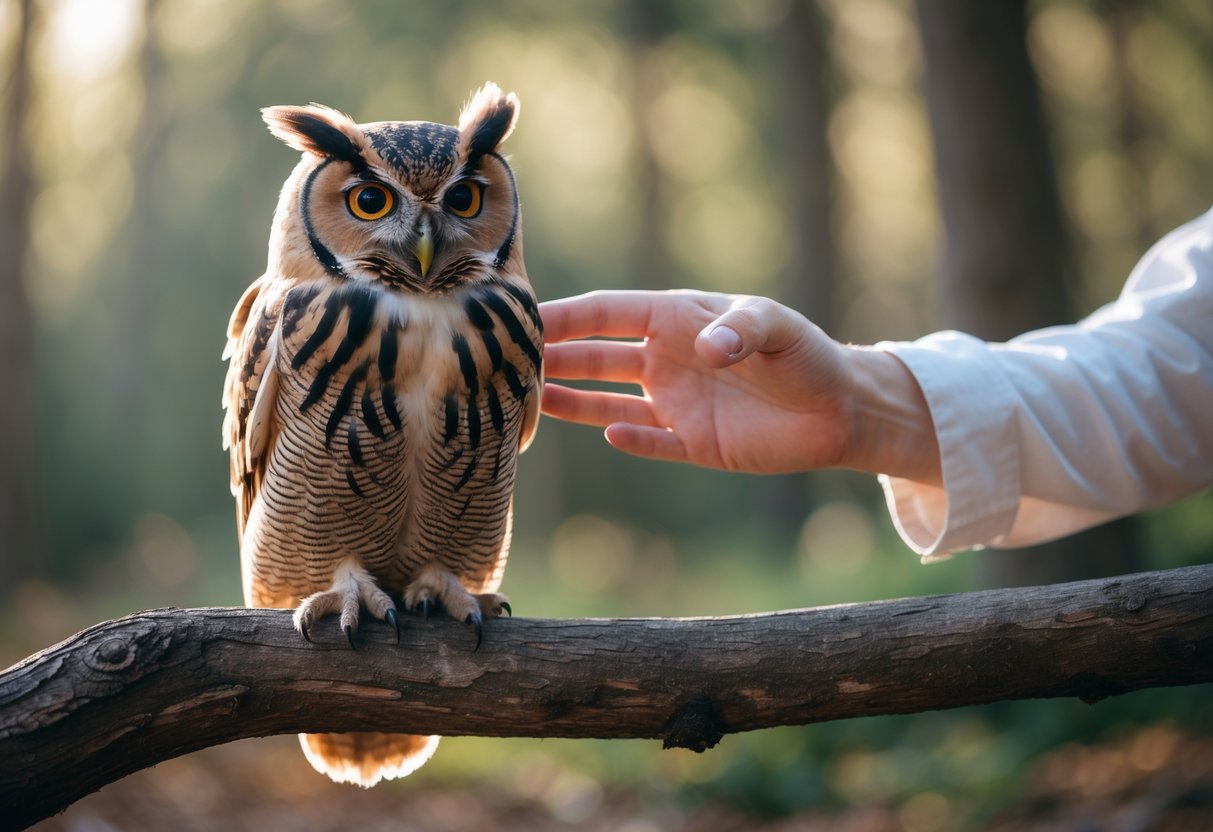
Owls have unique needs and behaviors that set them apart from typical pets. If you interact with an owl, you need to understand their habits and the risks that come with handling them.
Why Owls Are Not Typical Pets
Owls like their space and don’t enjoy being touched or cuddled. They aren’t naturally social with people and can get stressed if you try to pet them. Their instincts push them to keep their distance.
Some owls might bond with one person, but most will reject others. Their sharp talons and quick reflexes can hurt you if they get scared. They also need a calm, quiet environment to feel safe.
Laws like the Migratory Bird Treaty Act protect wild owls, including barn owls. You can’t just keep one at home without special permits. Their care and environment are way different from what most pets need.
Risks of Handling or Petting Owls
Handling or petting owls can be risky for both you and the bird. Their strong talons can easily puncture skin if they feel threatened or trapped. If an owl panics, it might injure itself or you.
Frequent handling stresses owls out and can weaken their immune system. Unlike pets that enjoy touch, owls usually want minimal physical contact. Trying to pet an owl might make it withdraw or act out.
Owls can carry diseases that pass to humans, so it’s smart to avoid unnecessary contact. If you want to interact safely, it’s better to observe owls without touching. Professional falconers and rehabilitators use special training and equipment to handle owls with care.
Owl Care in Home and Falconry Settings
If you want to keep an owl at home, you’ll need a special setup called a mews. This is basically an outdoor enclosure with solid walls, space for the owl to fly, and decent airflow.
A mews protects owls from injury and stress. It also lets them act more like themselves, which is honestly pretty important.
Owls eat a diet of fresh or frozen rodents and birds. You’ve got to know what you’re doing to feed them right and keep them healthy.
They’re messy eaters, so you’ll end up cleaning their space a lot more than you might expect.
With falconry, trained folks can keep owls for hunting or education. Falconers usually offer more room for flight and spend time training the birds to build trust.
This lifestyle isn’t for everyone—it takes a lot of time, patience, and a real respect for the owl’s wild instincts.
If you’re fascinated by owls, you could support them in other ways. Watching them in the wild, volunteering, or putting up an owl box can be pretty rewarding, honestly.
Curious why owls don’t make great pets? You might want to check out Do Owls Like to Be Petted?


